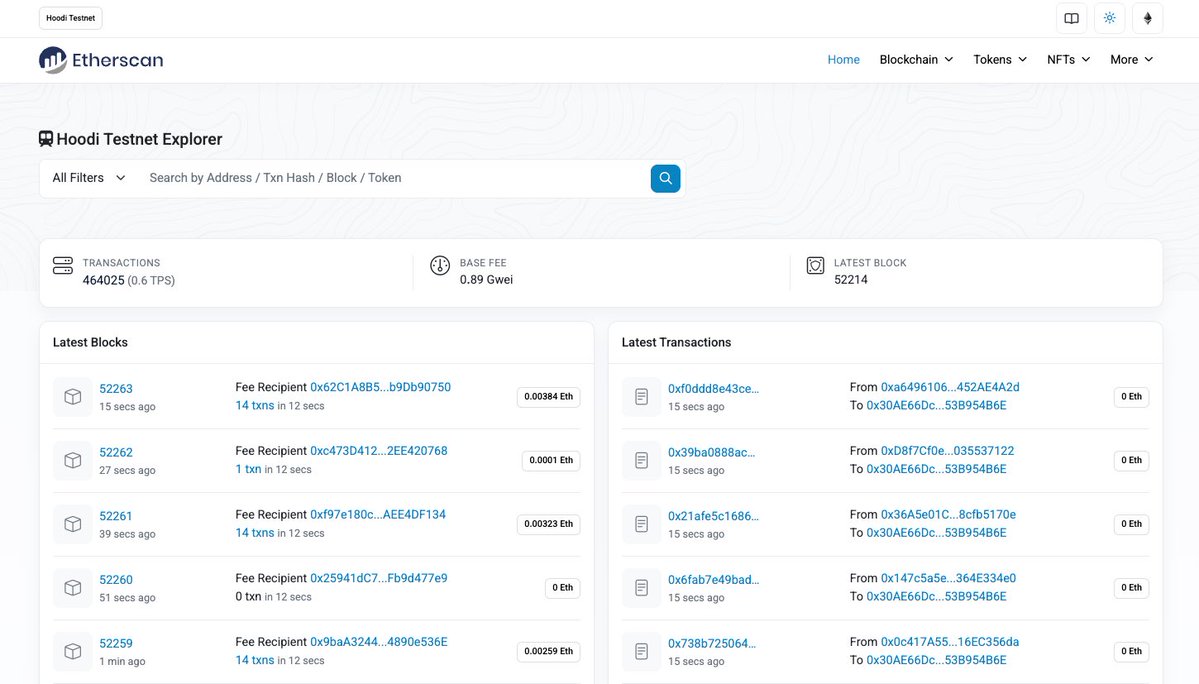
Hoodi testnet explorer is live! Namaskāra
𝕏/@etherscan •
Revision history
7 recorded changes
Want your article here?
Promote with Leviathan News7 recorded changes
Want your article here?
Promote with Leviathan NewsEtherscan has launched a Hoodi testnet explorer, adding block explorer support for Ethereum’s new long‑running staking and infrastructure test network. While the 𝕏 post announces the explorer going live, the broader context is that Hoodi is Ethereum’s second long‑standing, merged‑from‑genesis public testnet, intended to replace Holesky as the primary environment for validators, staking providers, client teams, and infrastructure operators. This network provides mainnet‑like conditions for testing activities such as validator onboarding and exits, client upgrades, and protocol changes. Hoodi was introduced by Ethereum client teams and the Ethereum Foundation specifically to support testing of the forthcoming Pectra upgrade and full validator lifecycle operations, after Holesky’s validator exit queue and recovery issues made it less suitable for some staking workflows. The Ethereum Foundation has indicated that Holesky will be supported only until September 2025, while Hoodi is expected to remain in use until September 2028, making it the key long‑term testnet for staking‑related testing. An Etherscan-powered Hoodi explorer gives ecosystem participants familiar tooling to inspect blocks, transactions, validator activity, and contracts on this network, complementing other Hoodi resources such as client configurations, launchpad staking tools, faucets, and alternative explorers like Blockscout and Ethplorer.
AI-generated background, compiled from web sources — not editorial content.
Loading related coverage…

𝕏/@ZenithFdn ·
𝕏/@OpenMoneyIndex ·
vitalik.eth.limo ·

𝕏/@THORChain ·

ꘜ/@BenthicNews ·

Coindesk ·
𝕏/@ZenithFdn ·
𝕏/@OpenMoneyIndex ·
vitalik.eth.limo ·
𝕏/@THORChain ·
ꘜ/@BenthicNews ·
Coindesk ·