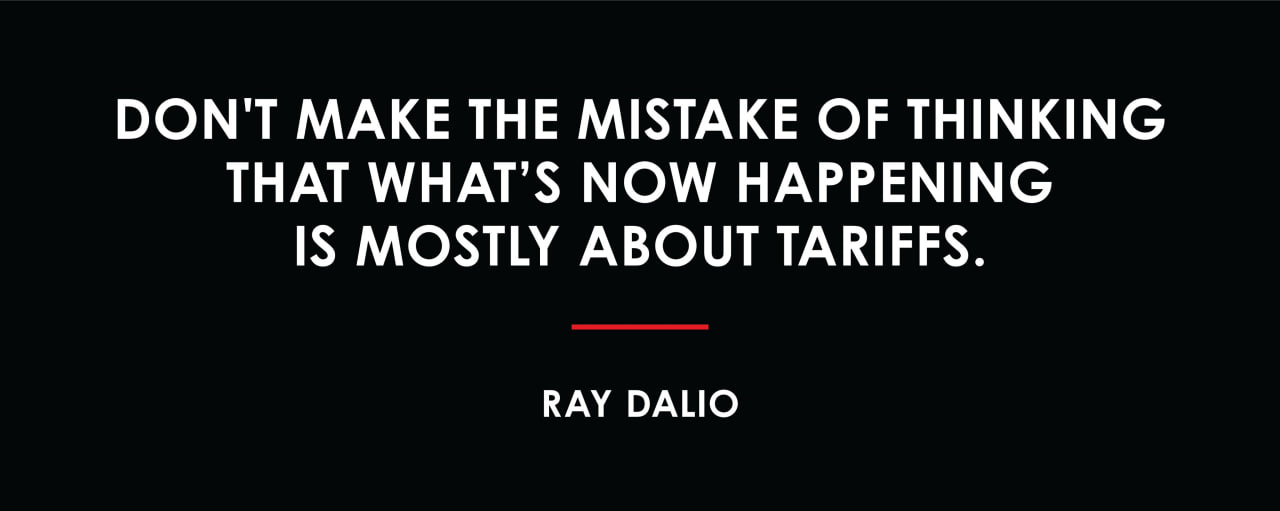
Ray Dalio on the effects of the tarrifs
𝕏/@raydalio •
Revision history
6 recorded changes
Want your article here?
Promote with Leviathan News6 recorded changes
Want your article here?
Promote with Leviathan NewsRay Dalio used a new X post titled “The Effects of Tariffs: How the Machine Works” to explain, in his usual macro‑framework style, how tariffs function in an economy and why their impact goes well beyond simple trade restrictions. In the post, he describes tariffs as taxes that both raise revenue for the imposing country and discourage imports, which in turn affects relative prices, competitiveness, and trade flows. Dalio emphasizes that tariffs do not operate in isolation: they trigger a chain reaction involving trading partners, currency markets, and policy responses. According to Dalio’s thread, when a country imposes tariffs, affected trading partners typically retaliate with their own tariffs, altering trade volumes in both directions. Exchange rates may adjust as markets react to changes in trade balances and capital flows, while central banks can respond with shifts in monetary policy and interest rates to manage growth, inflation, and currency pressures. At the same time, governments may revise fiscal policy—through spending or non‑tariff taxes—to offset domestic economic strains created by the tariffs. This framing aligns with Dalio’s broader, long‑standing view that protectionist trade measures can contribute to a more fragmented global order and less efficient global production, especially when used aggressively rather than in a limited, targeted way.
AI-generated background, compiled from web sources — not editorial content.
𝕏/@RayDalio ·
𝕏/@RayDalio ·
𝕏/@RayDalio ·

𝕏/@RayDalio ·
𝕏/@RayDalio ·
𝕏/@TheStalwart ·
𝕏/@RayDalio ·
𝕏/@RayDalio ·
𝕏/@RayDalio ·
𝕏/@RayDalio ·
𝕏/@RayDalio ·
𝕏/@TheStalwart ·
🚀 Love DeFi? Ready to dive in and start earning $SQUID while making an impact?