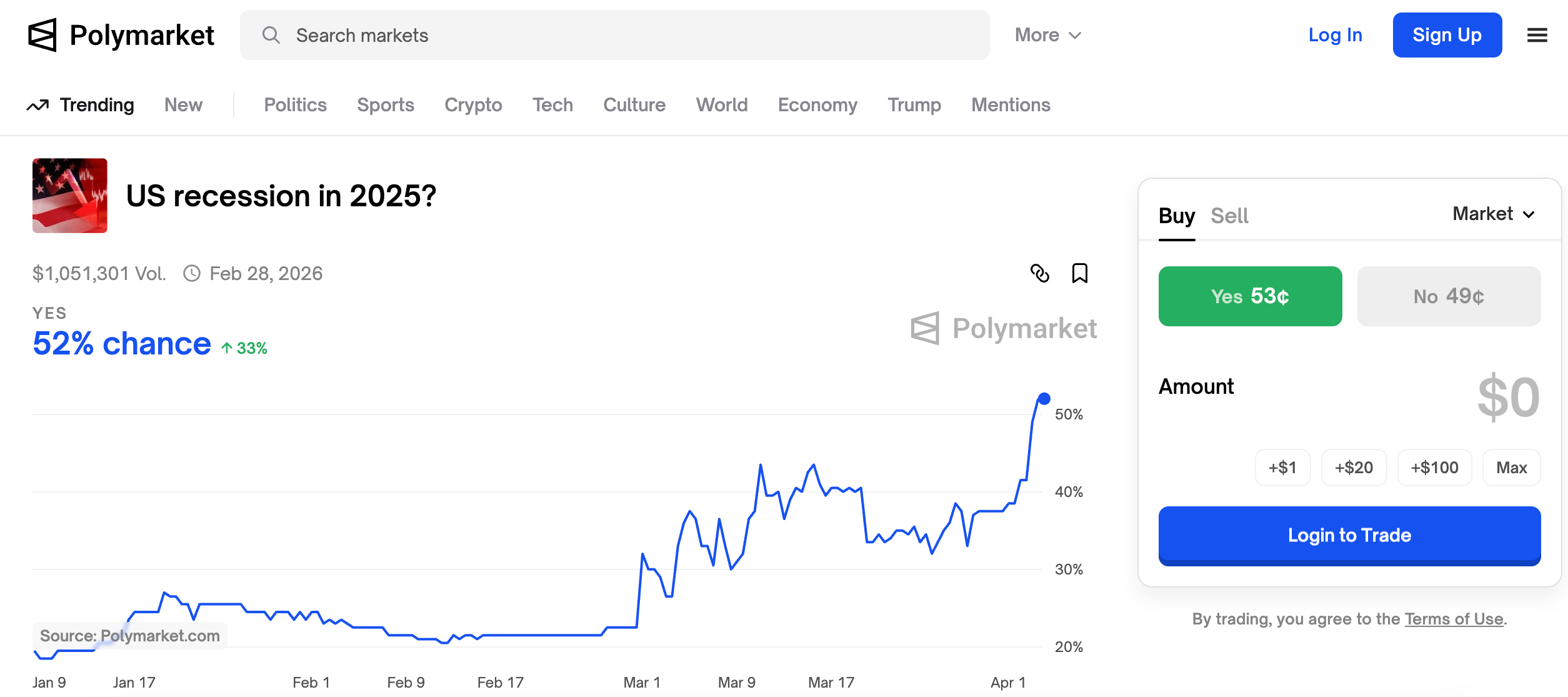
Prediction markets have rapidly repriced U.S. recession risk higher after President Donald Trump signed a sweeping new tariff order covering virtually all foreign imports, sharply escalating trade tensions. On regulated platform Kalshi, contracts tied to the U.S. experiencing a recession—defined as two consecutive quarters of negative real GDP growth—by 2025 climbed to roughly 60–61%, nearly doubling from levels seen in late March. Competing crypto-native platform Polymarket shows similar pricing around a 60% probability of recession under the same definition, indicating that both traditional and on-chain prediction venues are now assigning better‑than‑even odds to a downturn this year. The shift follows Trump’s April 2 executive order lifting effective U.S. tariff rates to roughly 23% if fully implemented, a move that has sparked a broad risk‑off reaction in conventional markets and prompted economists to reassess the macro outlook. Equities sold off, volatility rose, and so‑called safe havens such as gold and Bitcoin saw increased demand as investors looked to hedge policy and growth risk. Research teams at major banks and brokers characterize the tariffs as a meaningful negative shock to global trade and a front‑loaded inflation impulse for the U.S., with some, such as Nomura, moving their central outlook to “near‑recession” growth while still stopping short of calling a downturn their base case. For crypto investors, the episode underscores how quickly prediction markets can incorporate new policy information into market‑implied macro probabilities, and how tariff‑driven growth fears may interact with expectations for Federal Reserve policy, risk sentiment, and Bitcoin’s evolving role as a macro hedge.

AI-generated background, compiled from web sources — not editorial content.

More coverage

Explore the topic

More on Trump

Comments