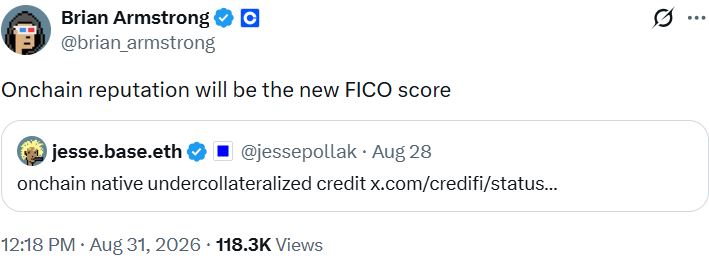
In a Wall Street Journal video interview, Coinbase CEO Brian Armstrong frames the company’s legal battle with the U.S. Securities and Exchange Commission (SEC) as a broader fight over how the United States will regulate and host the crypto industry. In the discussion, Armstrong argues that Coinbase has tried for years to obtain clear rules from the SEC, but instead received enforcement actions and legal threats, culminating in the SEC’s lawsuit accusing Coinbase of operating an unregistered securities exchange and listing unregistered securities. He positions Coinbase’s decision to contest the case in court as necessary to resolve what he describes as regulatory uncertainty around whether many crypto assets should be treated as securities or something distinct from traditional financial instruments. Armstrong uses the interview to situate Coinbase’s dispute within a wider policy debate in Washington about whether digital assets will be governed primarily through regulation by enforcement or via new, bespoke legislation. He contends that the SEC’s approach is pushing crypto innovation overseas, citing jurisdictions such as the European Union and the United Kingdom that are moving ahead with dedicated regulatory frameworks for digital assets and stablecoins, and warns that the U.S. risks ceding leadership in financial and technology innovation if it does not provide a workable rulebook. In parallel, Armstrong emphasizes Coinbase’s status as a publicly listed, U.S.-based company subject to existing disclosure and compliance obligations, arguing that this makes the exchange a suitable test case for establishing legal clarity that would apply to the broader industry, including other centralized exchanges, token issuers, and developers. The interview matters because it exemplifies how one of the largest U.S. crypto companies is attempting to shift its regulatory conflict from closed-door negotiations to a public and political arena. By casting Coinbase’s defense against the SEC as a defense of the entire crypto sector, Armstrong is seeking to influence lawmakers, regulators, and courts at a moment when Congress is considering multiple digital-asset bills and federal agencies are competing over jurisdiction. The outcome of Coinbase’s litigation with the SEC, and the accompanying public debate that interviews like this help shape, is likely to affect how tokens are classified, how exchanges can operate in the U.S., and whether future crypto innovation remains onshore or migrates to more permissive regulatory environments.

AI-generated background, compiled from web sources — not editorial content.

More coverage

Explore the topic

More on Brian Armstrong

Comments