Goodbye EVM, Hello RISC-V - The Road to 10,000 TPS and ZK-Snarking Everything
A new article by 0xJaehaerys
𝕏/@0xJaehaerys •
Revision history
11 recorded changes
Want your article here?
Promote with Leviathan News11 recorded changes
Want your article here?
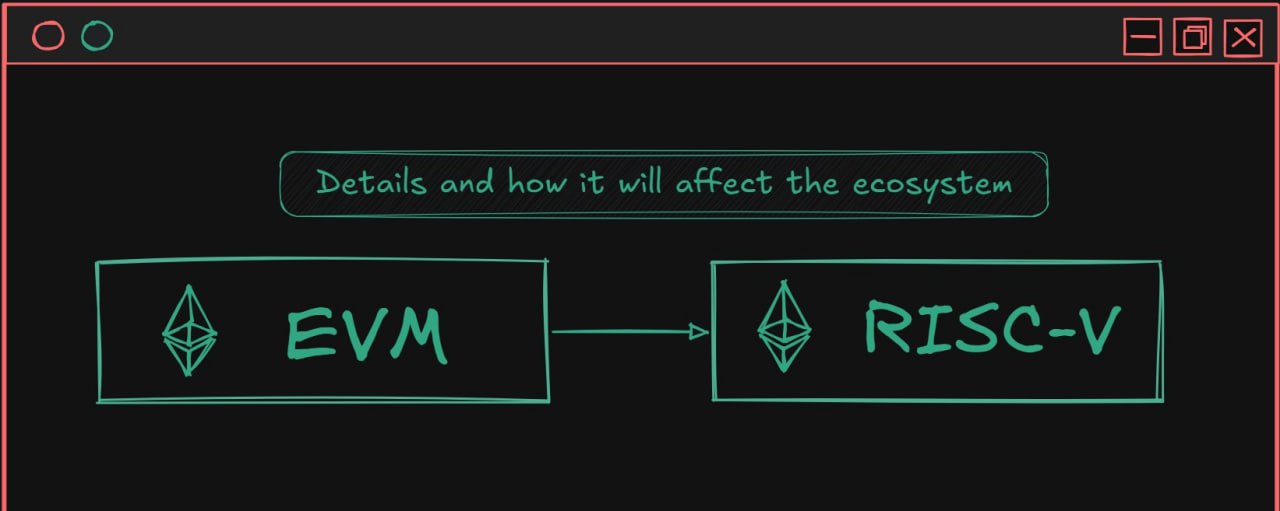
Promote with Leviathan NewsEthereum researcher and commentator 0xJaehaerys published a long-form thread titled “Goodbye EVM, Hello RISC‑V – The Road to 10,000 TPS and ZK‑Snarking Everything,” arguing that Ethereum’s long‑term roadmap is converging on replacing the Ethereum Virtual Machine (EVM) with a RISC‑V–based virtual machine tightly integrated with zero‑knowledge (ZK) proofs. The post synthesizes ongoing discussions inside the Ethereum research ecosystem, including Vitalik Buterin’s exploratory proposal to eventually swap out the EVM for RISC‑V and community work on “snarkifying” the entire stack so that block execution is provably correct using ZK proofs. In this framing, today’s efforts around zkEVMs and zk-rollups are treated as intermediate steps toward a future where the base layer’s execution environment is itself a ZK‑friendly, RISC‑V–style VM, enabling orders‑of‑magnitude higher throughput. The central performance target highlighted in the thread is about 10,000 transactions per second (TPS) on Ethereum L1, achieved by reaching roughly 1 giga‑gas per second and pairing that with mandatory ZK proofs of execution, a goal that has been described in recent Ethereum Foundation research conversations about “snarkifying the EVM” and eventually enshrining a zkVM in consensus. In that vision, the EVM is gradually phased out in favor of a RISC‑V–based zkVM, which is easier to prove succinctly and can leverage emerging ZK accelerators and optimized proof systems. The thread emphasizes that this shift is not imminent at the protocol level but represents a long‑term architectural direction: RISC‑V zkVMs are already gaining traction across the ecosystem, the EF has launched formal verification efforts around them, and Ethereum client teams such as Nethermind are actively compiling execution logic to RISC‑V‑targeting zkVMs as part of their “path to proofs.” For the broader ecosystem, the analysis frames a potential move from EVM to RISC‑V as a foundational change in how Ethereum scales, secures execution, and supports application development. By standardizing around an open, hardware‑style ISA like RISC‑V, developers could reuse existing toolchains and languages while benefiting from ZK‑secured execution, at the cost of introducing new complexity and security concerns around compilers and VM implementations. The thread positions this roadmap as Ethereum’s most significant architectural shift since its inception: in the long term, data availability and consensus remain key constraints, but the execution bottleneck is addressed by RISC‑V‑centric zkVMs that can “zk‑snark everything,” from L1 execution to rollups, pushing aggregate capacity into the tens of millions of TPS across L2s.
AI-generated background, compiled from web sources — not editorial content.
Loading related coverage…
Loading comments…
🚀 Love DeFi? Ready to dive in and start earning $SQUID while making an impact?
Loading comments…
Restoring your session before loading comments…

𝕏/@Pumpfun ·

Claude ·

𝕏/@celestia ·

𝕏/@BinanceWallet ·

metamask.io ·

𝕏/@ZenithFdn ·
𝕏/@Pumpfun ·
Claude ·
𝕏/@celestia ·
𝕏/@BinanceWallet ·
metamask.io ·
𝕏/@ZenithFdn ·