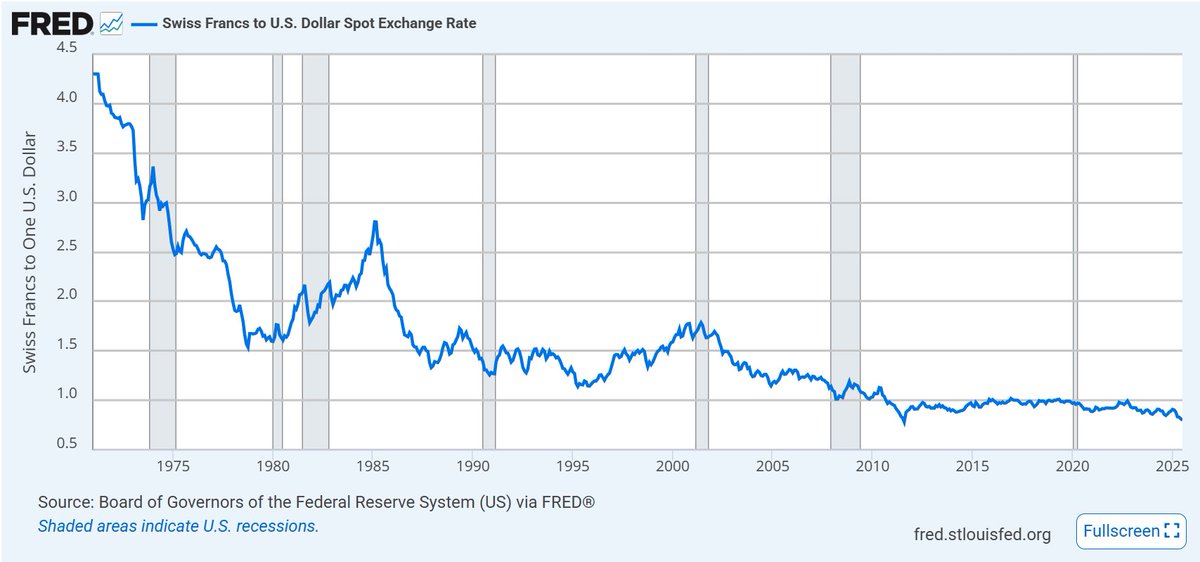
The post is referring to the events of the early 1970s, roughly 50 years ago, when the Swiss franc moved off a fixed gold and dollar-based system and began to demonstrate its long‑run strength versus other major currencies such as the US dollar and European currencies. In August 1971, the Nixon administration suspended the dollar’s convertibility into gold, triggering the collapse of the Bretton Woods system of fixed exchange rates; over the following years, most major currencies, including the Swiss franc, shifted to more flexible exchange rate regimes. Switzerland formally abandoned the gold standard and moved to flexible exchange rates by the mid‑1970s, ending the old parity framework and allowing the franc to appreciate as markets increasingly treated it as a safe‑haven asset. From that point on, the Swiss franc’s value and purchasing power held up much better than many peers, underpinned by Switzerland’s combination of low inflation, conservative monetary policy, political neutrality and stability, and relatively low public debt. Historical data show that since the early 1970s the franc has gained significantly against the US dollar and euro‑area currencies, and Switzerland has recorded the lowest average inflation in the industrialized world over the post‑World War I period. This track record is why the franc is widely regarded as a superior store of value and a classic “safe‑haven” currency, and it is the monetary and macroeconomic backdrop that projects like Frankencoin invoke when they market on‑chain Swiss franc exposure through a CHF‑pegged stablecoin.

AI-generated background, compiled from web sources — not editorial content.

More coverage

Explore the topic

More on HF

Comments