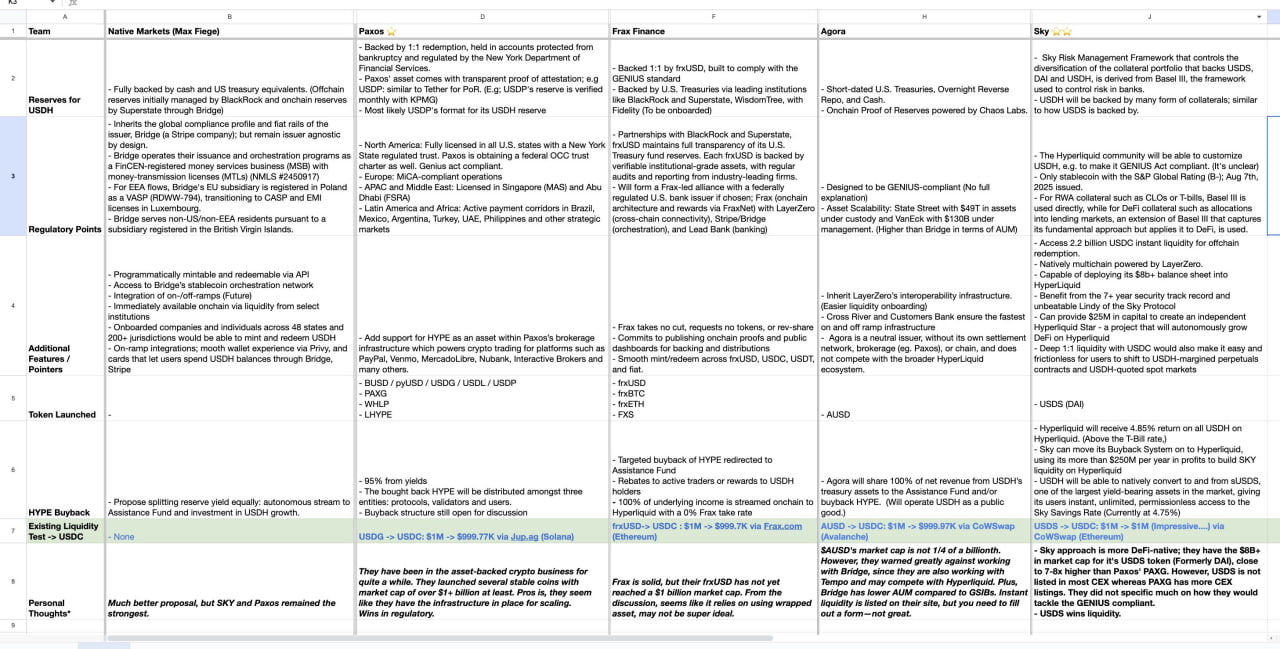
Hyperliquid, a fast‑growing perp DEX with billions in USDC liquidity, is running a competitive process to select an external issuer for its planned native stablecoin USDH, and a Stripe‑linked bid has triggered significant community pushback over concerns about economic sovereignty and vendor lock‑in. Validators on the Hyperliquid network will choose the winning proposal via governance, with major contenders including Paxos, Frax, and a coalition involving Agora and MoonPay, alongside a Stripe‑affiliated bid routed through its stablecoin infrastructure unit Bridge.
Hyperliquid announced USDH as a way to reduce its dependence on existing stablecoin issuers, particularly USDC, which currently accounts for around 95% of the platform’s roughly $5–5.6 billion stablecoin liquidity and represents a major revenue stream for Circle. Instead of issuing USDH itself, the Hyperliquid Foundation opened an auction‑style process where would‑be issuers submit proposals detailing reserve structure, yield‑sharing with the Hyperliquid ecosystem (often via HYPE token buybacks), and regulatory/compliance frameworks, with validators set to vote following a scheduled network upgrade and validator signaling period.
The most controversial proposal is from Native Markets, a vehicle created to bid for USDH issuance that plans to back the stablecoin with off‑chain reserves managed by BlackRock and on‑chain reserves managed by Superstate via Bridge, a stablecoin platform owned by Stripe. Critics in the Hyperliquid community argue that because Stripe is simultaneously building its own Layer‑1 blockchain, Tempo, and already gained a foothold in wallet infrastructure through its acquisition of Privy, allowing a Stripe‑linked stack to control USDH would effectively hand the “monetary layer” of Hyperliquid to a large Web2/fintech competitor, undermining the protocol’s neutrality and long‑term economic independence. This has opened space for rival bids: Paxos has proposed sharing the bulk of interest from USDH reserves with HYPE holders, Frax has floated an architecture tying USDH to its frxUSD ecosystem, and an Agora–MoonPay coalition plus other crypto‑native teams are positioning themselves as more alignment‑focused alternatives to Stripe‑adjacent infrastructure while still promising yield, liquidity, and regulatory coverage.
✨ AI-generated background, compiled from web sources — not editorial content.