The US Office of the Comptroller of the Currency (OCC) has granted preliminary conditional approval for a de novo national bank charter to Erebor Bank, National Association, a Columbus, Ohio–based “digital-native” bank that intends to focus on clients using virtual currencies and stablecoins, alongside traditional banking services. According to the OCC’s October 15, 2025 release and accompanying materials, Erebor aims to operate as an insured national bank targeting technology companies, payment providers, trading firms, and ultra–high-net-worth individuals active in digital assets, while integrating both crypto-related services and conventional deposit and lending products.
The OCC characterized Erebor as the first de novo bank to receive preliminary conditional approval under Comptroller Jonathan V. Gould and emphasized that the same “rigorous review and standards” applied to all charter applications were used here. The conditional approval is contingent on Erebor meeting substantial prudential and compliance requirements, including obtaining FDIC deposit insurance, applying for Federal Reserve Bank stock, passing a pre-opening OCC examination, and maintaining a minimum 12% Tier 1 leverage ratio during its first three years of operation, with OCC non‑objection required for changes to its business plan or senior leadership. The OCC’s approval letter also expressly affirms that a national bank may hold non‑asset‑backed virtual currencies on its balance sheet to pay transaction (gas) fees, treating this as an activity “incidental to the business of banking,” a determination that could provide a regulatory template for other banks seeking to integrate digital asset infrastructure.
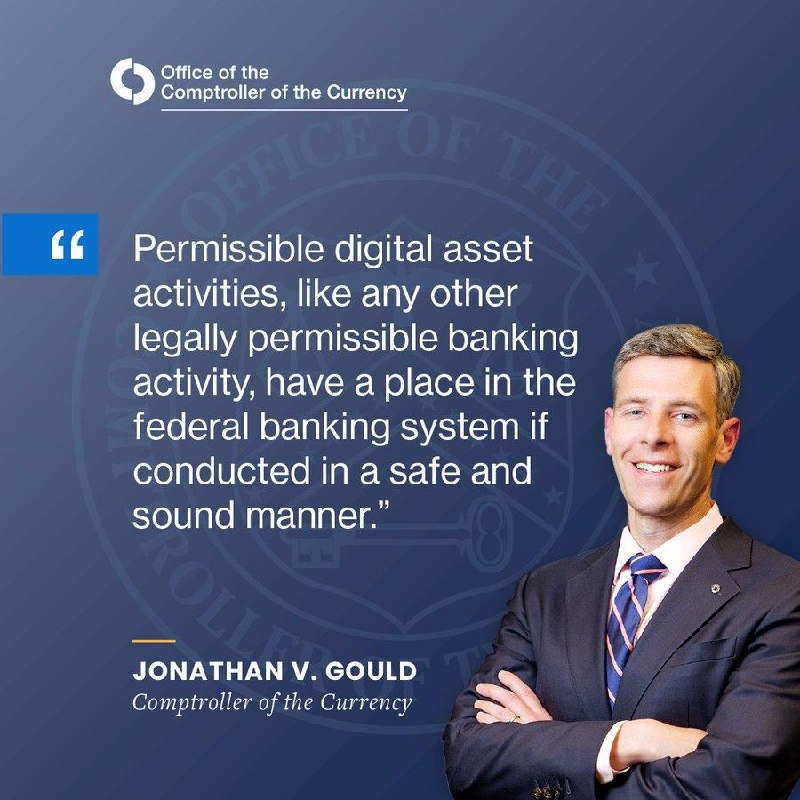
This decision is significant because it places a crypto‑focused, stablecoin‑oriented institution inside the federal banking perimeter, in contrast to earlier models that operated primarily under state regimes or as non‑banks. Commentators note that Erebor could become a reference model for how US national banks offer digital asset custody, payments, and infrastructure services alongside traditional banking, subject to heightened expectations around capital, governance, BSA/AML, sanctions compliance, and crypto‑specific risk controls. The approval also signals the OCC’s current policy stance that permissible digital asset activities can be part of the national banking system if conducted in a “safe and sound” manner, potentially encouraging additional charter applications from institutions building around stablecoins and other virtual currencies.
✨ AI-generated background, compiled from web sources — not editorial content.