New Proposals Aim to Scale crvUSD and Expand Yield Basis Capacity — Plans include boosting Curve DAO’s YB incentives up to 360K YB/week, raising PegKeeper limits from $108M to $300M, and allocating $1B crvUSD to Yield Basis to unlock $500M capacity, strengthening peg stability and system value ahead of broader scaling.
New Proposals Aim to Scale crvUSD and Expand Yield Basis Capacity — Plans include boosting Curve DAO’s YB incentives up to 360K YB/week, raising PegKeeper limits from $108M to $300M, and allocating $1B crvUSD to Yield Basis to unlock $500M capacity, strengthening peg stability and system value ahead of broader scaling.
gov.curve.finance
Revision history

2 recorded changes

Want your article here?

Promote with Leviathan News


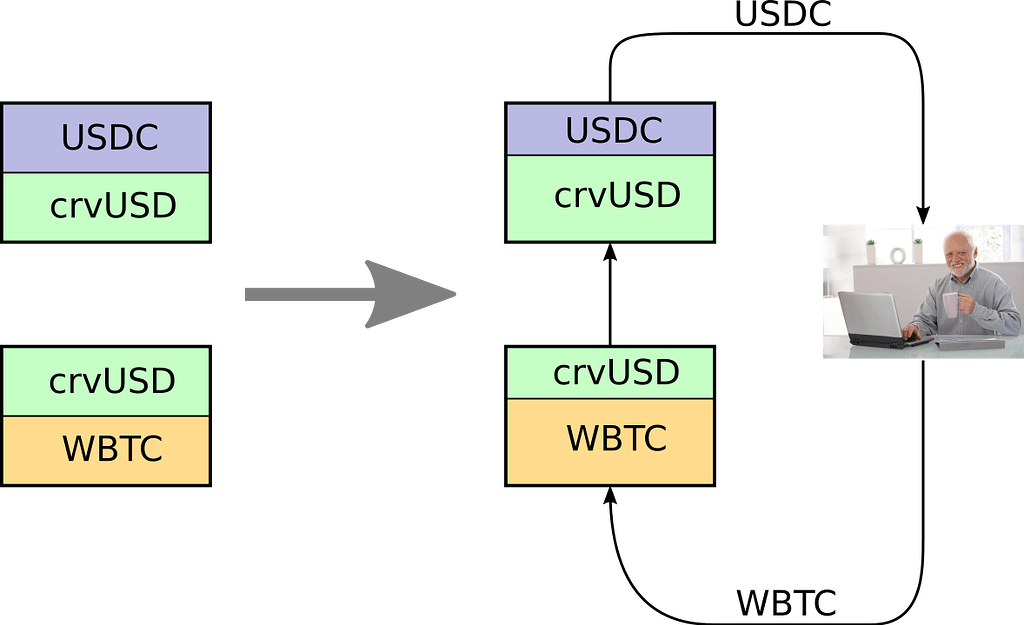
Curve DAO is moving to expand the capital available to its Yield Basis protocol, a crvUSD-based system designed to bootstrap Bitcoin and other volatile-asset liquidity while limiting impermanent loss. Earlier governance discussions centered on a 60M crvUSD pre-mint credit line for the first BTC pools, then a later increase to a 300M ceiling, and the newest proposal set now pushes further by targeting a 1B crvUSD maximum line, higher Yield Basis incentive emissions, and larger PegKeeper capacity to support crvUSD scale-up. The core mechanism is that Yield Basis uses crvUSD as a pre-minted credit line rather than a sold token allocation, with caps and utilization meant to expand gradually as liquidity, pool depth, and safety metrics improve. Curve governance has argued that this structure can create a demand sink for crvUSD, deepen on-chain liquidity, and generate more fee revenue for Curve while Yield Basis grows; the DAO has also approved increasing the Yield Basis crvUSD credit line from 300M to 1B, with the 1B figure described as a maximum ceiling rather than an immediate draw. What matters is that this is no longer just a launch-bootstrap proposal but a scaling framework for Curve’s stablecoin stack. Raising PegKeeper limits from 108M to 300M and allocating up to 1B crvUSD to Yield Basis are intended to expand the system’s absorption capacity, strengthen the crvUSD peg, and increase trading volume and protocol revenue as usage grows; the rollout is explicitly meant to remain data-driven and phased rather than fully deployed at once.

AI-generated background, compiled from web sources — not editorial content.

More coverage

Explore the topic

More on Liquidity Incentives

Comments