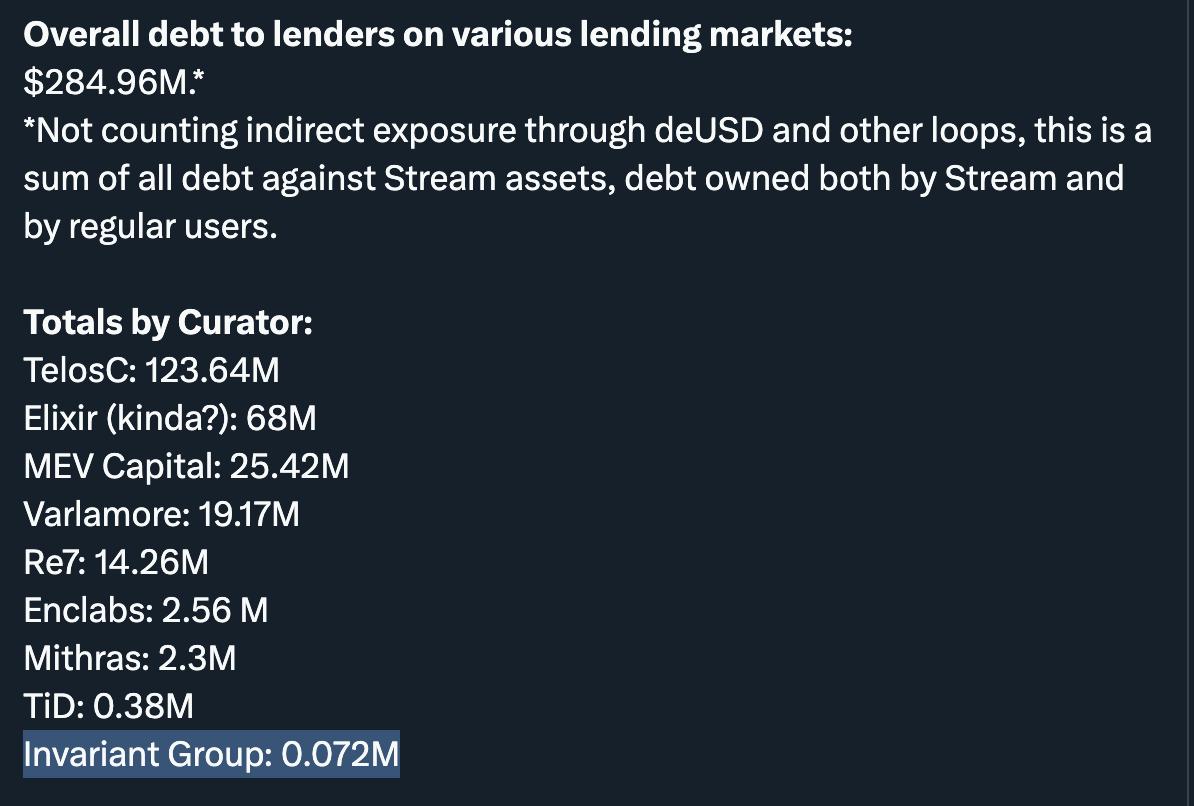
DeFi investigators have linked the collapse of Stream Finance, a synthetic-asset and yield protocol, to more than $284 million in interconnected bad debt and stablecoin exposure across multiple lending markets, dragging in curators and funds such as TelosC, MEV Capital, and Re7. This comes amid broader market stress that also includes a separate nine-figure exploit of Balancer, compounding risk across DeFi liquidity and lending venues.
According to research by on-chain analytics group Yields and More (YAM), Stream Finance previously reported about $93 million in losses tied to an external fund manager and subsequently halted deposits and withdrawals, which triggered a loss of confidence and a depeg in its synthetic stable assets like xUSD, as well as synthetic BTC and ETH products (xBTC, xETH). These synthetic assets had been widely used as collateral or traded across protocols such as Euler, Morpho, Silo, and Gearbox, meaning the impairment of Stream’s instruments cascaded into other venues where they backed loans or leveraged positions. The YAM report estimates that roughly $123 million in exposure is tied to TelosC, while Elixir has about $68 million in stablecoin-backed loans at risk, with additional exposures attributed to funds such as MEV Capital and Re7 acting as curators or liquidity providers around Stream’s products.
The situation matters because it highlights how layered derivatives and cross-protocol collateralization can amplify losses from a single failing protocol into systemic bad debt across DeFi money markets. Since liability is distributed through multiple rehypothecated positions and derivative stablecoins, it remains unclear which parties—protocol treasuries, fund managers, or end users—will ultimately absorb the losses, and there is still no clear timeline for Stream Finance to resume normal operations or offer full restitution. The episode, coming on the heels of a large Balancer exploit, underscores the concentration and contagion risk in DeFi’s current design, where complex leverage and synthetic assets can transmit shocks far beyond the originating platform.
✨ AI-generated background, compiled from web sources — not editorial content.