Privy rolls out manual approvals for programmable wallets, embedding human oversight directly into onchain treasury governance
privy.io •
Revision history
4 recorded changes
Want your article here?
Promote with Leviathan News4 recorded changes
Want your article here?
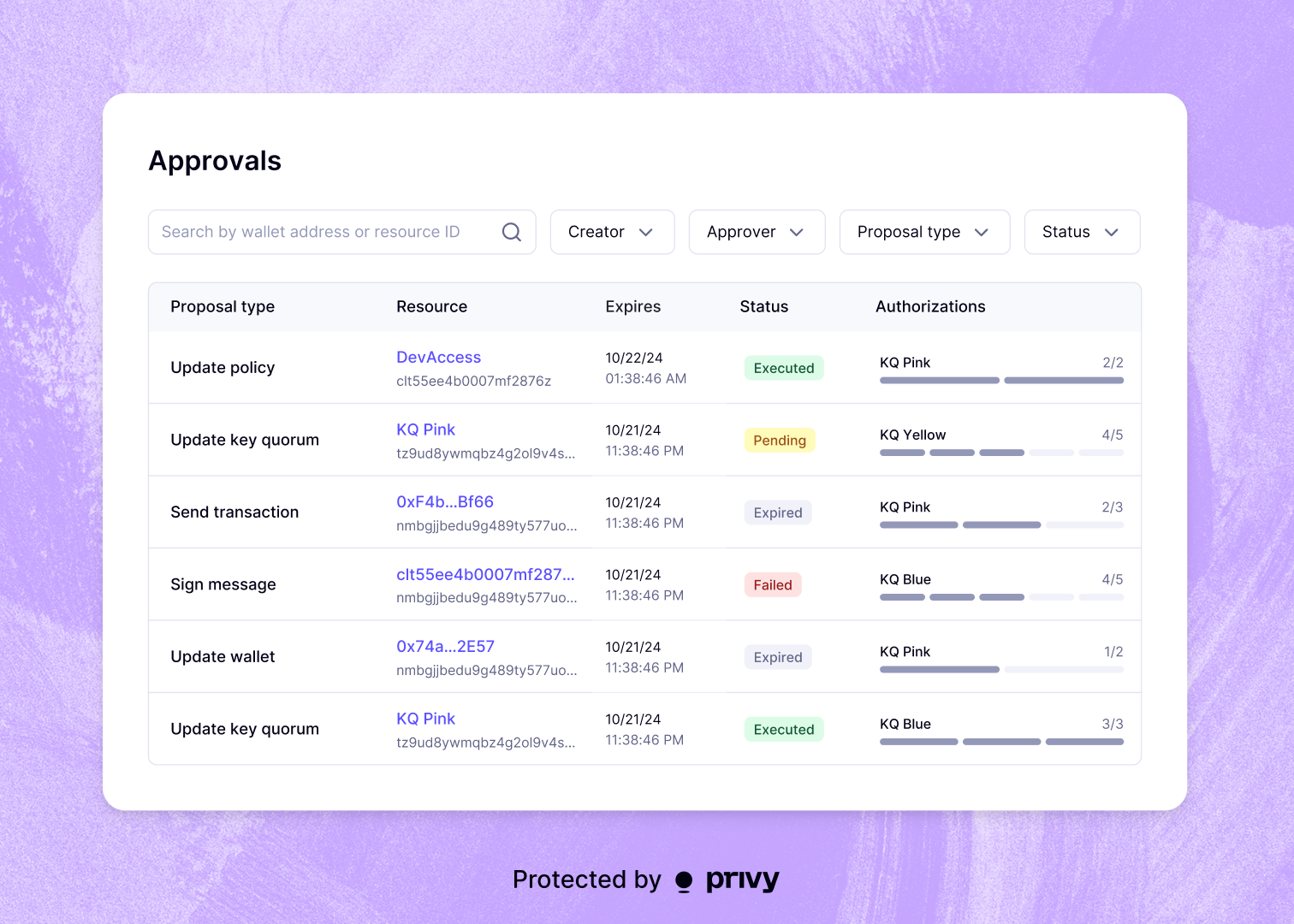
Promote with Leviathan NewsPrivy has introduced a new manual approvals feature that adds human-in-the-loop controls to its programmable wallet infrastructure, aimed particularly at stablecoin and onchain treasury operations. Instead of relying solely on automated policy rules or coordinating approvals through external tools like Slack, Google Sheets, or custom back-office systems, teams can now require designated human reviewers to approve sensitive actions—such as large transfers, policy changes, or transaction signatures—directly within Privy’s governance and dashboard workflows. According to Privy, the feature lets organizations define key quorums (groups of reviewers with a configurable approval threshold) and attach them as “owners” of specific wallets or policies, so any proposed intent (for example, updating a policy or executing a transaction) is automatically queued for review. Reviewers then approve or reject these intents in the Privy dashboard, with step-up security such as biometric or TOTP-based multi-factor authentication, before the action is executed onchain. This design is positioned as a way to bring traditional corporate treasury practices—like dual control, spend limits, and multi-step signoff—into programmable wallet flows, particularly for teams using stablecoins to manage working capital, pay vendors, or run high-volume payouts. The rollout matters because it addresses a core tension in onchain treasury management: automation and composability improve efficiency, but fully automated smart contract- or policy-driven flows can be risky for large balances or sensitive actions if something goes wrong. By embedding human oversight into the same infrastructure that automates transactions, Privy is trying to give finance and operations teams more granular control and auditability without forcing them to rebuild custom approval stacks or expose raw private keys. It also aligns with broader industry trends toward programmable wallets with policy engines, where approvals, limits, and routing rules are enforced at the infrastructure layer to support compliance, internal controls, and separation of duties for crypto and stablecoin treasuries.
AI-generated background, compiled from web sources — not editorial content.

𝕏/@privy_io ·

𝕏/@privy_io ·

𝕏/@privy_io ·

Stripe ·

𝕏/@privy_io ·

𝕏/@privy_io ·
𝕏/@privy_io ·
𝕏/@privy_io ·
𝕏/@privy_io ·
Stripe ·
𝕏/@privy_io ·
𝕏/@privy_io ·
🚀 Love DeFi? Ready to dive in and start earning $SQUID while making an impact?