Euro Pacific Asset Management chief economist Peter Schiff is using Bitcoin’s latest downturn to argue that the “digital gold” thesis is breaking down, highlighting that BTC has lost roughly 40% of its value when priced in gold compared with its prior cycle peak. Schiff contends that this relative underperformance during the current correction undermines the idea of Bitcoin as a superior store of value and warns that continued risk-off sentiment could drive further price declines as investor confidence erodes. Schiff’s argument focuses on Bitcoin’s performance not just in U.S. dollar terms but against physical gold, a benchmark favored by critics who view gold as the primary monetary hedge asset. He notes that at Bitcoin’s previous all‑time high, one BTC bought significantly more ounces of gold than it does now, framing the 40% drop in BTC’s “gold‑denominated” price as evidence that gold has outperformed over the current macro cycle and that Bitcoin’s store‑of‑value narrative is weakening. This comes amid a broader pullback in BTC, where Bitcoin recently posted a multi‑day slide far steeper than gold’s relatively mild move, reigniting debate among analysts over whether Bitcoin behaves more like a risk asset tied to tech/equities or like a defensive macro hedge. The episode matters because the “digital gold” framing is central to how many institutional and retail investors justify Bitcoin exposure, especially as an inflation or currency debasement hedge. If Bitcoin continues to exhibit higher volatility and deeper drawdowns than gold during risk‑off periods, critics like Schiff argue capital could rotate toward traditional safe‑haven assets, challenging one of Bitcoin’s key value propositions in portfolio construction. Supporters, by contrast, typically respond that shorter‑term drawdowns do not negate Bitcoin’s longer‑term outperformance in both USD and gold terms over the past decade, but Schiff’s comments underscore how relative performance versus gold has become a focal metric in the evolving narrative battle around BTC’s role in the macro asset landscape.

AI-generated background, compiled from web sources — not editorial content.

More coverage

Explore the topic

More on Narrative

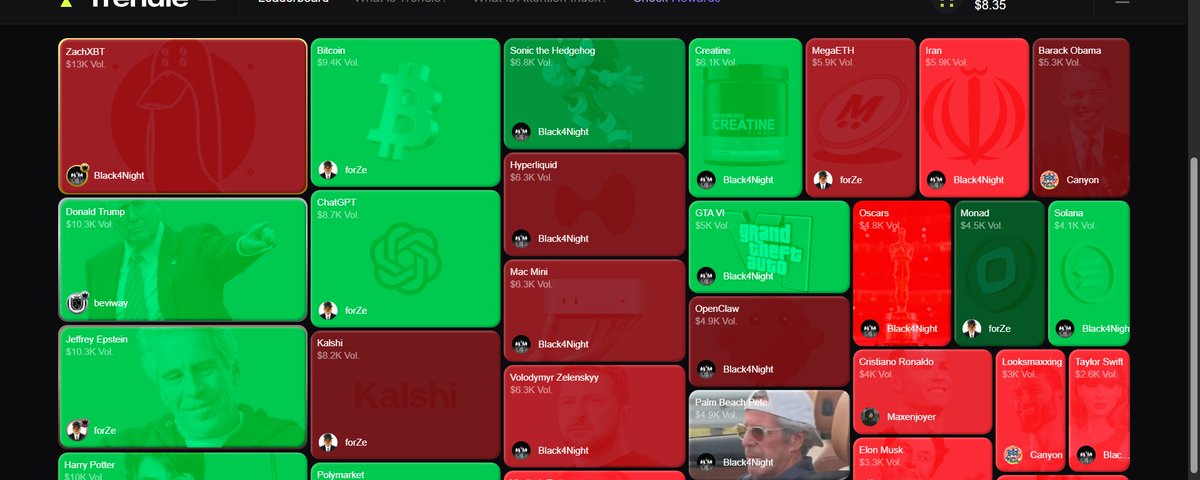
Attention markets reward what you already know, turning everyday scrolling into tradable edge as platforms like TrendleFi monetize narrative timing

Attention markets reward what you already know, turning everyday scrolling into tradable edge as platforms like TrendleFi monetize narrative timing

𝕏/@Baheet_ ·

Crypto analyst outlines five narratives to watch in 2026: Consumer DeFi, crypto payments, public token sales, prediction markets, and personalization—arguing the next wave is about usability, access, and real-world adoption.

Crypto analyst outlines five narratives to watch in 2026: Consumer DeFi, crypto payments, public token sales, prediction markets, and personalization—arguing the next wave is about usability, access, and real-world adoption.

𝕏/@0xNairolf ·

Crypto VCs are shifting toward FinTech-style investing as token-first exits fade, prioritizing real revenue, payments, trading, and compliance-driven models. Stablecoins and markets now anchor sustainable crypto businesses as fundamentals replace narrative-driven growth.

Crypto VCs are shifting toward FinTech-style investing as token-first exits fade, prioritizing real revenue, payments, trading, and compliance-driven models. Stablecoins and markets now anchor sustainable crypto businesses as fundamentals replace narrative-driven growth.

𝕏/@0xshawnpang ·

Hitesh parallels the crypto industry with the 1970s counterculture, arguing that while many participants are trapped in a cycle of hype and emotional escapism, the true ethos of the space is about questioning centralized authority and the nature of value. Sharing a personal narrative of early success followed by ego-driven failure, he concludes that lasting wealth is built through skill acquisition and emotional detachment, not just market speculation.

Hitesh parallels the crypto industry with the 1970s counterculture, arguing that while many participants are trapped in a cycle of hype and emotional escapism, the true ethos of the space is about questioning centralized authority and the nature of value. Sharing a personal narrative of early success followed by ego-driven failure, he concludes that lasting wealth is built through skill acquisition and emotional detachment, not just market speculation.

𝕏/@hmalviya9 ·

Another Crypto Tulip story 🌷🙄
Bitcoin’s Slide Revives ‘Digital Tulip’ Fears as the once–gold narrative falters amid rate jitters, energy concerns, and sharp short-term losses.

Another Crypto Tulip story 🌷🙄 Bitcoin’s Slide Revives ‘Digital Tulip’ Fears as the once–gold narrative falters amid rate jitters, energy concerns, and sharp short-term losses.

archive.ph ·

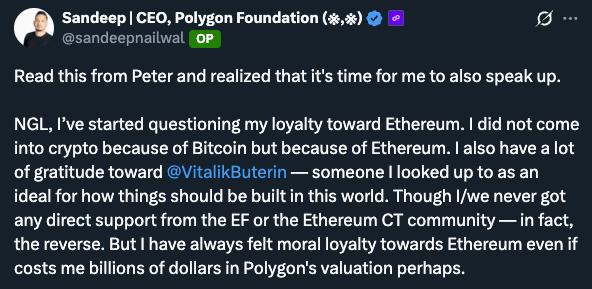
Polygon’s Co-Founder Questions His Loyalty to Ethereum, Calling Out “Toxic” Community Behavior

Polygon’s Co-Founder Questions His Loyalty to Ethereum, Calling Out “Toxic” Community Behavior

𝕏/@sandeepnailwal ·

Comments