Samsung preps backup plans for memory downturn it expects within two years, even as chip division eyes record 2026
𝕏/@jukan05 •
Revision history
6 recorded changes
Want your article here?
Promote with Leviathan News6 recorded changes
Want your article here?
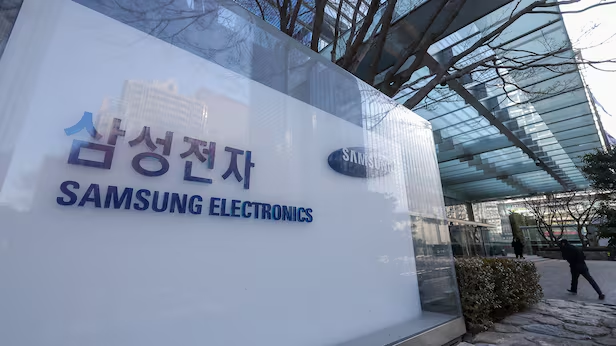
Promote with Leviathan NewsSamsung Electronics is signalling that it expects the current AI‑driven memory boom to continue into the middle of this decade, with its semiconductor division targeting record profits around 2026, while simultaneously preparing contingency plans for a potential memory downturn within about two years after the peak. Commentary around the company’s recent guidance notes that Samsung sees exceptionally strong demand for high‑bandwidth memory (HBM) and related DRAM for AI infrastructure through roughly 2026–2027, but is already concerned that heavy industry‑wide capital spending could tip the market back into oversupply around 2028. The firm has reportedly created internal support and planning structures to avoid repeating past cycles where aggressive capacity expansion during booms led to steep losses when demand normalized. This positioning comes against a broader backdrop of structural tightness in the memory market, driven by hyperscaler and AI demand that is pulling wafer capacity into HBM and away from conventional DRAM and some NAND segments. Industry analyses describe 2026 as a period of pronounced undersupply and elevated prices for many memory products, with HBM effectively sold out and DRAM and NAND pricing expected to remain high as long as AI infrastructure build‑out continues. Samsung’s strategy—pursuing record earnings during the upcycle while explicitly planning for a possible post‑AI correction—matters for the entire supply chain because Samsung, alongside SK hynix and Micron, controls the bulk of global DRAM output; its investment discipline, or lack of it, has historically amplified semiconductor boom‑bust swings that affect everything from data centers to consumer electronics.
AI-generated background, compiled from web sources — not editorial content.
Loading related coverage…
Loading comments…
🚀 Love DeFi? Ready to dive in and start earning $SQUID while making an impact?
Restoring your session before loading comments…
Related coverage is temporarily unavailable.