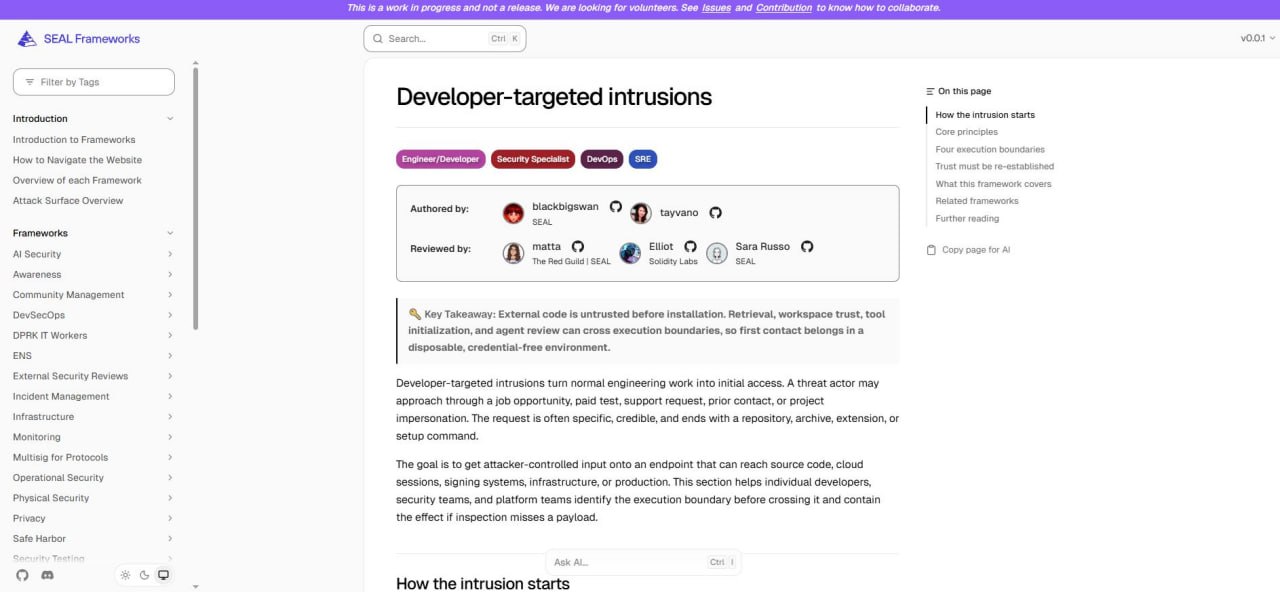
SEAL (Security Alliance), a crypto security collective, has announced a new real-time crypto defense network designed to coordinate security response across much of the decentralized finance (DeFi) ecosystem in parallel with a new U.S. executive order on combating cybercrime and crypto fraud. According to SEAL’s announcement on X, the network combines open-source security frameworks, on-chain security certifications, 24/7 incident response hotlines, and a legal “safe harbor” structure that already covers entities responsible for over half of current DeFi total value locked (TVL). The initiative is framed as a public‑interest, industry‑led complement to the Biden administration’s March 2025 executive order on cybercrime, which calls for better real‑time coordination between government, exchanges, and service providers on scams and crypto-related fraud.
In its materials, SEAL positions this defense network as an open, coalition-based alternative to closed vendor products, aiming to standardize how DeFi protocols share threat intelligence, certify security posture on‑chain, and escalate urgent incidents (such as live exploits, phishing campaigns, or stolen funds) through a 24/7 hotline and common workflows. The “safe harbor” element is intended to reduce legal risk and encourage faster and richer information‑sharing among participating DeFi projects, auditors, wallets, and infrastructure providers, echoing recommendations raised in recent U.S. congressional hearings and policy discussions about providing liability protections for proactive cybercrime collaboration. Against a backdrop of rising AI‑accelerated phishing, crypto fraud, and cross‑border ransomware activity highlighted by U.S. cyber and law‑enforcement officials, SEAL’s move matters because it attempts to create a quasi‑standard, industry‑wide incident response layer for DeFi—one that could improve time‑to‑detection, unify best practices via open‑source frameworks, and potentially make it easier for victims, protocols, and eventually regulators to coordinate during fast‑moving crypto security incidents.
✨ AI-generated background, compiled from web sources — not editorial content.