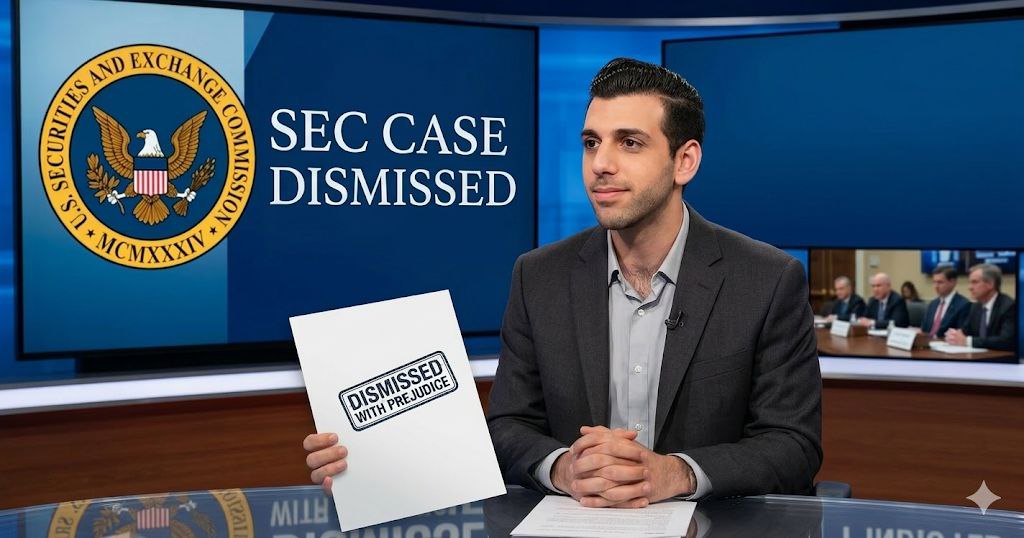
The U.S. Securities and Exchange Commission has formally dropped its civil fraud and unregistered offering lawsuit against BitClout and DeSo founder Nader Al‑Naji, agreeing to a dismissal with prejudice, which bars the agency from refiling the same case. The joint stipulation of dismissal, filed in the Southern District of New York, follows a prior decision by the U.S. Department of Justice to drop its parallel criminal case, leaving both the SEC and DOJ actions against Al‑Naji closed. The SEC had originally sued Al‑Naji in July 2024, alleging that he raised more than $257 million through unregistered offers and sales of BitClout’s BTCLT token and misled investors about both the purportedly “decentralized” nature of the BitClout social-media protocol and his use of project funds. According to the complaint, the SEC claimed he diverted over $7 million for personal expenses such as luxury housing and cash gifts, and that he used the pseudonym “Diamondhands” and the framing of BitClout as “just coins and code” to avoid regulatory scrutiny while exercising actual control over the platform and token distribution. The dismissal with prejudice means the SEC will not pursue these allegations further in civil court, an outcome that significantly reduces Al‑Naji’s legal exposure and may influence how enforcement agencies approach complex, “decentralized” token projects that blur the line between startup control and protocol autonomy. This case has been closely watched in crypto circles because BitClout and its successor ecosystem, DeSo, were early, high-profile attempts at a blockchain-based social network built around "creator coins" tied to individual identities. The SEC’s complaint argued that BitClout’s token sales constituted investment contracts under U.S. securities law and cited the project as an example of how some teams raise large sums while presenting themselves as decentralized infrastructure. With the civil case now closed and the criminal charges previously dropped, the outcome will likely be referenced in future debates about when crypto tokens and social‑fi structures fall under securities regulation, although the dismissal itself does not create binding precedent or resolve the underlying legal questions.

AI-generated background, compiled from web sources — not editorial content.

More coverage

Explore the topic

More on SEC

Comments