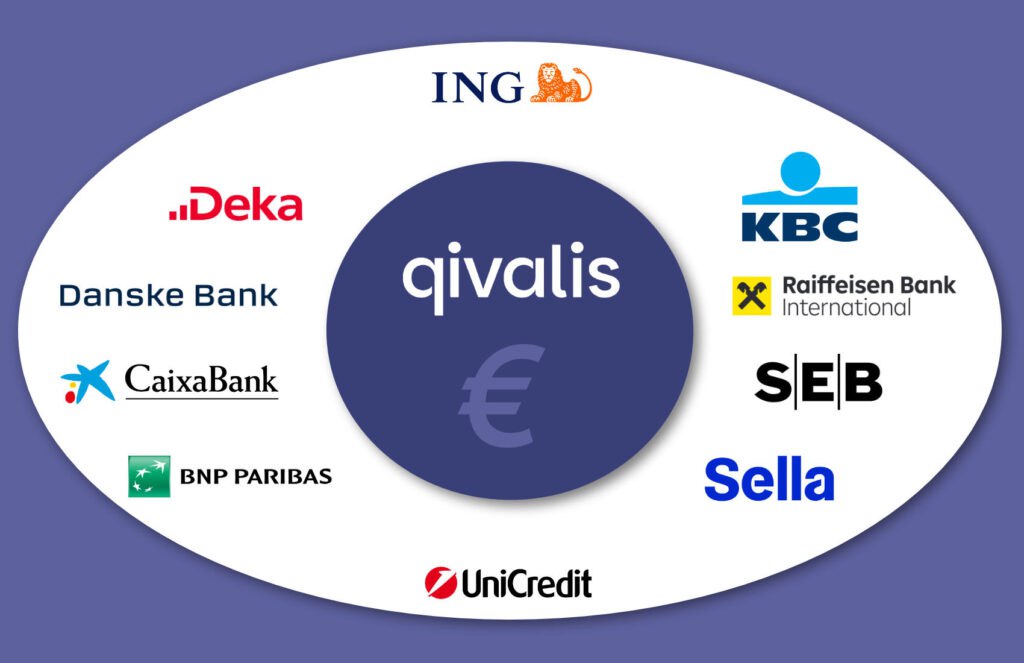
A consortium of major European banks has created a joint venture, Qivalis B.V., to issue a fully regulated, euro‑denominated stablecoin by the second half of 2026, aiming to provide an on‑chain alternative to the US dollar‑pegged stablecoins that currently dominate global crypto and digital asset markets. Qivalis, founded in September 2025 and domiciled in Amsterdam, is seeking an Electronic Money Institution (EMI) licence from the Dutch central bank (De Nederlandsche Bank), and plans to issue a MiCA/MiCAR‑compliant token backed 1:1 by euro reserves and high‑quality liquid assets.
The initiative began with a core group of large EU banks—including BNP Paribas, ING, UniCredit, BBVA, CaixaBank, Danske Bank, DZ Bank, KBC, Raiffeisen Bank International, SEB, Banca Sella and DekaBank—and has since expanded to 37 banks across 15 European countries as additional institutions such as ABN AMRO, Intesa Sanpaolo, Nordea, Rabobank and Piraeus Bank joined the consortium. The stablecoin is designed primarily for institutional and wholesale use cases such as cross‑border payments, corporate treasury liquidity management, and atomic settlement of tokenised assets (e.g., bonds, funds, and real estate) on blockchain infrastructure, with the aim of building common European rails for real‑time, programmable euro‑denominated transactions. By offering a bank‑backed, euro‑based instrument under EU regulatory oversight, Qivalis directly targets the current reliance on US dollar stablecoins like USDT and USDC—often cited as exceeding 95–99% of the market—framing the project as part of a broader push for European monetary and digital sovereignty in Web3 and digital payments.
✨ AI-generated background, compiled from web sources — not editorial content.