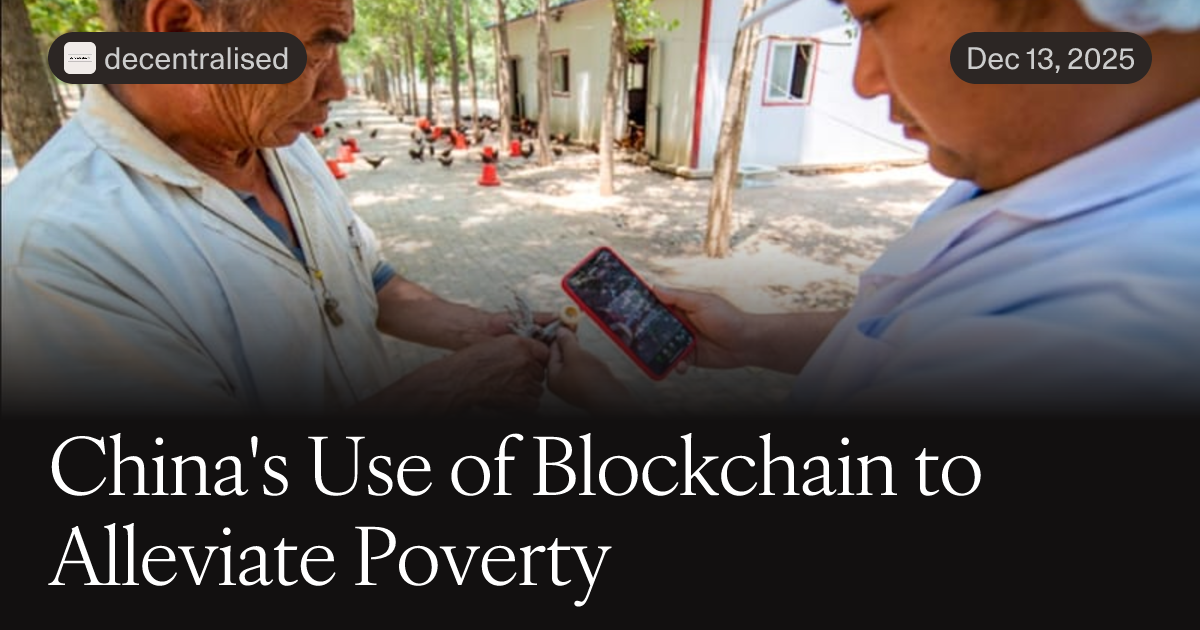
A look into the ways China has used blockchain technology to lift 98 million people out of poverty since 2012.
Paragraph •
Revision history
7 recorded changes
Want your article here?
Promote with Leviathan News7 recorded changes
Want your article here?
Promote with Leviathan NewsTL;DR: China has used blockchain—largely in centralized, state-led ways—to support its Targeted Poverty Alleviation drive, helping lift around 98 million people out of extreme poverty since 2012. Applications range from food traceability (like QR-tracked “million-step” chickens), transparent management of government funds, microloans for rural farmers, and blockchain-based charity and insurance platforms. While this approach contrasts with the cypherpunk vision of decentralization, it shows how blockchain, when embedded into public policy and institutions, can materially improve trust, transparency, and rural incomes at massive scale.
Top comment by @Danicjade
Loading related coverage…

𝕏/@tradeparagon ·

Figure ·

mas.gov.sg ·

Cryptonews ·
vitalik.eth.limo ·
𝕏/@Eli5defi ·
𝕏/@tradeparagon ·
Figure ·
mas.gov.sg ·
Cryptonews ·
vitalik.eth.limo ·
𝕏/@Eli5defi ·
🚀 Love DeFi? Ready to dive in and start earning $SQUID while making an impact?