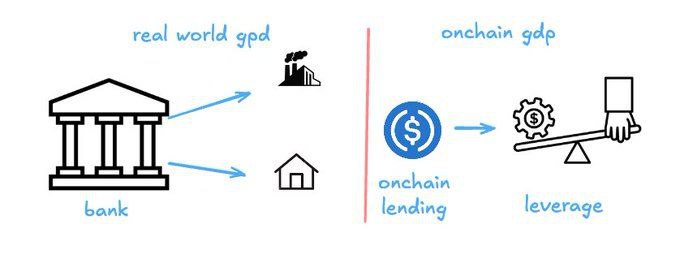
An analysis circulating on X from researcher Silvio Busonero argues that current DeFi lending protocols such as Aave capture far lower lending margins than traditional banks because of how onchain credit is used and structured. According to this view, most DeFi lending volume is driven by leverage, rehypothecation, and yield loops in crypto markets (for example, borrowing stablecoins against crypto collateral to lever long, farm yields, or loop LST/LRT positions), rather than by financing real-economy borrowers. In that environment, protocols compete intensely on rates, collateral is highly mobile, and users can switch platforms at low cost, all of which compresses protocol “take rates” and interest margins relative to banks that lend into consumer, SME, and corporate credit.
Bank and academic research supports this characterization of DeFi lending as heavily speculative and overcollateralized, with limited information on borrower creditworthiness and little link so far to real-economy credit. BIS and ECB analyses note that typical DeFi loans are collateralized by volatile crypto assets, are often used to lever trading positions, and require substantial overcollateralization because protocols cannot perform traditional credit screening. This structure enables capital-efficient trading for sophisticated users but leaves little room for wide, stable net interest margins; DeFi lending platforms generally charge lower rates and capture only a small fraction of the economic value passing through them compared with fintech lenders and banks.
The post suggests that as onchain lending expands into tokenized real-world assets (RWAs) and structured credit, protocol economics could begin to resemble traditional credit intermediation, potentially supporting higher and more persistent margins that are less tied to crypto market cycles. That shift would involve using blockchains to originate and finance assets such as trade finance, invoice factoring, real-estate backed credit, or offchain corporate and SME loans, packaged in onchain structured products and credit pools. Central bank and academic work on DeFi’s future similarly argues that meaningful real-economy impact requires better tokenization of RWAs and improved information about borrowers, even if that implies more centralization and new risk-management layers. The strategic question for protocols like Aave is whether they can evolve from infrastructure for leveraged crypto trading into generalized credit platforms that intermediate between onchain capital and offchain borrowers while sustaining stronger, less cyclical margins.
"entities":["Aave","Silvio Busonero","BIS (Bank for International Settlements)","European Central Bank (ECB)","Bank of Canada","DeFi lending protocols","Decentralized Finance (DeFi)","Traditional banks","Real-world assets (RWAs)","Structured credit","Stablecoins","Crypto collateral","Leverage / yield loops","Hyperliquid (as a DeFi/fintech comparison in cited research)"]}'}`
✨ AI-generated background, compiled from web sources — not editorial content.