Crypto kept Venezuela’s oil trade alive. Over years of aggressive US sanctions on the country, an economist says 80% of Venezuela’s oil trade has been collected in USDT, as a fast & secure alternative, bypassing American sanctions.
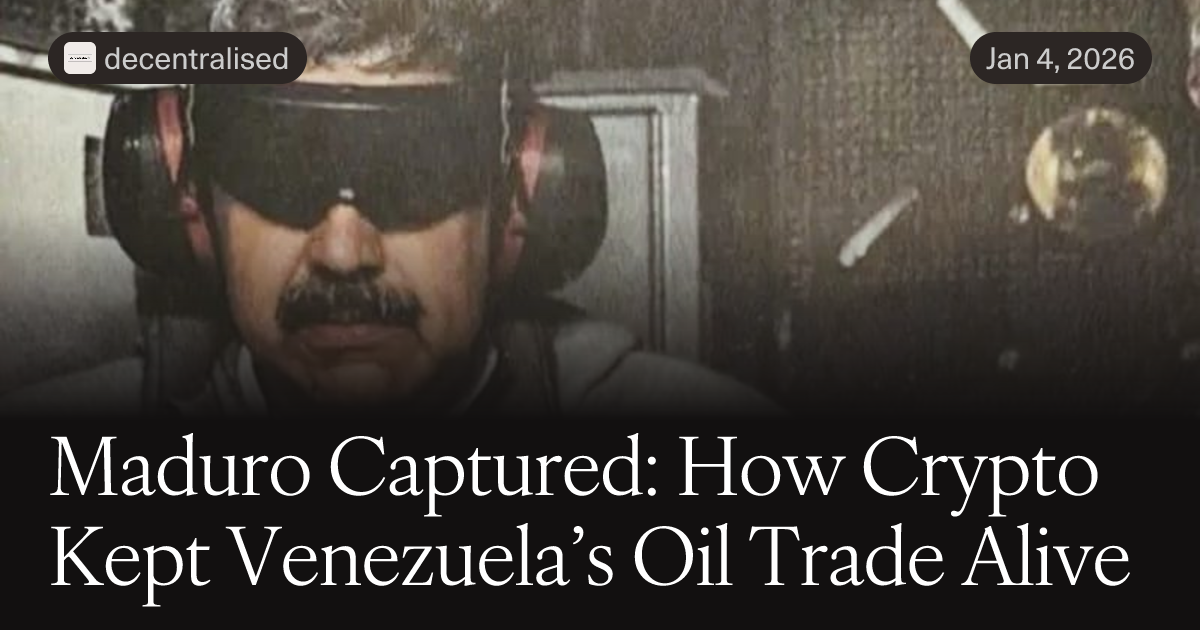
Crypto kept Venezuela’s oil trade alive. Over years of aggressive US sanctions on the country, an economist says 80% of Venezuela’s oil trade has been collected in USDT, as a fast & secure alternative, bypassing American sanctions.
Paragraph
Revision history

23 recorded changes

Want your article here?

Promote with Leviathan News
According to recent reporting and expert analysis, Venezuela’s state oil company Petróleos de Venezuela S.A. (PDVSA) has increasingly relied on the stablecoin USDT (Tether) to conduct oil sales and mitigate the impact of U.S. financial sanctions on its oil sector. Economist Asdrúbal Oliveros estimates that roughly 80% of Venezuela’s oil export revenues are now collected in USDT, allowing the Maduro government and its intermediaries to receive payments outside the traditional banking system that is heavily monitored and restricted by U.S. authorities. This use of crypto is part of a broader strategy adopted since sanctions on PDVSA and the Venezuelan central bank were tightened in 2019, pushing the regime to experiment with various digital asset mechanisms to keep oil exports flowing. The shift accelerated after the U.S. provided limited, conditional sanctions relief to Venezuela’s oil sector in late 2023 via General License 44, then revoked much of that relief in April 2024 (via General License 44A) when Washington judged that the Maduro government had not met political commitments on elections. Facing renewed restrictions and the risk that oil sale proceeds could be frozen in foreign bank accounts, PDVSA began requiring many new oil customers to pay via digital wallets in USDT, sometimes using intermediaries to mask links to sanctioned entities and avoid the compliance risks counterparties face under U.S. Office of Foreign Assets Control (OFAC) rules. Reports from the Wall Street Journal and policy think tanks indicate that this crypto-based oil trade has become a key channel for sanctions evasion, prompting U.S. policymakers to call for a clearer strategy on monitoring and potentially constraining the use of dollar-pegged stablecoins by sanctioned regimes. The growing role of USDT in Venezuela’s oil trade also highlights broader tensions in the global stablecoin system. On one hand, USDT and other digital dollars provide Venezuelan entities with a fast, dollar-linked payment rail at a time when access to the formal dollar banking system is severely restricted; on the other, this same feature raises enforcement challenges for the U.S. and allies who rely on financial sanctions as a policy tool. In response to U.S. pressure and investigative reporting, Tether has cooperated with authorities by freezing USDT wallets linked to Venezuelan oil-trade sanctions evasion, with at least 41 wallets tied to OFAC‑designated parties reportedly blocked. At the domestic level, the spread of digital dollars, including USDT, has also been used by Venezuelan businesses and individuals as a partial hedge against the collapse of the bolívar through hyperinflation, intertwining everyday crypto use with the state’s high-level sanctions-evasion strategies.

AI-generated background, compiled from web sources — not editorial content.

More coverage

Explore the topic

More on $USDT

Comments