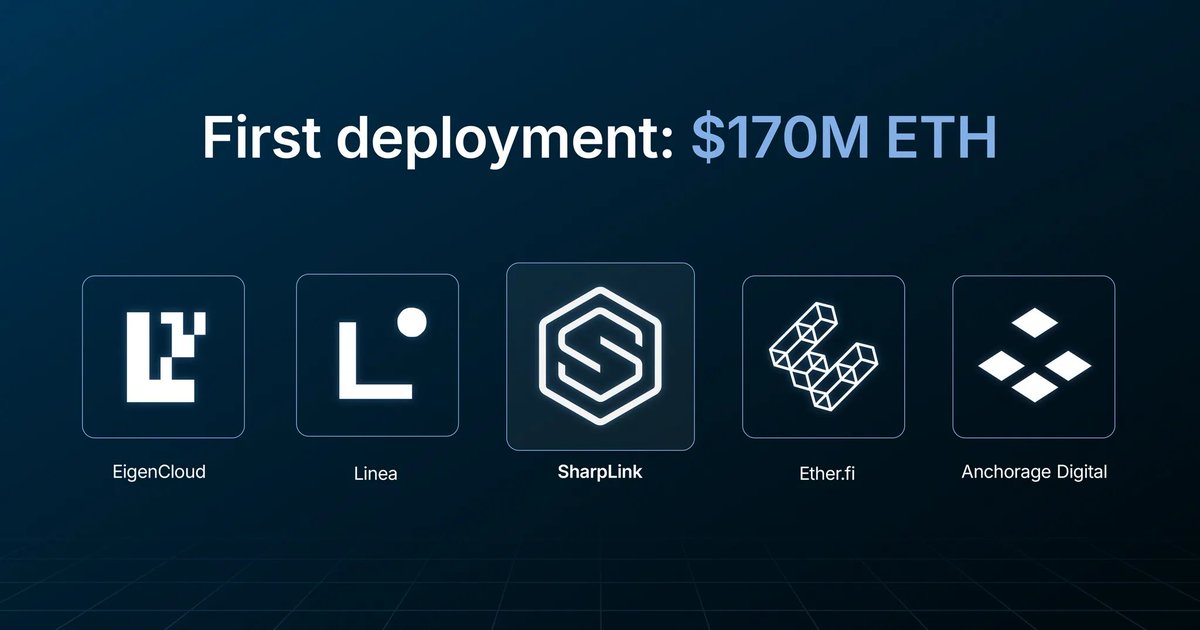
SharpLink, a publicly listed Ethereum treasury and staking firm, has deployed $170 million worth of ETH into a structured yield strategy on Linea, Consensys’ Ethereum Layer 2 network, in what it is presenting as a first-of-its-kind institutional setup combining multiple yield streams. The program layers native Ethereum staking yield with restaking rewards via EigenLayer/Eigencloud and incentive programs from Linea and Ether.fi, all executed through qualified custody with Anchorage Digital to meet institutional compliance and risk standards. According to company communications and coverage, the $170M deployment is part of SharpLink’s broader multi‑year Ethereum treasury strategy, which aims to turn a large ETH balance into a productive, on-chain yield engine rather than a passive asset. The structure routes ETH from Anchorage Digital custody into staking and restaking arrangements on Linea, allowing SharpLink to earn base ETH staking yield plus additional rewards tied to restaking infrastructure and ecosystem incentive programs, while preserving institutional controls over keys and custody. Linea’s role as an Ethereum-aligned Layer 2 offers lower transaction costs and direct integration with DeFi protocols, making it a test case for how listed companies might use L2s to operate complex, multi-protocol yield strategies at scale. The move is being closely watched as a potential blueprint for institutional DeFi adoption, because it attempts to package advanced on-chain practices—staking, restaking, and L2 incentive farming—inside a structure that traditional institutions can use, including a regulated custodian and a public-company governance context. Analysts have framed SharpLink as an "institutional gateway to Ethereum," with this deployment highlighting a broader trend of treasury-focused crypto firms evolving from simple token holders into active yield and infrastructure participants, redirecting traditional finance capital into Ethereum’s restaking and L2 ecosystems.

AI-generated background, compiled from web sources — not editorial content.

More coverage

Explore the topic

More on Yield

Comments