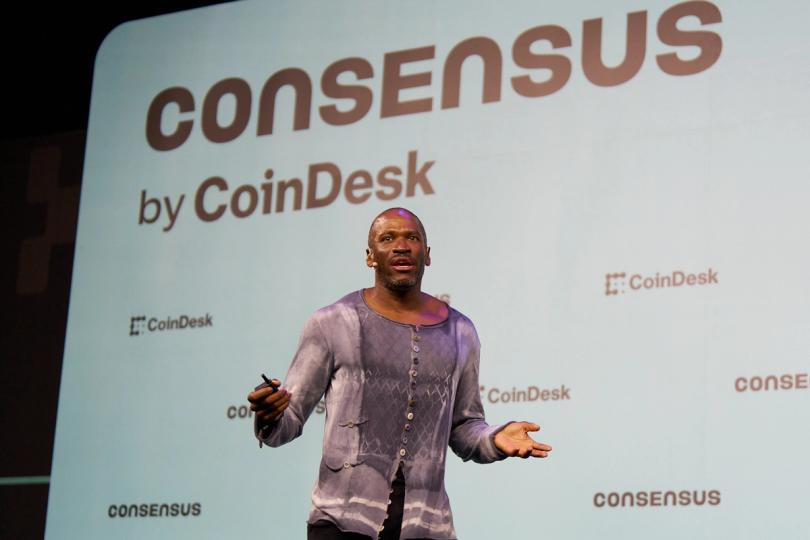
BitMEX co-founder Arthur Hayes’ essay “Frowny Cloud” argues that Bitcoin’s disappointing performance in 2025 was primarily a macro-liquidity story rather than a failure of crypto-specific narratives. Despite briefly setting a new all‑time high above roughly $126,000 during the year, Bitcoin finished 2025 as one of the worst‑performing major assets, lagging both gold and the Nasdaq 100, which continued to grind higher. Hayes attributes this divergence to tightening U.S. dollar liquidity driven by Federal Reserve quantitative tightening and a shrinking Fed balance sheet, which he says removed the “fuel” Bitcoin historically needs to outperform during post‑halving cycles.
In the piece, Hayes frames Bitcoin, gold, and U.S. tech stocks as different expressions of the same underlying force: dollar credit creation. He contends that Bitcoin typically excels when central banks expand their balance sheets and commercial banks extend more credit, because fiat devaluation and excess liquidity push investors into scarce or high‑beta assets. In 2025, however, the Fed focused on balance‑sheet reduction and tighter conditions, which Hayes argues capped Bitcoin’s upside even as other assets found support from more idiosyncratic drivers such as state‑backed AI investment (boosting tech equities) and sovereign accumulation (supporting gold).
Looking ahead, Hayes’ core claim is that 2026 could mark a liquidity inflection that reverses Bitcoin’s relative underperformance. He expects U.S. dollar liquidity to expand via three main channels: renewed Federal Reserve balance‑sheet growth (including Reserve Management Purchases he estimates at a baseline of at least $40 billion per month), increased commercial bank lending into government‑favored sectors like defense and AI, and policy‑driven support for the housing market via large‑scale mortgage‑backed securities purchases that lower mortgage rates and stimulate credit and spending. In his view, if this liquidity wave materializes, it should restore the historical pattern in which Bitcoin and risk assets rally alongside an expanding dollar supply, potentially enabling Bitcoin to regain leadership after an anomalously weak post‑halving year.
{"entities":["Arthur Hayes","BitMEX","Bitcoin (BTC)","gold","Nasdaq 100","Federal Reserve","U.S. dollar liquidity","Reserve Management Purchases (RMP)","Maelstrom","MSTR (MicroStrategy)","Metaplanet","Zcash (ZEC)"]}'}Note: The last markdown code appears malformed. Here is the corrected JSON output:`json
✨ AI-generated background, compiled from web sources — not editorial content.