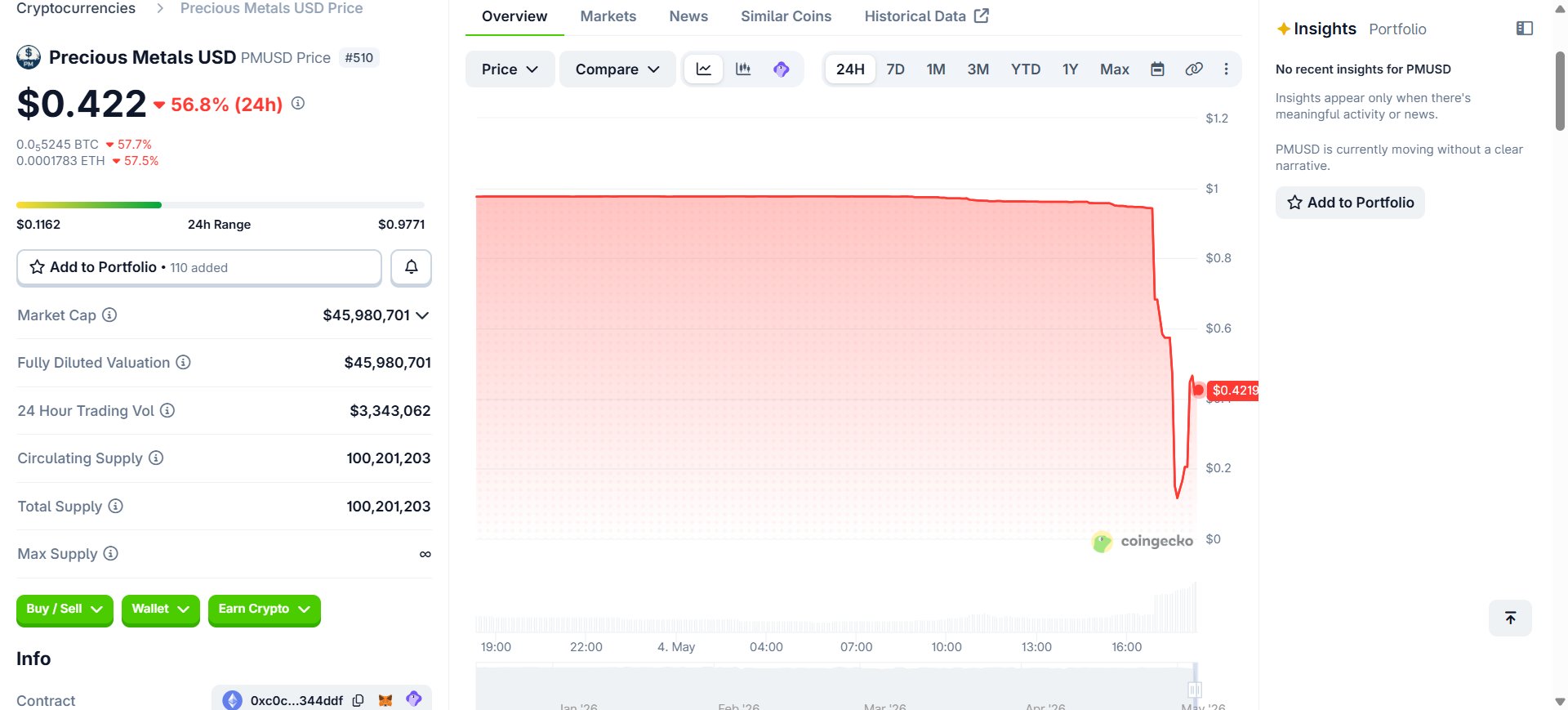
PMUSD, a little-known token marketed as a “stablecoin,” suffered a sudden collapse of roughly 90% after an on-chain research account, Pharos Watch, posted a thread on X alleging that the coin’s backing was fundamentally misrepresented. According to the thread, PMUSD was presented as a stable, asset-backed token, but its collateral was in fact tied to in‑situ gold reserves—gold that is still in the ground and not yet mined or refined—rather than readily accessible cash or short-term liquid assets. Once this detail gained attention, market participants rapidly repriced the token, driving a severe loss of its peg and wiping out most of its quoted value in a short window.
The core issue highlighted by Pharos Watch is that backing a “stablecoin” with in‑situ resources introduces extreme valuation and liquidity risk: the collateral’s existence, quantity, and recoverability are uncertain, and even if real, it cannot be easily liquidated to meet redemptions during stress. This stands in stark contrast to the reserve structures used by major fiat-backed stablecoins, which are typically composed of cash, bank deposits, and short-dated government securities designed to be both verifiable and quickly redeemable. The PMUSD episode underscores ongoing structural vulnerabilities in the “real-world asset” (RWA) and commodity-backed token segment, where some projects blur the line between speculative exposure to future resource extraction and genuine stablecoins, creating potential for rapid loss of confidence and sharp price dislocations when collateral-quality questions surface.
The incident matters as a fresh example of due‑diligence risk around lesser-known stablecoin-like tokens and as a reminder that “backed” does not necessarily mean redeemable or safe. It is also likely to fuel further scrutiny by analysts, risk managers, and regulators over how projects label tokens as stablecoins, what qualifies as acceptable collateral, and how collateral disclosures are made to users. Similar past crises—such as the collapses of TerraUSD (UST) and other unstable designs—have already prompted industry-wide debate about transparency and reserve composition; the PMUSD drawdown reinforces those concerns within the niche of commodity- and RWA-linked digital assets.
✨ AI-generated background, compiled from web sources — not editorial content.