DeFi protocol Goldfinch backed by Coinbase Ventures and a16z, used social trust for uncollateralized loans to businesses in Africa and Asia, promising around 10% yields. Morra lost most of his 2021-2022 deposits amid defaults and restructurings, with $53.8 million in troubled loans and an official 19.95% loss rate that he claims exceeds 70%.
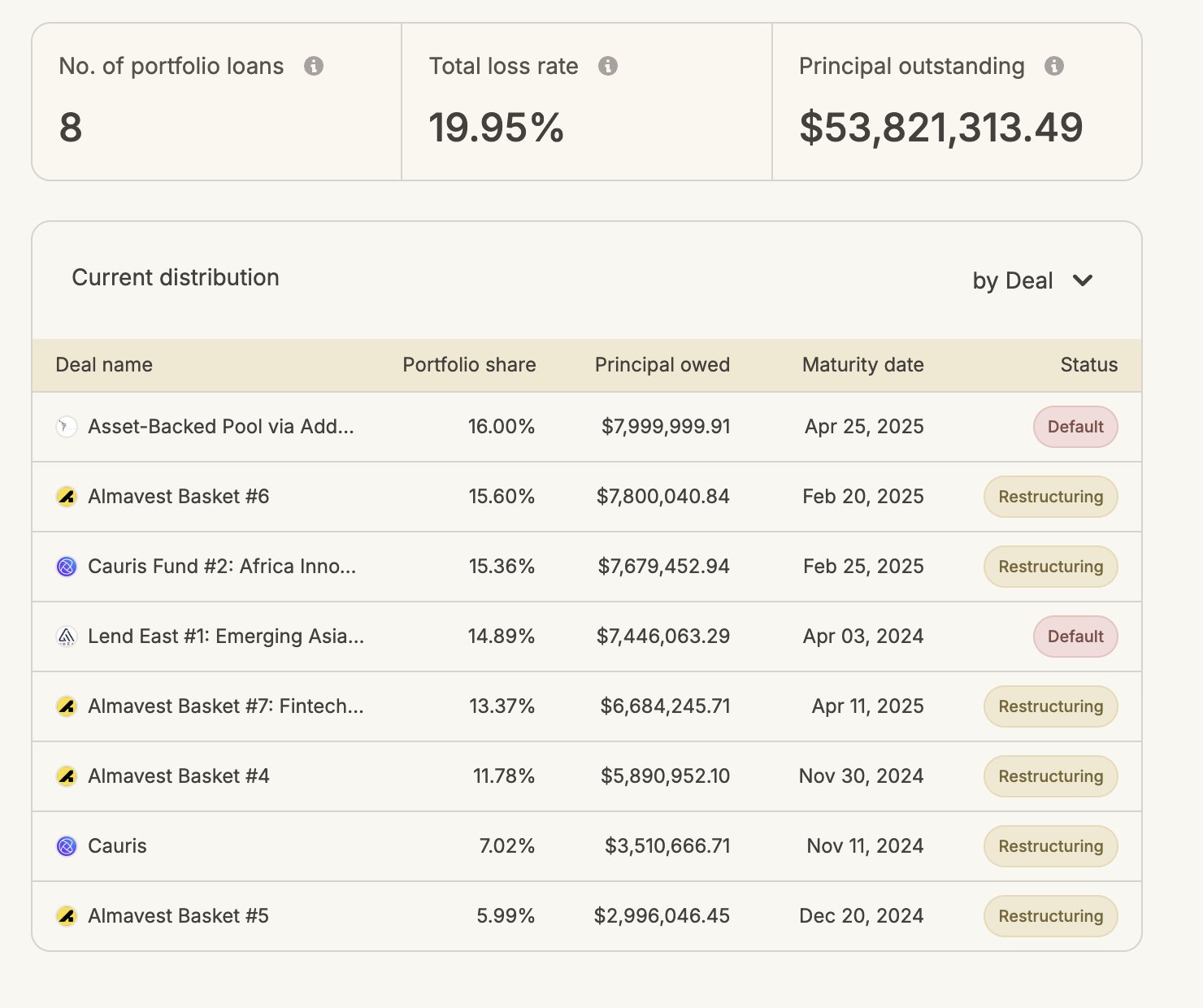
DeFi protocol Goldfinch backed by Coinbase Ventures and a16z, used social trust for uncollateralized loans to businesses in Africa and Asia, promising around 10% yields. Morra lost most of his 2021-2022 deposits amid defaults and restructurings, with $53.8 million in troubled loans and an official 19.95% loss rate that he claims exceeds 70%.
𝕏/@edwardmorra_btc
Revision history

7 recorded changes

Want your article here?

Promote with Leviathan News

Goldfinch is a decentralized credit protocol launched in 2021 that set out to bring “real-world” private credit on-chain by offering undercollateralized loans to lending businesses, especially in emerging markets such as Africa and Asia. Instead of requiring crypto collateral, it used a “trust-through-consensus” model where community backers and auditors assessed borrower creditworthiness, and depositors could earn advertised double‑digit yields from off‑chain lending activity. The project raised about $36–37 million from major venture backers including a16z crypto and Coinbase Ventures, and promoted Goldfinch as a way for DeFi users to access uncorrelated yields from real‑world lending. In 2024, on‑chain performance and user reports highlighted that several loan pools had gone into default or restructuring, leading to significant losses for some depositors. According to community discussions and protocol disclosures cited by critics like trader Edward Morra, the protocol has tens of millions of dollars in “troubled” or non‑performing loans and a double‑digit realized loss rate on the senior pool, well above what many DeFi users expected from what was marketed as conservative real‑world credit exposure. The situation illustrates the core risk of undercollateralized, off‑chain lending in DeFi: while yields can appear attractive, investors are ultimately exposed to traditional credit, underwriting, and recovery risks, which may not be fully transparent or well understood by retail depositors.

AI-generated background, compiled from web sources — not editorial content.

More coverage

Explore the topic

More on Coinbase

Comments