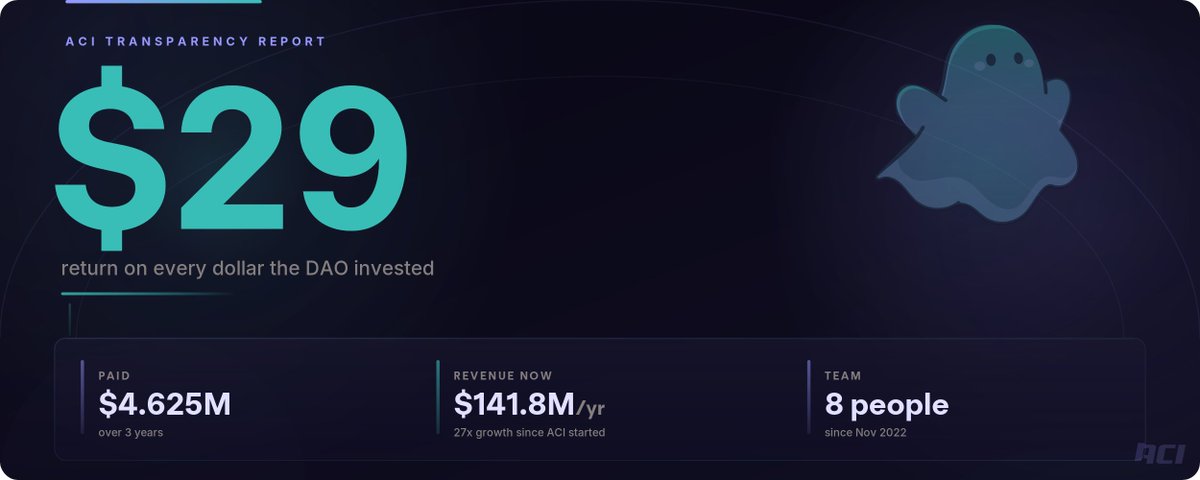
Marc Zeller’s new piece, titled “What $4.6M Bought the Aave DAO,” summarizes the performance and impact of the Aave Chan Initiative (ACI), an eight‑person service provider that has been working for the Aave DAO since late 2022. According to ACI’s own Full Transparency Report on the Aave governance forum, the DAO has paid ACI about $4.625 million since March 2023 (after four unpaid months of work starting November 2022), during which Aave’s annualized protocol revenue increased from roughly $5.2 million to $141.8 million, and GHO stablecoin supply grew from $35 million to $527 million. ACI frames this as roughly $29 in additional protocol revenue for every $1 the DAO has paid them, noting that at Aave’s current 30‑day revenue run rate, the protocol now generates the equivalent of ACI’s entire three‑year compensation in about a week.
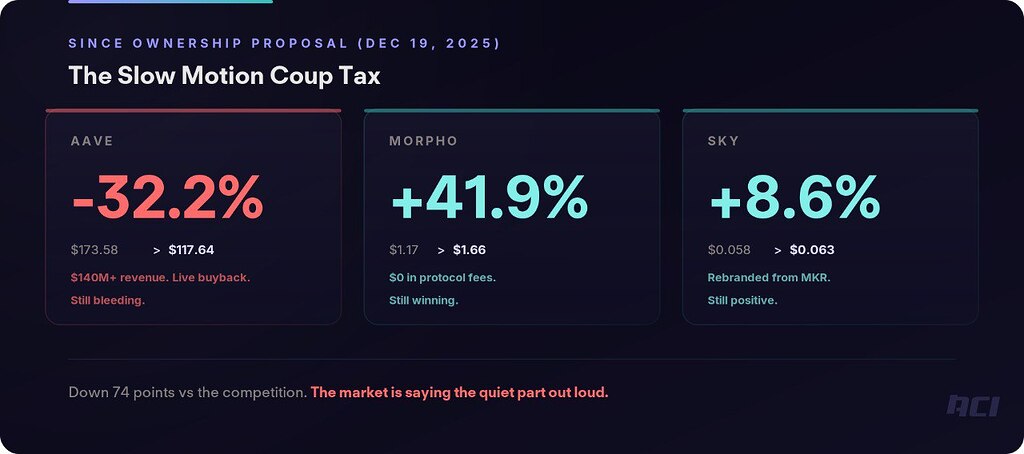
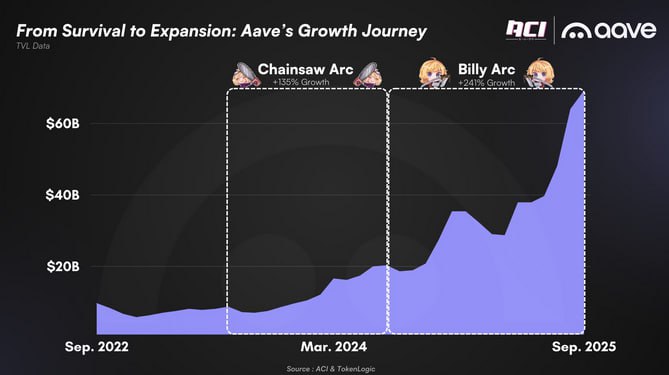
The report positions ACI not as the sole driver of this growth but as one contributor within a broader ecosystem that includes technical provider BGD Labs, risk manager Chaos Labs, and treasury/business‑development contributor TokenLogic, alongside favorable market conditions. ACI emphasizes outcomes such as increasing Aave’s active loan market share from below 50% to above 65%, materially scaling GHO, and contributing to treasury and governance initiatives, including the “Aave Will Win” framework that seeks a larger, multi‑year mandate and budget from the DAO. This framing matters because Aave governance is currently debating the role, cost, and accountability of major service providers; some community members have flagged that ACI’s new ask (around $42.5 million in stablecoins plus 75,000 AAVE) would represent a large share of the DAO treasury, and external analysis has highlighted that roughly $4.6 million in past spending helped underpin a significant expansion in Aave’s revenues and market position. The “$4.6M bought” narrative thus sits at the center of ongoing discussions over how DAOs evaluate ROI, concentrate power among key contributors, and structure long‑term funding.
✨ AI-generated background, compiled from web sources — not editorial content.