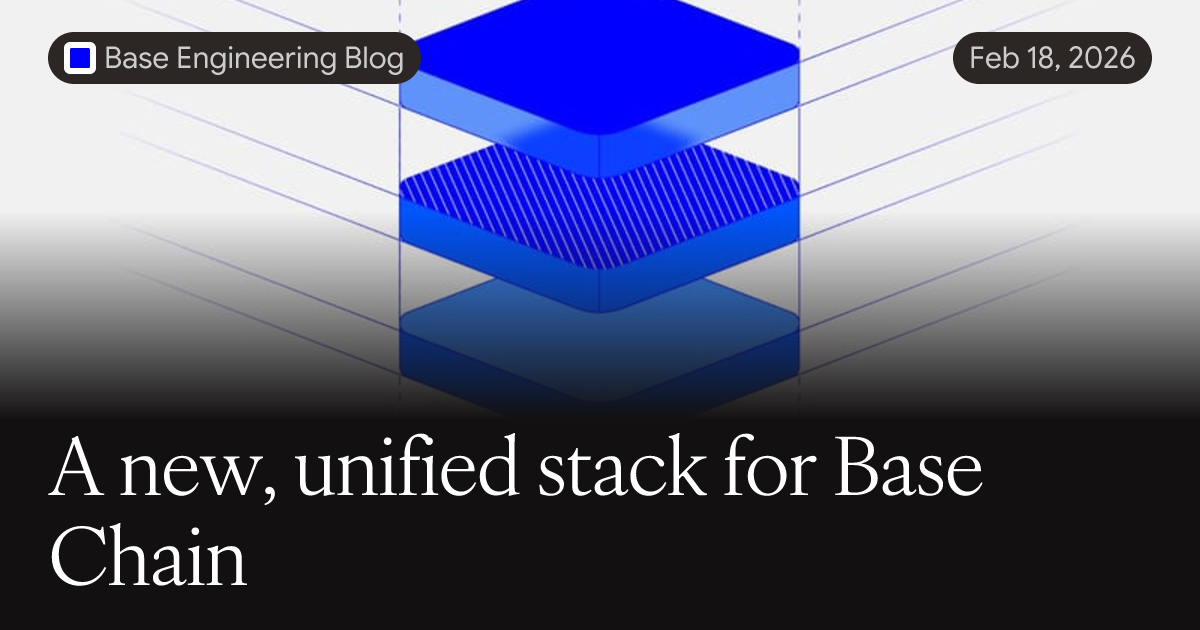
Base, the Ethereum layer-2 network incubated by Coinbase, is overhauling its core infrastructure by moving away from the shared OP Stack codebase toward a single, unified, open-source base/base stack that it will operate and maintain itself. According to Base’s engineering blog, all node software for the chain will now be packaged and released as a single Base binary, and node operators will follow Base’s own releases rather than Optimism’s, with the goal of shipping upgrades faster, simplifying operations, and improving security and decentralization over time.
Previously, Base relied on a “patchwork of dependencies” across multiple repositories in the Optimism ecosystem, which made upgrades more complex and increased coordination overhead. The new base/base stack consolidates these components into one repo and distribution, so all protocol changes, security patches, and future innovations (such as scaling or fee improvements) are developed and tested in a single place before being shipped to the network. Base frames this as a way to accelerate its roadmap around scaling, reliability, and safety for high-volume use cases, while still remaining aligned with Ethereum as an L2 and interoperable with the broader OP Stack ecosystem via shared standards and bridges.
This change comes as Base is positioning itself not just as a single chain but as part of a broader open stack for the onchain economy, alongside the newly rebranded Base app (formerly Coinbase Wallet) and related identity and payments components. The unified stack is intended to support that growth by giving Base more direct control over its infrastructure path, while continuing to operate transparently in open source so external teams can inspect, integrate, and potentially reuse the stack.
✨ AI-generated background, compiled from web sources — not editorial content.