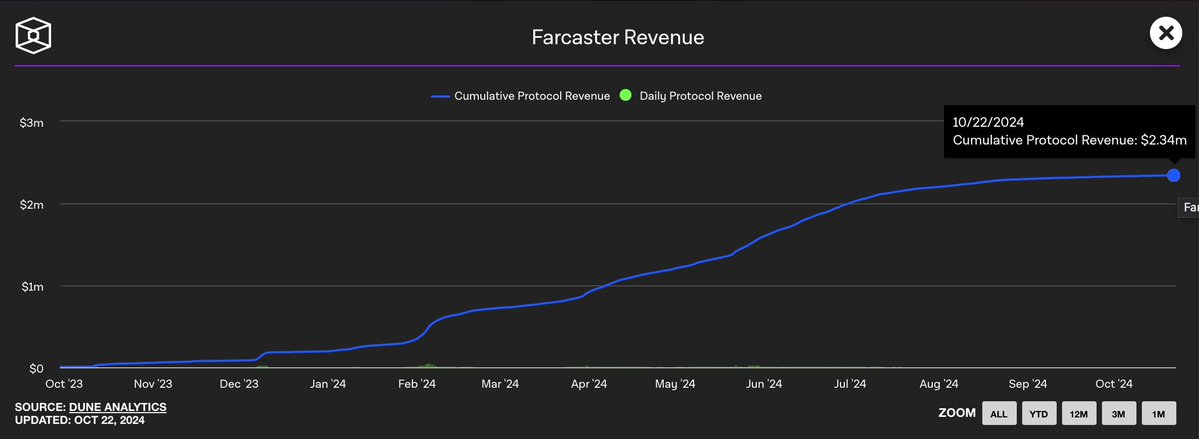
Farcaster, the decentralized social protocol built by Merkle Manufactory, has come under scrutiny for its weak revenue performance relative to the large amount of venture capital it raised. Commentators analyzing on-chain and Dune Analytics data note that after a strong initial ramp to around $2 million in cumulative protocol revenue by July 2025, Farcaster’s revenue growth slowed markedly, reaching only about $2.34 million in total revenue by September 2025. This implies that over roughly four months, the protocol added just ~$340,000 in new revenue, despite having raised around $180 million in funding at roughly a $1 billion valuation from investors including Paradigm and a16z crypto. This stagnation in revenue has become a focal point in broader critiques of Farcaster’s business model and of consumer-facing Web3 social platforms more generally. Analysts argue that generating only about 1.6% revenue-to-funding over several years is difficult to reconcile with venture-scale expectations, especially given Farcaster’s reported burn rate and subsequent 85% year‑over‑year revenue decline into late 2025. The weak monetization trajectory contributed to Merkle’s eventual decision to return its entire $180 million to investors and sell Farcaster to infrastructure startup Neynar, reinforcing a narrative that stand‑alone decentralized social protocols struggle to achieve sustainable revenue compared with infrastructure and developer‑focused businesses that can monetize APIs and tooling.

AI-generated background, compiled from web sources — not editorial content.

More coverage

Explore the topic

More on Revenue

Comments