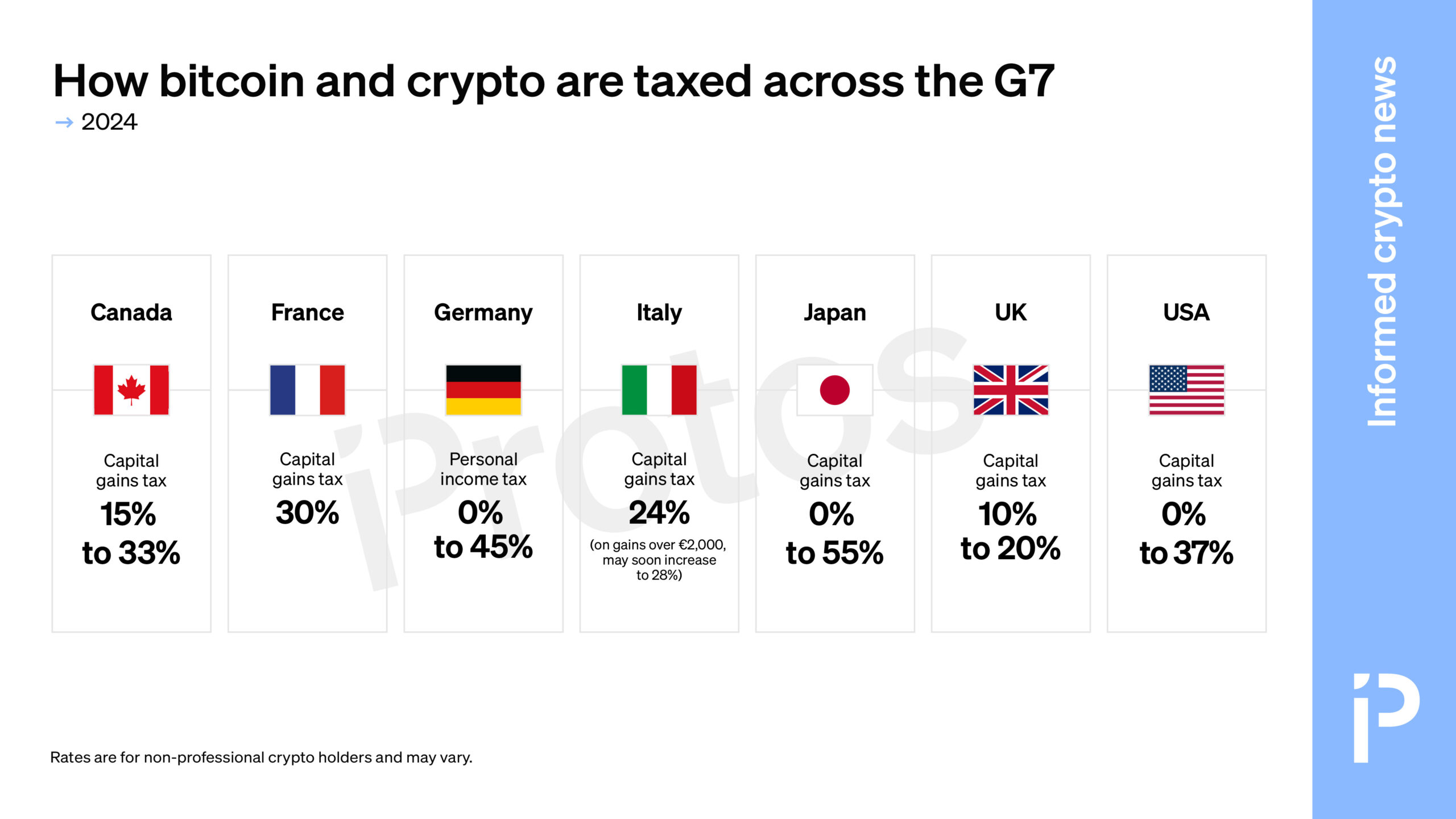
CHART: How bitcoin and crypto are taxed across the G7
Protos •
Revision history
4 recorded changes
Want your article here?
Promote with Leviathan News4 recorded changes
Want your article here?
Promote with Leviathan NewsProtos’ chart article compares how bitcoin and other crypto assets are taxed for casual, individual investors across the G7, highlighting wide differences in rates, thresholds, and how gains are categorized. It notes that in the United States, crypto is treated as property, with short‑term capital gains (assets held under one year) taxed at ordinary income rates of roughly 10%–37%, and long‑term gains at around 0%–20%, with capital losses usable to offset gains and the usual April 15 filing deadline. The piece links this framework to a potentially more “crypto‑friendly” stance under President‑elect Donald Trump, suggesting future U.S. policy shifts could influence both domestic and international approaches to crypto taxation. The article then contrasts the U.S. with other G7 members: Canada taxes only 50% of a casual investor’s crypto capital gains, applying combined federal and provincial rates that typically leave effective tax between about 15% and 33%, with 50% of capital losses also offsetting gains. In the United Kingdom, capital gains tax on crypto is generally 10%–20%, while related income from mining, staking, or lending can fall under income tax bands of roughly 20%–45%. France applies a flat 30% on crypto gains for casual investors, with small gains below €305 exempt. Italy uses a flat 24% rate on crypto gains exceeding €2,000, amid ongoing debate over proposals that have floated much higher rates (around 42%) and counter‑proposals near 28%. Germany taxes crypto gains at personal income rates between 0% and 45%, within a system that, as other reporting notes, has historically included tax‑free treatment for certain long‑term holdings but is subject to political pressure for reform. Japan taxes gains above 200,000 yen (about $1,300) as miscellaneous income at progressive rates that can range approximately from 15% up to 55%, making it one of the higher‑tax G7 jurisdictions for individual crypto gains. By placing these rules side by side, the story underscores both the fragmented global landscape of crypto taxation and the policy choices G7 governments face as crypto markets mature. It emphasizes that these figures apply to casual investors only, are not exhaustive of all tax treatments (for example, business activity or complex DeFi use), and remain subject to change, especially in countries where political negotiations are underway around capital income and digital assets. The piece situates crypto tax policy as a moving target within broader debates on investor protection, tax fairness, and the competitiveness of national crypto markets.
AI-generated background, compiled from web sources — not editorial content.

Coindesk ·

The Block ·

𝕏/@swissbitcoinpay ·
𝕏/@_ALCPB ·

Coindesk ·

The Block ·
Coindesk ·
The Block ·
𝕏/@swissbitcoinpay ·
𝕏/@_ALCPB ·
Coindesk ·
The Block ·
🚀 Love DeFi? Ready to dive in and start earning $SQUID while making an impact?