On March 13, 2025, the U.S. Senate Committee on Banking, Housing, and Urban Affairs scheduled and held a vote on an updated, bipartisan version of the Guiding and Establishing National Innovation for U.S. Stablecoins (GENIUS) Act, a landmark bill to create a federal framework for “payment stablecoins.” According to legal and policy analyses of the bill, the measure is spearheaded by Republican Senators Bill Hagerty, Cynthia Lummis, and Tim Scott, together with Democratic Senators Kirsten Gillibrand and Angela Alsobrooks, and was reported out of the Banking Committee by a bipartisan 18–6 vote. This committee action followed negotiations between both parties to refine consumer protections and address supervisory, ethics, and technology-related concerns raised during earlier discussions.
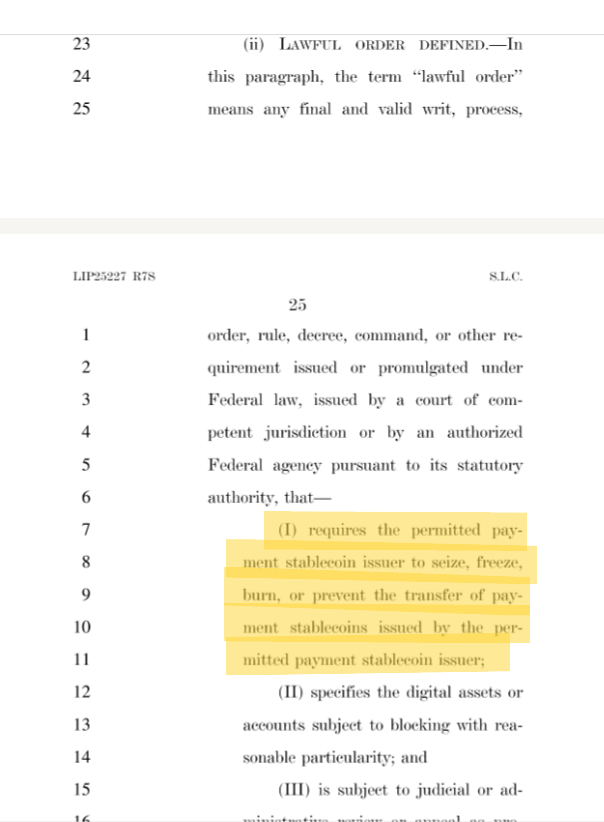
Substantively, the GENIUS Act would, for the first time, establish a comprehensive U.S. regulatory regime for payment stablecoins and their issuers, limiting issuance to federally supervised entities and state‑regulated issuers that meet strict criteria, and requiring one‑to‑one reserves in high‑quality, short‑duration assets. It also sets standards for audits, disclosures, and redemption rights, and imposes obligations on digital asset service providers that offer or sell payment stablecoins in the United States. The March 13 committee vote mattered because it cleared a key procedural hurdle for one of the most consequential pieces of U.S. crypto legislation to date, positioning the GENIUS Act to advance to the full Senate and, ultimately, to be reconciled with related House efforts on stablecoin oversight.
✨ AI-generated background, compiled from web sources — not editorial content.