Solving impermanent loss is the next chapter of Ethereum Defi adoption
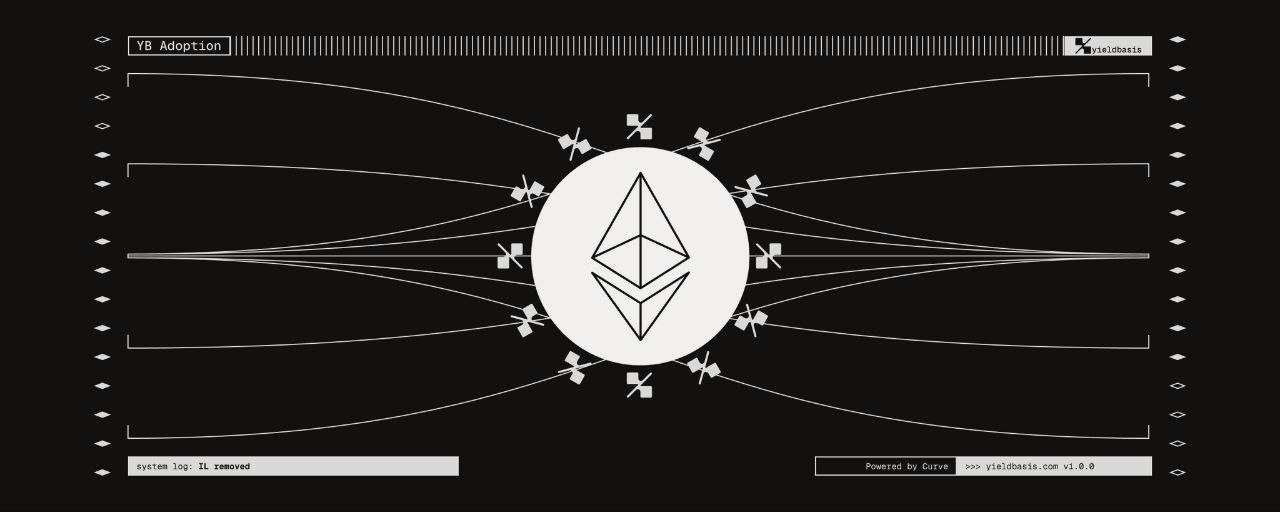
𝕏/@yieldbasis •
Revision history
10 recorded changes
Want your article here?
Promote with Leviathan News10 recorded changes
Want your article here?
Promote with Leviathan NewsA post by Ethereum DeFi researcher and builder @yieldbasis argues that finding robust ways to neutralize or offset impermanent loss (IL) in automated market makers (AMMs) is likely to be a key catalyst for the next stage of Ethereum DeFi adoption. Impermanent loss is the well‑documented phenomenon where liquidity providers (LPs) in AMM pools such as Uniswap end up with a position that is worth less than simply holding their original tokens when relative prices move, because the AMM’s constant‑product or similar formula rebalances their holdings toward the underperforming asset. According to the post, “solving” IL would unlock a new, scalable, non‑subsidized yield source for holders of ETH and liquid staking tokens (LSTs), and would make it viable for far more users to act as LPs without relying on unsustainable token incentives. Impermanent loss is considered one of the central structural risks limiting wider participation in DeFi liquidity provision, because it converts price volatility into an opportunity cost borne by LPs rather than traders. Research and documentation from DeFi educators and infrastructure providers emphasize that, unless trading fees and incentives exceed expected IL, LPs are often worse off than passive holders, especially in volatile pairs. Existing mitigation techniques—such as providing liquidity to stablecoin or correlated-asset pools, using concentrated liquidity with active management, or hedging via options and derivatives—reduce IL but do not fully eliminate it and typically require sophistication or active strategies that many users will not adopt at scale. This backdrop gives context to the claim that a protocol‑level or design‑level solution to IL—one that can offer sustainable yield to ETH/LST holders without heavy subsidies—would be a major step forward for Ethereum DeFi’s maturity and mainstream usability.
AI-generated background, compiled from web sources — not editorial content.
Loading related coverage…
Loading comments…
🚀 Love DeFi? Ready to dive in and start earning $SQUID while making an impact?
Danicjade
Can that really be done?since price of tokens range.
Spencer420
theyre doing it by like pairing the LP tokens against leverage. working well so far for btc, although during the recent big liquidation event wbtc took a hit, but the other LPs-tBTC and cbBTC actually profited
Danicjade
Mad, this will be crazy if it works out
Restoring your session before loading comments…
Danicjade
Can that really be done?since price of tokens range.
Spencer420
theyre doing it by like pairing the LP tokens against leverage. working well so far for btc, although during the recent big liquidation event wbtc took a hit, but the other LPs-tBTC and cbBTC actually profited
Danicjade
Mad, this will be crazy if it works out
The Block ·
𝕏/@ETH_Daily ·
𝕏/@eigencloud ·

𝕏/@ZenithFdn ·
𝕏/@OpenMoneyIndex ·
vitalik.eth.limo ·
The Block ·
𝕏/@ETH_Daily ·
𝕏/@eigencloud ·
𝕏/@ZenithFdn ·
𝕏/@OpenMoneyIndex ·
vitalik.eth.limo ·