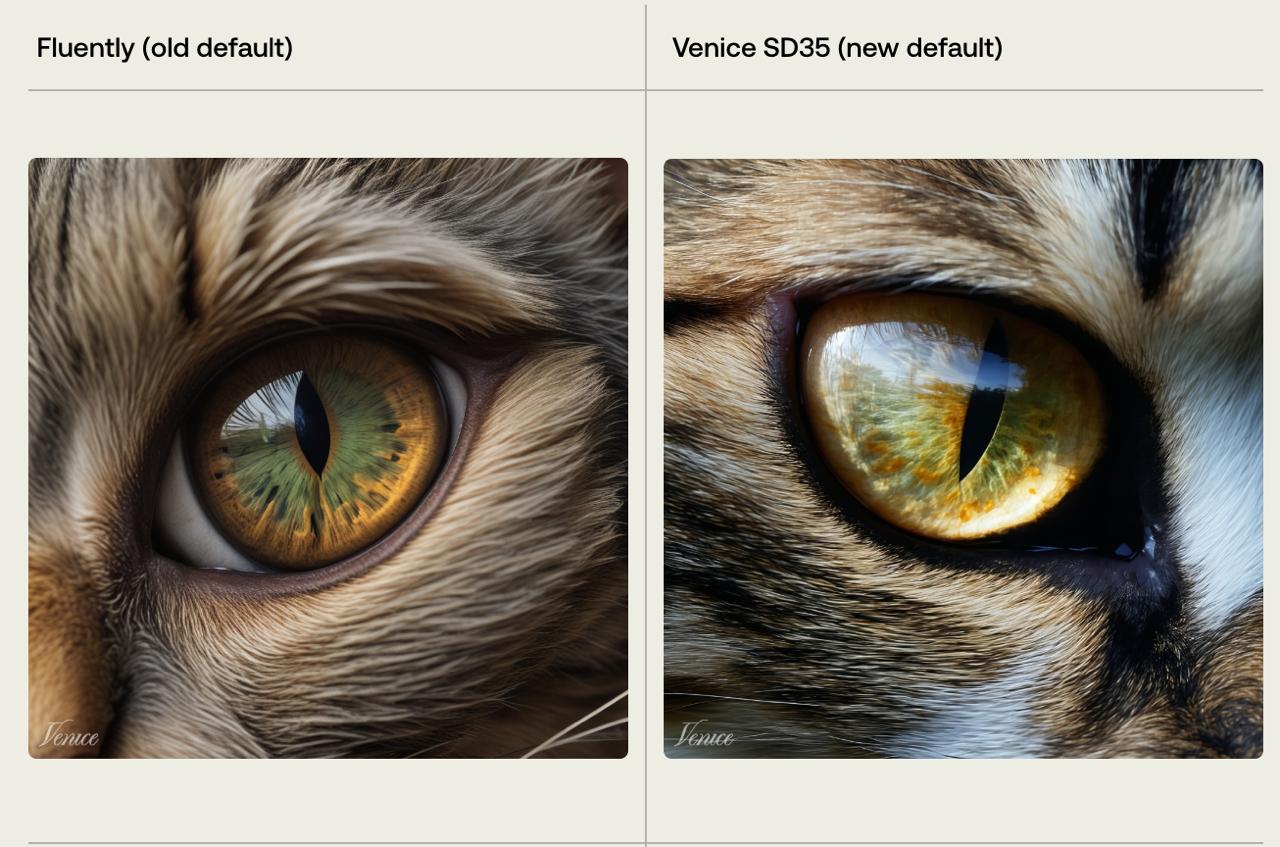
Venice introduces his new image engine, with superior photorealism, better prompt understanding, reduced artifacts and enhanced artistic range
𝕏/@AskVenice •
Revision history
9 recorded changes
Want your article here?
Promote with Leviathan News9 recorded changes
Want your article here?
Promote with Leviathan NewsVenice, an AI assistant and creative platform focused on text and visual generation, has introduced a new image engine that it promotes as a major upgrade in photorealism, prompt understanding, artifact reduction, and artistic flexibility. According to Venice’s recent feature rollouts and supporting materials, the platform has been steadily expanding its visual toolset with capabilities like inpainting-style image editing, automatic model selection (“Auto Mode”), image upscaling for Pro users, and a Studio environment for coordinated image and video generation. The new engine announcement fits into this broader push to make Venice a more capable end‑to‑end visual creation environment that can handle everything from simple prompts to complex, multi-asset projects. In practical terms, a “new image engine” with better photorealism and prompt understanding suggests Venice is either upgrading underlying diffusion/vision models or refining how it routes prompts and parameters to those models. Previous updates such as Auto Mode already use prompt-aware model selection in the background, while Venice Studio relies on reference images, identity locks, and camera-language cues to produce more coherent scenes and animations, indicating a strong emphasis on controllable, production-style outputs. For creators and designers, the new engine matters because it aims to cut down on visual artifacts and misinterpretations of prompts—two of the most common pain points in image generation—while also broadening the range from realistic photography-style renders to more stylized or artistic work. As of the announcement, Venice has not published technical benchmarks or model details, so the claims are communicated primarily via product messaging and demo-oriented content rather than formal evaluations.
AI-generated background, compiled from web sources — not editorial content.

𝕏/@axisrobotics ·
Coindesk ·

𝕏/@tiger_research_ ·
𝕏/@JensenHuang ·

𝕏/@claudeai ·

The Block ·
𝕏/@axisrobotics ·
Coindesk ·
𝕏/@tiger_research_ ·
𝕏/@JensenHuang ·
𝕏/@claudeai ·
The Block ·
🚀 Love DeFi? Ready to dive in and start earning $SQUID while making an impact?