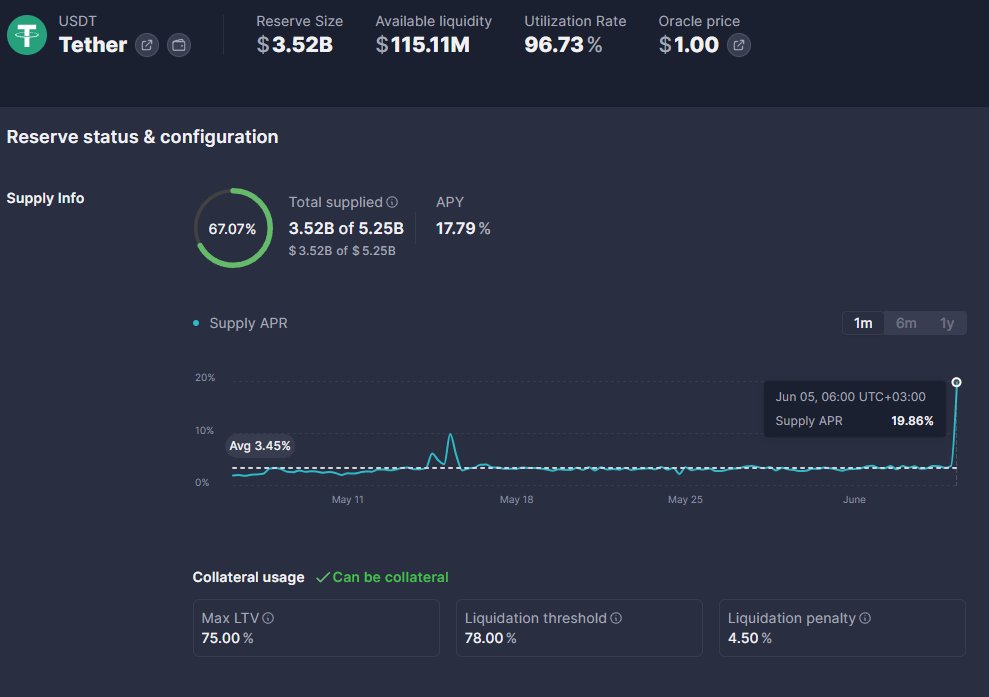
Aave’s main USDT lending pool on Ethereum experienced a sharp but short‑lived liquidity shock after a wallet associated with Justin Sun–linked exchange HTX withdrew roughly $570 million USDT in a series of transactions completed within about three hours. On‑chain analysts such as EmberCN reported that available borrowable USDT in the pool collapsed to around $91.95 million, sending deposit (supply) rates up from roughly 3.8% to about 29% and borrowing rates from around 4.4% to over 30%, as utilization spiked close to 100%. Blockchain analytics firm Sentora (formerly IntoTheBlock) put the net withdrawal a bit lower at about $400 million, but similarly noted that the wallet’s move represented more than 90% of the pool’s available USDT and effectively trapped other large depositors who could not easily exit without severe slippage or punitive rates. The wallet involved is tied to HTX’s so‑called “recovery” address, which previously received funds returned by an early hacker and is widely labeled as an HTX hot wallet, reinforcing the link to Sun‑advised entities. The episode fits into a broader pattern of HTX cycling very large USDT positions into and out of Aave, behavior that has repeatedly driven spikes and crashes in the protocol’s USDT lending rates. Aave community figure Marc Zeller described the event as a “small liquidity crush,” attributing it to Justin Sun “aping around” and expressing confidence that fresh liquidity would quickly restore normal conditions as yield‑seekers respond to the elevated rates. Several hours after the withdrawals, the same HTX‑linked address deposited about $600 million USDT back into Aave, and interest rates reverted toward prior levels, but the incident underscored how a single large actor can temporarily distort liquidity and user experience on even the largest DeFi lending markets.

AI-generated background, compiled from web sources — not editorial content.

More coverage

Explore the topic

More on Aave

Comments