Stock market reaction to geopolitical events
𝕏/@TheShortBear •
Revision history
11 recorded changes
Want your article here?
Promote with Leviathan News11 recorded changes
Want your article here?
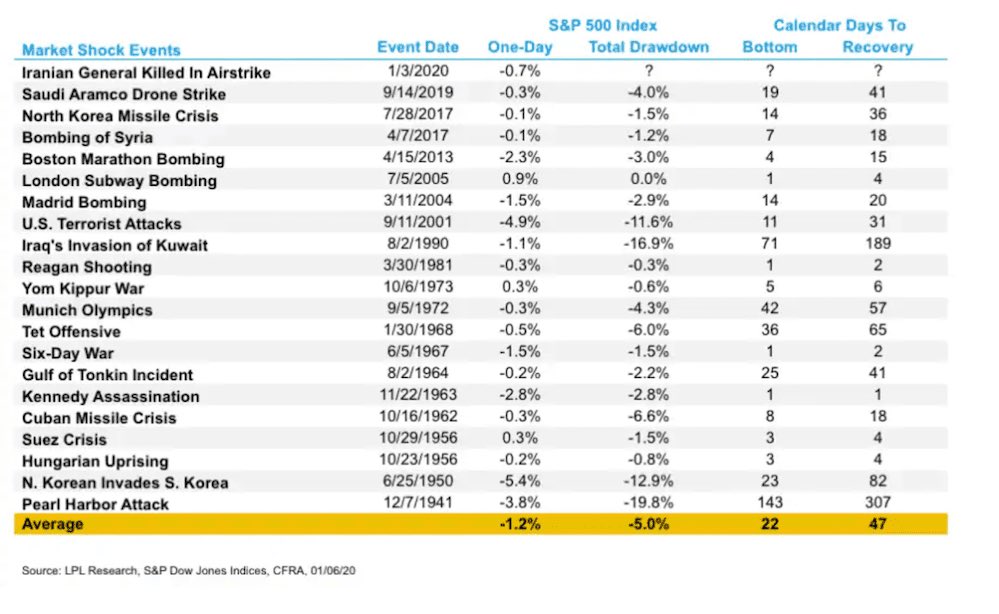
Promote with Leviathan NewsThe post is pointing to a familiar market pattern: geopolitical shocks often trigger an immediate selloff or spike in volatility, but the effect on broad stock indices is usually short-lived. Large financial firms and research pieces cited in the search results say that wars, attacks, and other geopolitical events typically cause sharp initial reactions, especially when they affect energy or other key commodities, but broad equity markets often recover once the uncertainty is absorbed. The main context is that investors tend to price in uncertainty, not just the event itself. Bankrate, Schroders, JPMorgan, and Fidelity all note that markets can fall when the outlook becomes unclear, yet historical data suggests large-cap and globally diversified equities have generally not suffered lasting damage from geopolitical shocks; over longer horizons, corporate earnings and interest rates matter more than the headline event. JPMorgan adds that while markets may underperform in the first three months after an event, six- and 12-month returns have historically converged with normal periods. Why it matters is that geopolitical headlines can produce fast, localized moves even when the broader market impact fades. The search results highlight that oil, defense, gold, and regional assets can react more strongly than diversified stock indices, so the story is less about a permanent market break and more about a short-term repricing of risk.
AI-generated background, compiled from web sources — not editorial content.
Reuters ·
CNBC ·
𝕏/@Stocktwits ·

The Block ·
Reuters ·
CNBC ·
𝕏/@Stocktwits ·
The Block ·
🚀 Love DeFi? Ready to dive in and start earning $SQUID while making an impact?