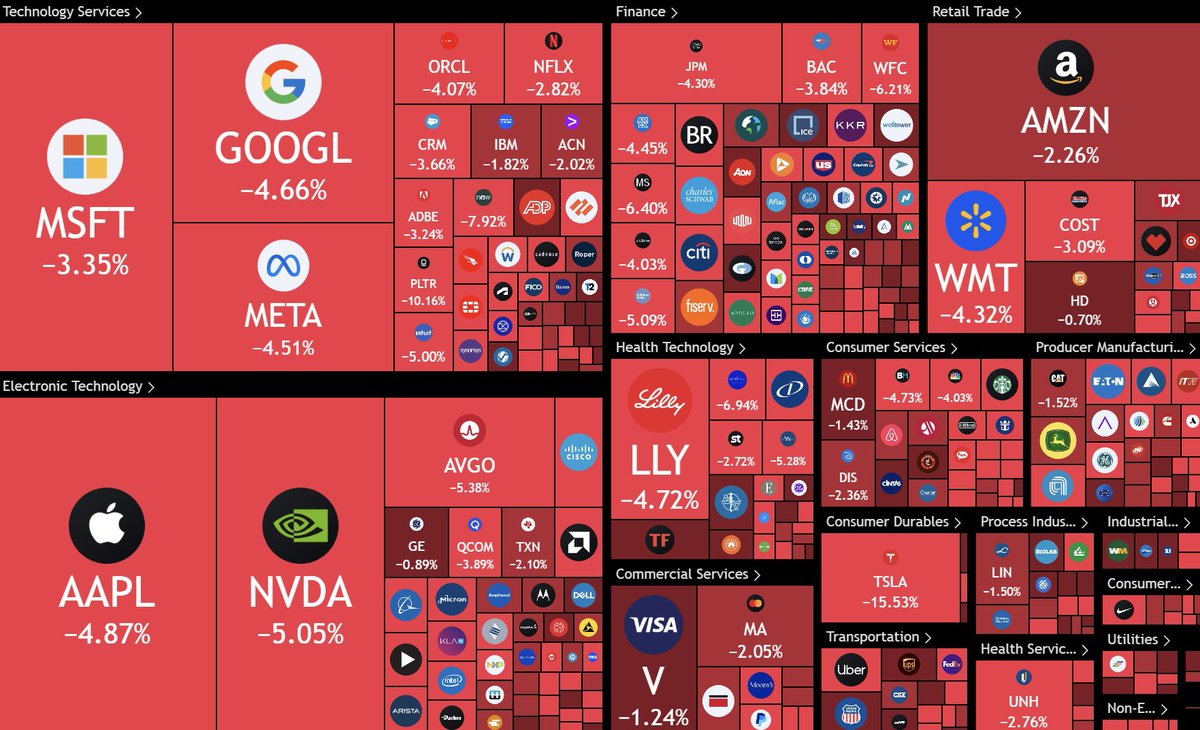
U.S. equities experienced a sharp, broad-based sell-off in a single session, wiping out roughly $1.75 trillion in market value and pushing the S&P 500’s cumulative loss since February 18 above $3.6 trillion, with heavy pressure on the major index ETFs SPY and QQQ. The move reflects a rapid repricing of risk across large-cap U.S. stocks, particularly in growth and tech names that dominate these benchmarks.
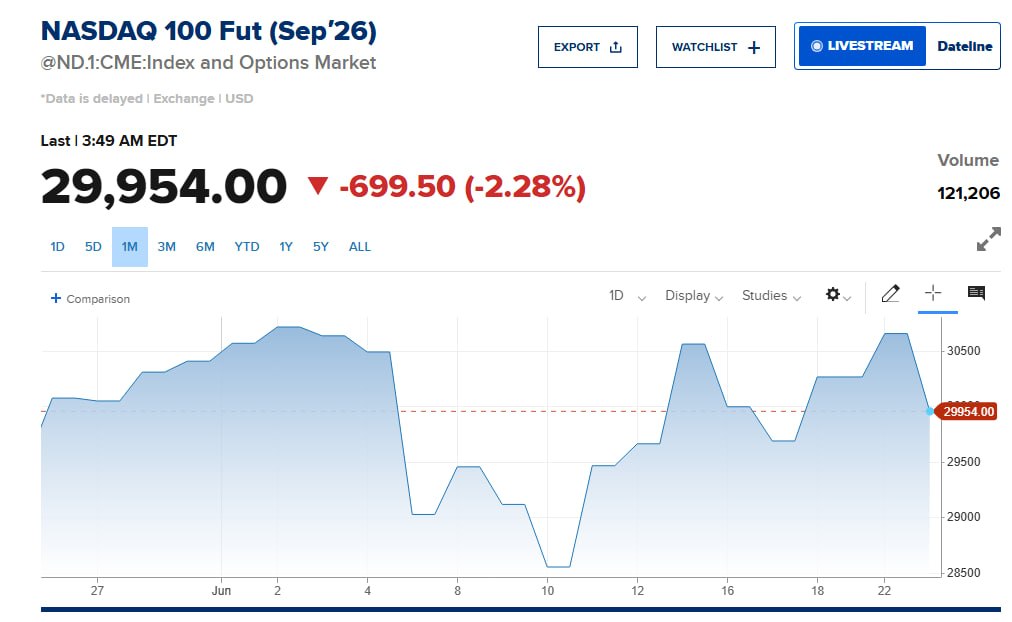
According to market commentary, the one-day drawdown saw the S&P 500 fall around 2.5–2.7%, while the Nasdaq 100 dropped roughly 3.8–4.8%, marking one of its worst single-day performances since 2022. This translated into steep losses for the SPDR S&P 500 ETF Trust (SPY), which tracks the S&P 500, and the Invesco QQQ Trust (QQQ), which tracks the Nasdaq-100, as both vehicles are heavily used by institutions and retail traders for broad U.S. equity exposure and leveraged strategies. The cumulative figure of more than $3.6 trillion erased from the S&P 500 since February 18 underscores that this was not an isolated event but part of an extended correction phase in U.S. equities driven by macro uncertainty.
Context from recent coverage ties similar trillion‑dollar single-session drawdowns to shifts in expectations around Federal Reserve policy, particularly when stronger-than-expected economic data reduces the odds of rate cuts and even raises the prospect of future hikes, pressuring equity valuations—especially long-duration growth stocks. In addition, previous episodes of $1.7–$2.5 trillion one-day losses have coincided with heightened geopolitical risk and risk-off sentiment across global markets, demonstrating how quickly aggregate U.S. equity capitalization can swing when macro, policy, and earnings narratives turn more pessimistic. For holders and traders of SPY and QQQ, such sessions translate almost directly into portfolio drawdowns and often prompt volatility spikes, forced de-leveraging, and heavier derivatives hedging.
✨ AI-generated background, compiled from web sources — not editorial content.