"I believe tokenization is the greatest capital markets innovation since the central limit order book" - Vlad Tenev, Robinhood CEO
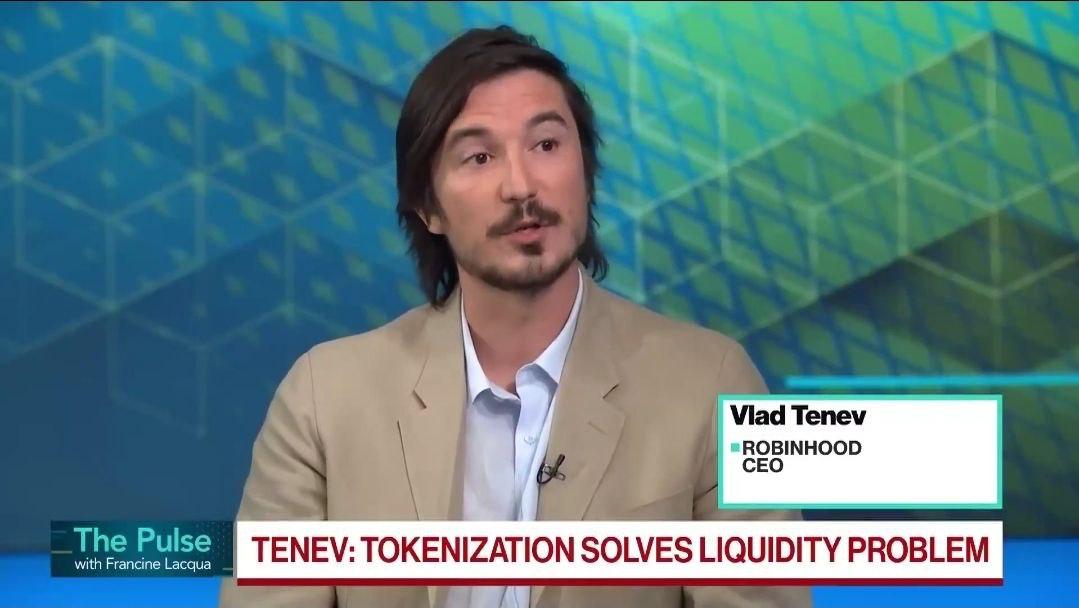
𝕏/@vladtenev •
Revision history
18 recorded changes
Want your article here?
Promote with Leviathan News18 recorded changes
Want your article here?
Promote with Leviathan NewsRobinhood CEO Vlad Tenev has publicly argued that tokenization of real‑world assets is the most important development in capital markets since the advent of the electronic central limit order book, calling it a coming “tokenization supercycle” and “freight train” that will “eat the entire financial system.” In recent interviews and public appearances, he has positioned tokenization—issuing blockchain-based tokens that represent exposure to traditional assets such as stocks, private company equity, bonds, or funds—as a structural upgrade to how securities are issued, traded, and settled, rather than a speculative crypto side bet. Tenev emphasizes that tokenization can enable 24/5 or near 24/7 trading, faster and more automated settlement, and global access to U.S. and other markets via crypto rails, which he believes will expand the overall liquidity and reach of capital markets. This view is closely tied to Robinhood’s product strategy. In Europe, Robinhood has launched stock tokens that give investors synthetic exposure to U.S. listed equities via tokenized derivatives under EU MiCA and MiFID rules, tradable around the clock on weekdays. The company has also experimented with private stock tokens linked to OpenAI and SpaceX, initially via giveaways, as a test case for eventually offering tokenized exposure to a broad range of private companies that are traditionally inaccessible to most retail investors. Tenev argues that as large financial institutions like BlackRock, JPMorgan and Citi expand their own tokenization programs, and as more jurisdictions clarify crypto‑asset and tokenization rules, this model will move from niche to mainstream infrastructure—even if the U.S. is slower to adopt it due to its entrenched legacy systems. In Tenev’s framing, tokenization is not just another product line for Robinhood but a potential new base layer for capital markets—one that could make ownership records more programmable, settlement more efficient, and access less geographically constrained. He acknowledges that challenges remain, including legal frameworks to tightly link token ownership to underlying asset rights, liquidity management for instant or near‑instant settlement, interoperability between platforms, and compliance standards across jurisdictions. Nonetheless, he contends that regulatory momentum abroad, particularly in the European Union, has created a window for firms like Robinhood and crypto exchanges such as Kraken to build tokenized stock and asset markets that may later influence how U.S. and global securities trading is conducted.
AI-generated background, compiled from web sources — not editorial content.
Loading related coverage…
Loading comments…
🚀 Love DeFi? Ready to dive in and start earning $SQUID while making an impact?
Restoring your session before loading comments…
𝕏/@Anchorage ·

Youtube ·

Ajunews ·
genfinity.io ·

𝕏/@chainlink ·
Youtube ·
𝕏/@Anchorage ·
Youtube ·
Ajunews ·
genfinity.io ·
𝕏/@chainlink ·
Youtube ·