Let's have an honest conversation.

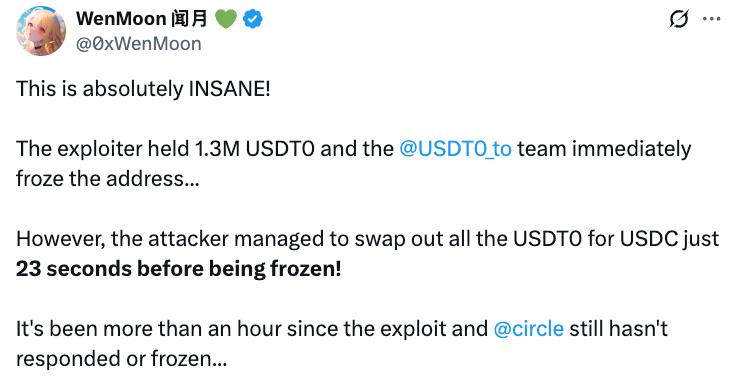
With firms like Chainalysis, Peckshield, Drosera providing block-by-block monitoring of all EVM networks, centralized asset issuers should be have no defense against freezing potentially exploited assets. The GMX attacker sat on $30m USDC for half an hour as he knew it wouldn't be frozen.

Tether is goatd for immediately stopping illicit flows in minutes, while Circle must wait days, weeks, months even, for a court order.
Let's have an honest conversation. 

With firms like Chainalysis, Peckshield, Drosera providing block-by-block monitoring of all EVM networks, centralized asset issuers should be have no defense against freezing potentially exploited assets. The GMX attacker sat on $30m USDC for half an hour as he knew it wouldn't be frozen. 

Tether is goatd for immediately stopping illicit flows in minutes, while Circle must wait days, weeks, months even, for a court order.
𝕏/@0xWenmoon
Revision history

25 recorded changes

Want your article here?

Promote with Leviathan News

A post by pseudonymous crypto commentator 0xWenmoon has reignited debate over the responsibilities of centralized stablecoin issuers in responding to on‑chain exploits. The thread argues that, given the maturity of real‑time blockchain monitoring tools from firms such as Chainalysis, PeckShield, and others that track EVM networks block by block, large issuers of centralized assets (like fiat‑backed stablecoins) should rarely be “caught off guard” by major incidents and should be able to freeze potentially exploited funds rapidly. The author points to a recent exploit involving GMX, where an attacker reportedly held about $30 million in USDC for roughly half an hour without the funds being frozen, as an illustration of perceived gaps between available monitoring capabilities and how quickly issuers act. The post contrasts Tether (USDT) and Circle (USDC), claiming that Tether frequently freezes illicit or stolen funds within minutes, whereas Circle typically waits for formal legal processes such as court orders, which can take days or longer. This reflects a broader policy and governance difference between major stablecoin issuers: Tether has historically exercised broad discretion to blacklist addresses at its own initiative, while Circle publicly emphasizes compliance procedures closely tied to legal requests and regulatory frameworks. The discussion feeds into a wider industry debate about how centralized stablecoins should balance rapid incident response and victim protection with due process, legal risk, and concerns about censorship or overreach when freezing assets on otherwise permissionless networks.

AI-generated background, compiled from web sources — not editorial content.

More coverage

Explore the topic

More on Tether

Comments