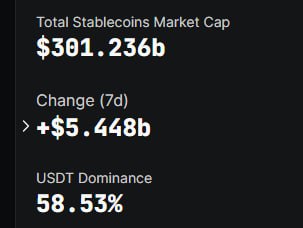
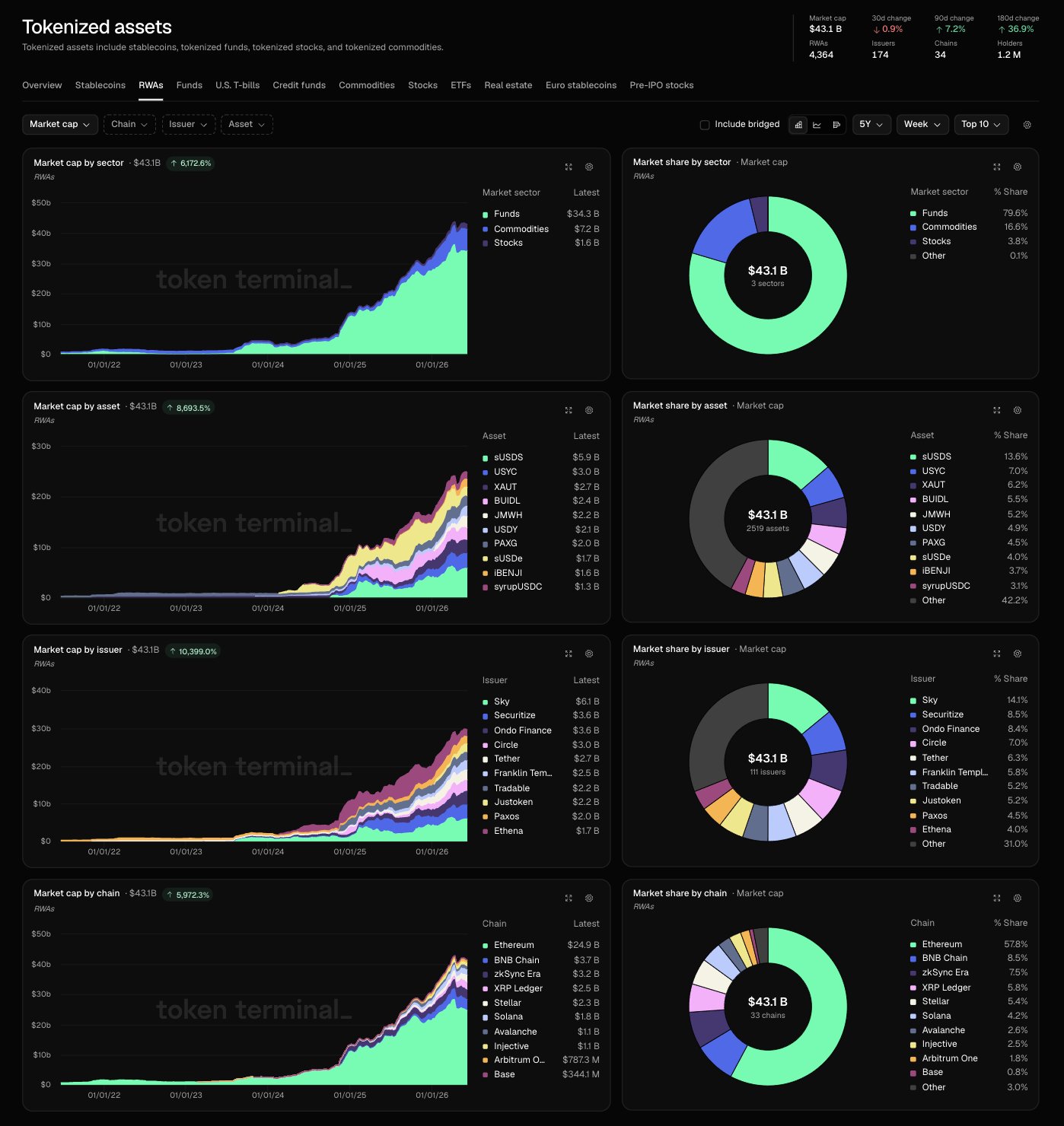
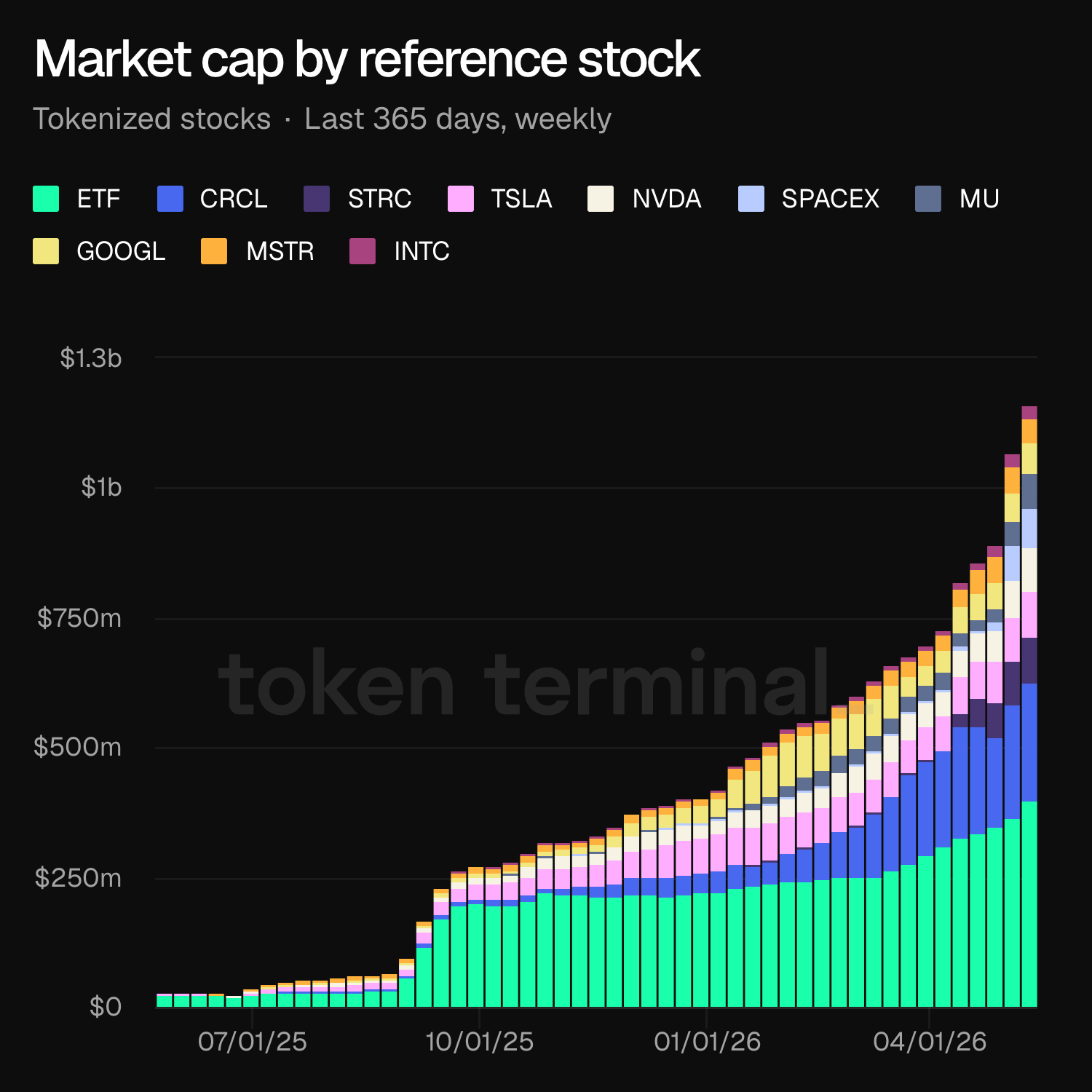
The global stablecoin market has crossed the $300 billion threshold for the first time, reflecting a renewed wave of capital into crypto and the growing role of dollar-pegged assets in trading, DeFi, and payments. According to DeFiLlama data reported by The Block and other analytics providers, the aggregate market cap recently reached about $301 billion, up from roughly $200 billion a year earlier, as both established and newer issuers expanded supply in response to stronger market activity.
Tether’s USDT remains the dominant stablecoin with about 58% market share and roughly $176 billion in circulation, reinforcing its position as the primary liquidity layer across centralized exchanges and many on-chain venues. Circle’s USDC has rebounded alongside U.S. regulatory progress on stablecoins, climbing to around $74 billion, while decentralized or synthetic designs have gained ground: Ethena’s USDe has grown rapidly to roughly $14–15 billion, and MakerDAO’s DAI stands near $5 billion, highlighting investor demand for both custodial and on-chain collateral-backed options.
The move beyond $300 billion matters because it signals that stablecoins are becoming a core part of the digital dollar infrastructure rather than a niche trading tool. Policymakers and institutions are increasingly focused on this segment: recent research from organizations such as the World Economic Forum notes that stablecoin capitalization has risen from under $50 billion to around $300 billion in just a few years, prompting new legislative efforts and debates over definitions, reserve transparency, and systemic risk. At the same time, competition from newer synthetic and yield-bearing designs is challenging incumbents like USDT, potentially reshaping how dollar exposure, yield, and risk are packaged in crypto markets.
"entities":["Tether","USDT","Circle","USDC","Ethena","USDe","MakerDAO","DAI","DeFiLlama","The Block","World Economic Forum"]}`
✨ AI-generated background, compiled from web sources — not editorial content.