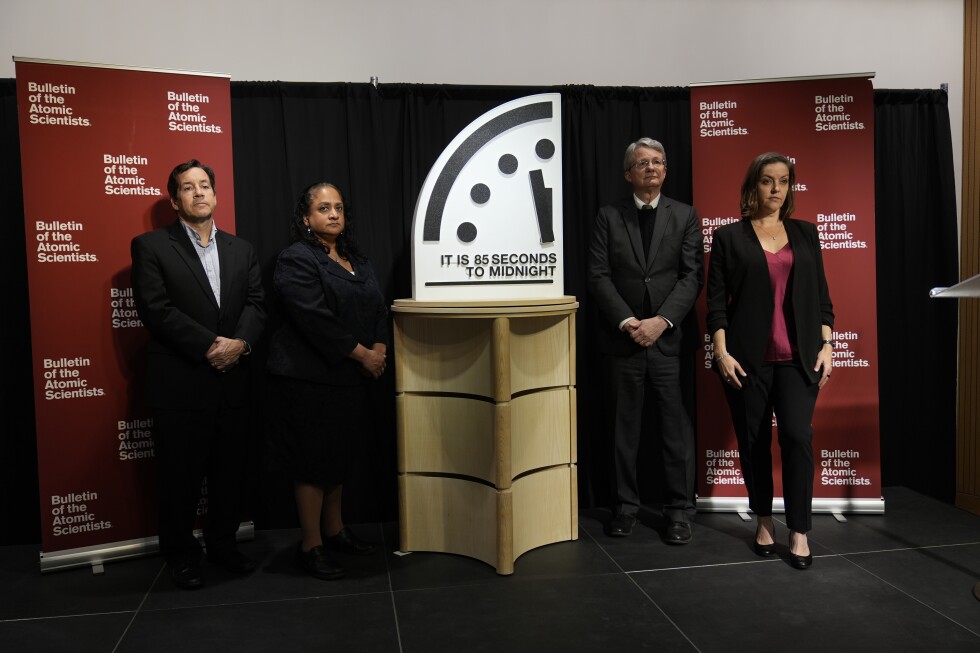
The Bulletin of the Atomic Scientists has moved its symbolic Doomsday Clock to 85 seconds to midnight, the closest it has ever been to indicating global catastrophe. The 2026 setting reflects escalating risks from nuclear tensions, accelerating climate change, biological threats, and rapidly advancing technologies such as artificial intelligence and space-based weapons systems.
The Doomsday Clock, created in 1947 to communicate the urgency of nuclear dangers, is reset annually by the Bulletin’s Science and Security Board in consultation with experts, including Nobel laureates. Originally focused on nuclear weapons, its assessment now also incorporates climate change, disruptive technologies, biosecurity risks, and erosion of international norms. The move from 89 seconds in 2025 to 85 seconds in 2026 is attributed to increasing aggressiveness among nuclear-armed states, weakened arms control frameworks, ongoing wars, record-breaking global temperatures, and inadequate governance of emerging technologies such as AI, which scientists warn could trigger arms races or destabilize security if misused.
This new setting is intended as a warning signal about a “most dangerous moment” for modern civilization, not a prediction of inevitable disaster. The Bulletin emphasizes that the clock can still be moved back if governments strengthen nuclear arms control and non-proliferation efforts, accelerate climate mitigation, reinforce international law and cooperation, and develop robust norms and regulations for technologies like AI and biotechnology.
✨ AI-generated background, compiled from web sources — not editorial content.