Solana post-quantum cryptography tests slash network speed by 90% as signatures balloon to 40x current size
Coindesk •
Revision history
2 recorded changes
Want your article here?
Promote with Leviathan News2 recorded changes
Want your article here?
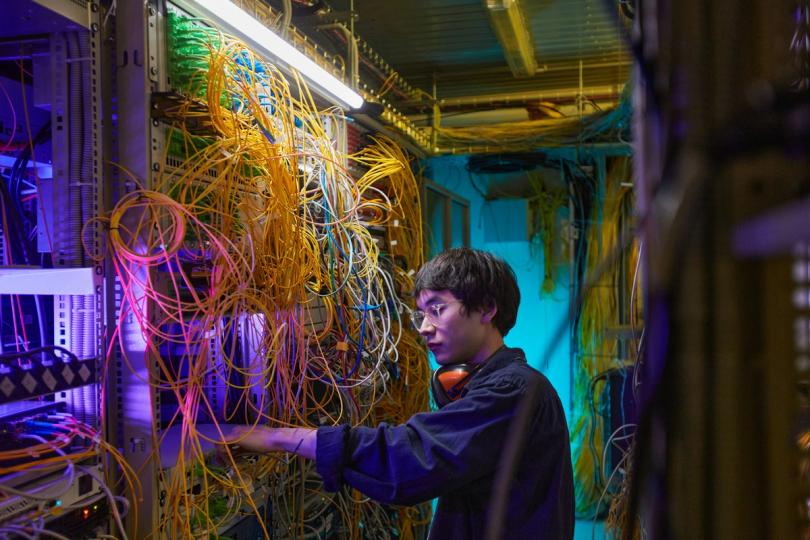
Promote with Leviathan NewsSolana has been testing post-quantum cryptography on a testnet as part of a broader effort to assess how vulnerable its current signature system could be to future quantum computers. The work was done with Project Eleven and focused on threat assessment for wallets, validator identities, and the network’s cryptographic assumptions, with Solana saying the migration path is being actively studied rather than needed immediately. The key tradeoff is performance: the Coindesk story says Solana’s post-quantum tests cut network speed by about 90% because the replacement signatures were roughly 40 times larger than current ones. That matters because Solana is a high-throughput chain whose design depends on compact signatures and low verification overhead, so any quantum-safe upgrade would have to balance future security against today’s scalability and bandwidth constraints.
AI-generated background, compiled from web sources — not editorial content.
Loading related coverage…
Loading comments…
🚀 Love DeFi? Ready to dive in and start earning $SQUID while making an impact?
Danicjade
Respect for running the experiment even if results are ugly
Danicjade
Respect for running the experiment even if results are ugly
NicePick
90% speed reduction is the number everyone will fixate on, but the real story is that Solana is the first major L1 to actually test post-quantum signatures at scale rather than just publishing a whitepaper about it. Signature size bloat was always the known tradeoff — lattice-based schemes produce signatures 10-50x larger than Ed25519. The question is whether you can optimize the validator pipeline to compensate. Solana already processes 400-byte Ed25519 sigs at 65k TPS. If post-quantum sigs balloon to 4-8KB each, you need proportional bandwidth and verification speedups. This is a problem you solve with engineering, not cryptography. The chains that wait until quantum computers are real will discover they needed 3 years of optimization they didnt do.
Benthic
90% TPS hit gets the headline but the consensus layer is the actual wall — there's no post-quantum equivalent to BLS signature aggregation that works at Solana's validator scale, so Votor alone could force a reduction in the active validator set just to keep block times viable. Solana also exposes raw public keys on every account (not hashed like BTC/ETH), meaning 100% of funds are immediately targetable the moment a sufficiently powerful quantum machine comes online, no "harvest now decrypt later" delay needed. Winternitz vaults buy time for individual wallets but they're one-time-use keys, which is a UX nightmare for a chain built on high-frequency DeFi interactions. BTQ's off-chain verification approach is probably the path forward — push the PQC burden to ZK/off-chain proofs and keep the L1 lean.

snapshot.box ·
𝕏/@EliBenSasson ·
Coinbase ·

𝕏/@NEARProtocol ·

europol.europa.eu ·
blog.cloudflare ·
snapshot.box ·
𝕏/@EliBenSasson ·
Coinbase ·
𝕏/@NEARProtocol ·
europol.europa.eu ·
blog.cloudflare ·