Crypto industry conferences are becoming increasingly institutional in their economics, sponsorship models, and audience focus, with 2026 events showcasing high-priced keynotes, food‑driven brand activations, and a shift from grassroots hackathons to capital‑centric gatherings that prioritize investors, LPs, and distribution over builders. This is reshaping where conferences are held, who attends, how much they pay, and how Web3 teams think about go‑to‑market and fundraising via events.
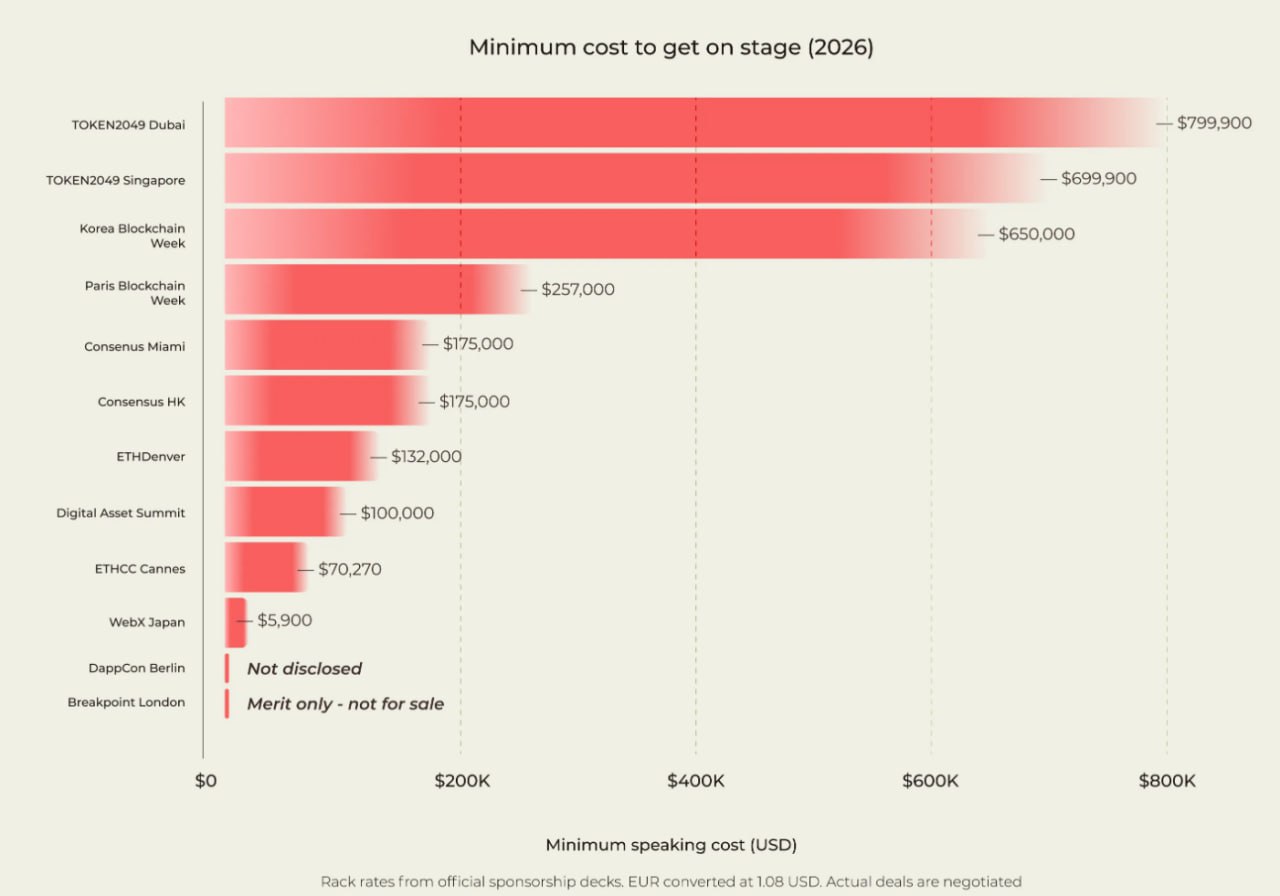
According to the Crypto Nomads / Beehiiv report, some flagship 2026 crypto conferences are now charging upwards of $33,000 per minute for main‑stage keynote slots, reflecting a model where speaking is treated as a premium distribution channel to captive institutional and high‑net‑worth audiences, rather than a merit‑driven content selection process. These events typically bundle stage time with large sponsorship packages, exhibition space, and list access, making them effectively pay‑to‑play platforms for funds, exchanges, and well‑capitalized projects. At the same time, sponsorship competition has moved heavily into hospitality: rather than just logo walls and booths, top‑tier sponsors are buying out meals, cafes, and food courts so their brand is the default touchpoint whenever attendees eat or drink, capturing attention in an environment where participants increasingly skip talks but never skip meals.
The article also highlights a structural shift in crypto event design: capital‑centric conferences and investor summits are crowding out traditional builder‑first hackathons, especially in high‑cost global hubs where venue, AV, and F&B inflation has pushed organizer economics toward institutions that can pay five‑ and six‑figure packages. Organizers are selecting venues that optimize for VIP rooms, private meeting spaces, and sponsor‑controlled hospitality rather than hacker spaces, and adjusting pricing tiers so founders often attend via discounted or comped passes while general builders and retail participants face higher prices. For Web3 teams, this changes GTM strategy around events: early‑stage projects increasingly treat conferences as fundraising and distribution funnels—prioritizing curated investor side events, private dinners, and sponsor lounges over main‑stage talks—while technical communities and hackathons move to separate, cheaper, often community‑run venues and dates. The overall effect is a bifurcation between high‑budget, institution‑driven conferences and smaller, builder‑led gatherings, with attendance patterns and outcomes diverging accordingly.
✨ AI-generated background, compiled from web sources — not editorial content.