Tokenized equities may reduce intermediaries, cut settlement friction and unlock billions in savings while expanding access to private markets

𝕏/@chamath •
Revision history
11 recorded changes
Want your article here?
Promote with Leviathan News11 recorded changes
Want your article here?
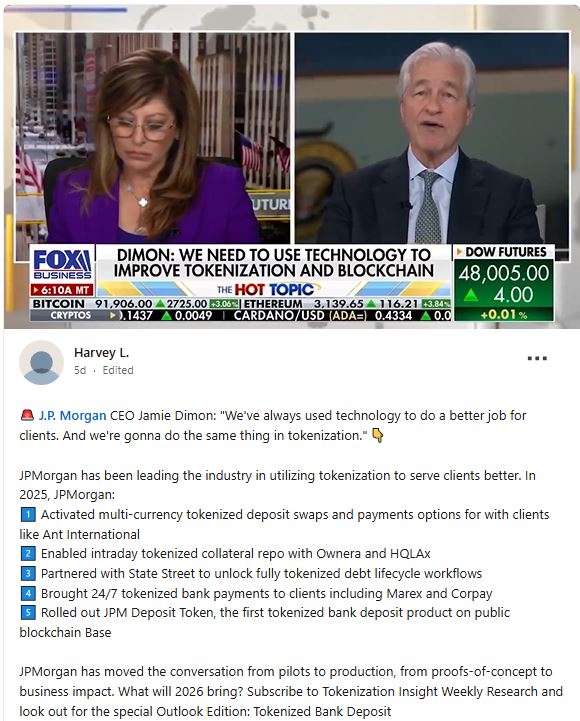
Promote with Leviathan NewsChamath Palihapitiya used a post on X to argue that tokenized equities—shares represented on a blockchain—could remove layers of financial intermediaries, speed up settlement, and unlock large cost savings, especially in private markets. His comments align with a broader trend in traditional finance and crypto, where banks, exchanges, and regulators are exploring blockchain-based representations of stocks and private equity to improve efficiency and broaden investor access. Tokenized equities are digital tokens on a blockchain that represent ownership of traditional shares (public or private), often backed 1:1 by the underlying securities held with a regulated custodian. By recording ownership and transfers on-chain and automating processes via smart contracts, tokenized equities can enable near-instant or same‑day settlement, 24/7 trading, fractional ownership, and more direct transfer of assets between parties, reducing the need for traditional clearing houses and other intermediaries. Consultancies and large financial institutions, including JPMorgan, RSM, and others, forecast that tokenization of real‑world assets—including equities and alternative investments—could scale to trillions of dollars in value over the next decade, with a significant part of the opportunity in opening private and alternative markets to a broader base of individual investors. These developments matter because today’s equity markets, particularly for private companies, often involve limited liquidity, complex and costly custody and settlement chains, and high minimum investment thresholds that restrict participation to large institutions or accredited investors. Tokenization offers a potential infrastructure change that could lower operational and compliance costs, improve transparency, and enable smaller, global investors to access private equity, venture capital, and other alternative assets in smaller ticket sizes. While regulatory, legal, and market‑structure questions remain unresolved in many jurisdictions, Palihapitiya’s post reflects a growing view among market participants that on‑chain representations of equities may be a key mechanism for modernizing capital markets and capturing substantial efficiency gains.
AI-generated background, compiled from web sources — not editorial content.
The Block ·

WSJ ·
Okx ·

crypto.news ·

crypto.news ·
Linkedin ·
The Block ·
WSJ ·
Okx ·
crypto.news ·
crypto.news ·
Linkedin ·
🚀 Love DeFi? Ready to dive in and start earning $SQUID while making an impact?