User phished for $2.1MM, likely a victim of Renzo Protocol's hacked 𝕏 account.
ZachXBT •
Revision history
17 recorded changes
Want your article here?
Promote with Leviathan News17 recorded changes
Want your article here?
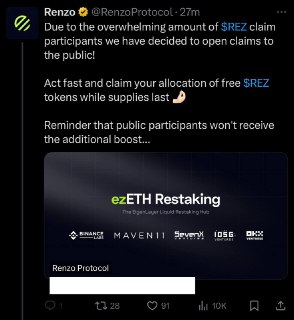
Promote with Leviathan NewsBlockchain investigator ZachXBT reported that a user was phished for about $2.1 million after interacting with a malicious link circulated via Renzo Protocol’s compromised X (Twitter) account. According to his post, attackers gained control of Renzo’s official social media presence and used it to promote a fraudulent link, which at least one user followed, resulting in the loss of a large portfolio of on-chain assets. The incident fits a broader pattern where attackers target the official X accounts of Web3 projects to push fake airdrops, upgrades, or support links that trick users into signing malicious transactions. Renzo Protocol is a liquid restaking platform that serves as an interface to the EigenLayer ecosystem, allowing users to restake ETH to secure Actively Validated Services and earn additional yield. A compromise of its main communications channel therefore created a high‑value phishing vector, since followers are typically sophisticated DeFi users with significant capital at stake. The case underlines the systemic risk posed by social media account takeovers in crypto, where trust in verified project channels can be weaponized to bypass usual user caution and facilitate large-scale theft. The episode also reinforces ongoing security debates around both protocol operations and user practices. For projects, it highlights the need for stronger operational security around social media accounts, including hardware‑based 2FA, restricted admin access, and rapid incident response procedures. For users, it underscores that no official announcement—whether about restaking, rewards, or integrations—should be trusted solely because it appears on a verified handle; links should be cross‑checked against the project’s website and known contracts, and wallet permissions reviewed before signing any transaction. The $2.1 million loss serves as another example of how phishing through hijacked trusted channels remains one of the most effective attack vectors in the Web3 ecosystem.
AI-generated background, compiled from web sources — not editorial content.
Loading related coverage…
Loading comments…
🚀 Love DeFi? Ready to dive in and start earning $SQUID while making an impact?
Restoring your session before loading comments…

𝕏/@RenzoAI ·

The Block ·

research.auditless ·

𝕏/@sparkdotfi ·

𝕏/renzoprotocol ·

Coindesk ·
𝕏/@RenzoAI ·
The Block ·
research.auditless ·
𝕏/@sparkdotfi ·
𝕏/renzoprotocol ·
Coindesk ·