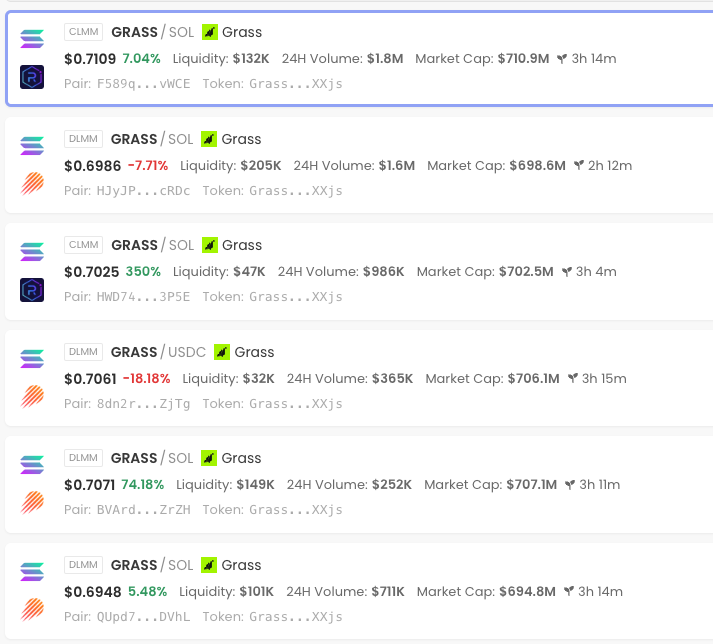
Grass (ticker: GRASS), the token associated with Wynd Network’s Grass data-sharing protocol, launched with a fully diluted valuation around $1 billion, drawing criticism over the small amount of liquidity made available on decentralized exchanges at launch. Grass is a network that pays users for sharing unused internet bandwidth and device data, which Wynd has been aggregating for roughly a year through a points-based campaign ahead of the token generation event and airdrop. The project also established the Grass Foundation in 2024 to oversee the token and protocol governance. At launch, only a relatively small pool of on-chain liquidity—reported by critics as under $1 million—was seeded against a multibillion-dollar implied valuation, leading to accusations of a “low-float, high FDV” rollout that can result in highly volatile price action and potential price manipulation risks for secondary-market buyers. This structure is part of a broader pattern in recent token launches where teams conduct long data- or points-farming campaigns, then debut tokens with high headline valuations but limited circulating supply and constrained liquidity, raising ongoing debate about fairness, transparency, and user protection in Web3 token economics.

AI-generated background, compiled from web sources — not editorial content.

More coverage

Explore the topic

Comments