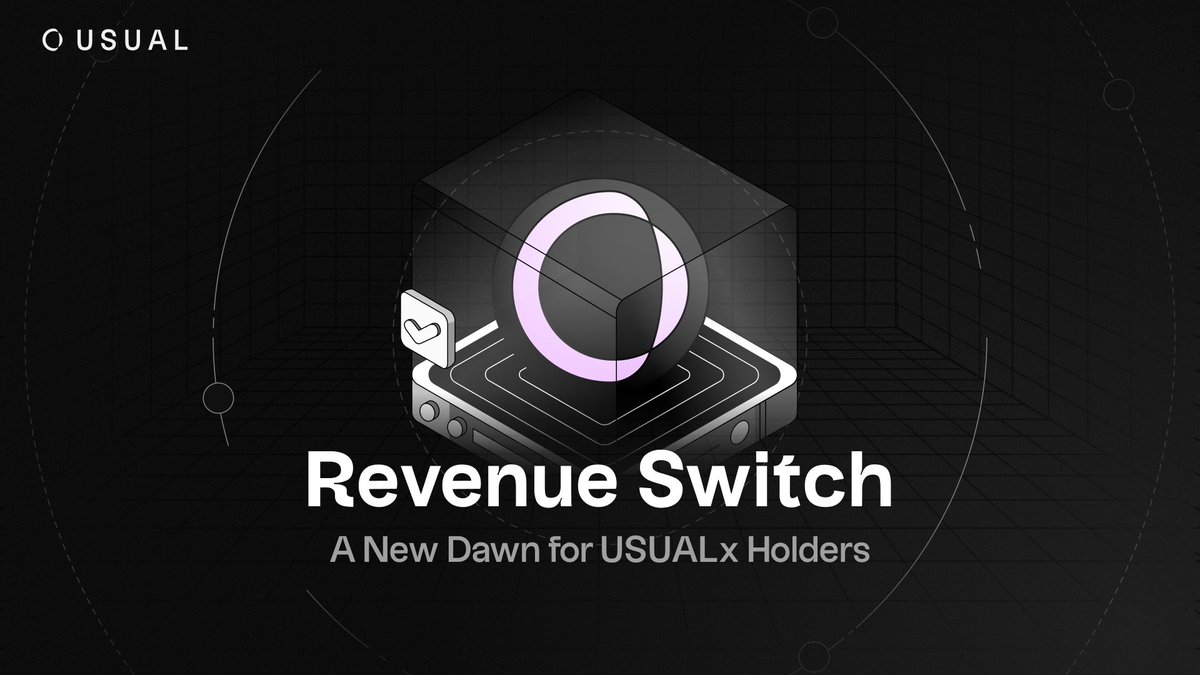
Usual will turn on its revenue switch when 50% of USUAL is staked or on February 1st, whatever comes earlier
𝕏/@usualmoney •
Revision history
1 recorded changes
Want your article here?
Promote with Leviathan News1 recorded changes
Want your article here?
Promote with Leviathan NewsUsual, a protocol building a stablecoin and DeFi “super app,” announced on X that its protocol revenue sharing (“revenue switch”) will be activated once 50% of the USUAL token supply is staked, or on February 1, whichever occurs first. This mechanism links the start of fee distribution and protocol revenue to a concrete governance/participation milestone rather than leaving it open‑ended. The announcement follows Usual’s recent token launch and staking campaign, which is designed to bootstrap long‑term alignment between the protocol and token holders. Usual positions USUAL as a governance and revenue‑sharing token tied to its stablecoin and broader DeFi ecosystem, with stakers expected to receive a share of protocol fees once the switch is on. By making revenue activation conditional on reaching 50% staking or a fixed date, the team creates a clear incentive to lock tokens and deepen protocol security and commitment, while also providing certainty that revenue sharing will not be postponed indefinitely. This kind of “revenue switch” structure echoes a broader trend among DeFi protocols that gate fee sharing behind usage, security, or governance thresholds to comply with evolving regulatory expectations and encourage early participation. If the 50% staking threshold is reached ahead of February 1, revenue would begin flowing earlier; if not, February 1 becomes the backstop date. For token holders and prospective users, the key implication is that staking participation and the calendar date jointly determine when USUAL starts accruing protocol revenue, which may affect how quickly the protocol can attract and retain long‑term liquidity and governance participants.
AI-generated background, compiled from web sources — not editorial content.
Loading related coverage…
Loading comments…

𝕏/@usualmoney ·
𝕏/@usualmoney ·

leviathannews.substack ·

𝕏/@usualmoney ·

𝕏/@usualmoney ·

𝕏/@usualmoney ·
𝕏/@usualmoney ·
𝕏/@usualmoney ·
leviathannews.substack ·
𝕏/@usualmoney ·
𝕏/@usualmoney ·
𝕏/@usualmoney ·
🚀 Love DeFi? Ready to dive in and start earning $SQUID while making an impact?
Restoring your session before loading comments…