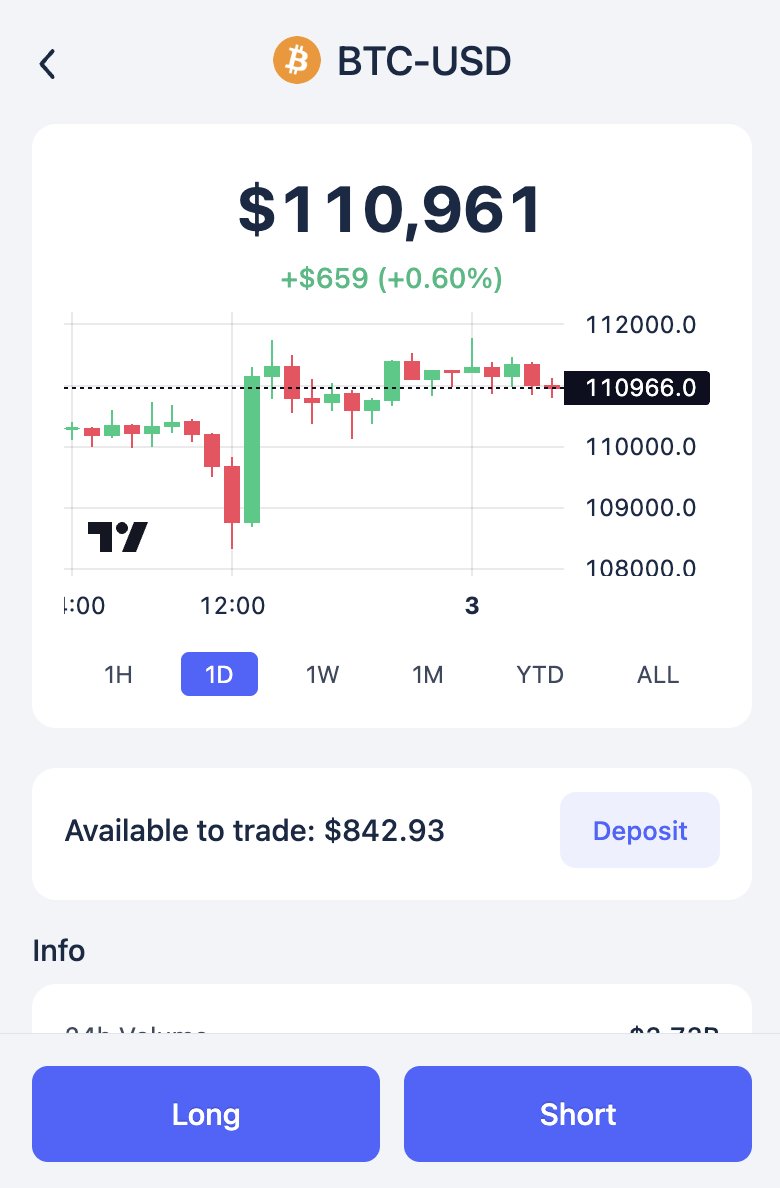
Rabby has officially integrated hyperliquid perps directly in-wallet
𝕏/@kirbyongeo •
Revision history
2 recorded changes
Want your article here?
Promote with Leviathan News2 recorded changes
Want your article here?
Promote with Leviathan NewsRabby, a non-custodial EVM wallet, has rolled out native integration of Hyperliquid perpetual futures (perps) directly inside the wallet interface, allowing users to trade on Hyperliquid without leaving Rabby. The feature lets users open, monitor, and manage leveraged perp positions using Hyperliquid’s infrastructure while Rabby serves as the front-end wallet and signing surface. This follows a broader trend of wallets embedding trading functionality, coming just weeks after the Phantom wallet launched in-app perps and amid reports that MetaMask is exploring a similar Hyperliquid-based integration. Hyperliquid is a derivatives-focused crypto exchange that offers perpetual futures across a large set of markets with on-chain style connectivity via EVM wallets. By integrating Hyperliquid perps, Rabby effectively turns the wallet into a lightweight trading terminal: users connect their wallet, enable trading with a gasless signature, and can then deposit collateral (typically USDC on Arbitrum) to Hyperliquid and manage long/short positions directly from the Rabby UI. This model mirrors other recent integrations where interfaces like Blockchain.com’s DeFi wallet and other tools plug into Hyperliquid for execution and liquidity, while the wallet remains the user’s control point for keys and balances. The move matters because it highlights the convergence of wallets and exchanges: instead of switching between a wallet and a separate trading platform, users increasingly interact with markets from within their primary wallet app. For Rabby, the integration is a competitive response to Phantom’s in-app perps and anticipated MetaMask perps via Hyperliquid, positioning Rabby among the wallets pushing toward more exchange-like functionality. For Hyperliquid, integrations like Rabby expand distribution and order flow without requiring users to adopt a new standalone interface, strengthening its role as a back-end liquidity and execution layer for perp trading across multiple wallets.
AI-generated background, compiled from web sources — not editorial content.

info.arkm ·

𝕏/@SkewTrade ·
sec.gov ·

𝕏/@HyperliquidX ·

𝕏/@sizedotclub ·

hyperliquid.gitbook.io ·
info.arkm ·
𝕏/@SkewTrade ·
sec.gov ·
𝕏/@HyperliquidX ·
𝕏/@sizedotclub ·
hyperliquid.gitbook.io ·
🚀 Love DeFi? Ready to dive in and start earning $SQUID while making an impact?