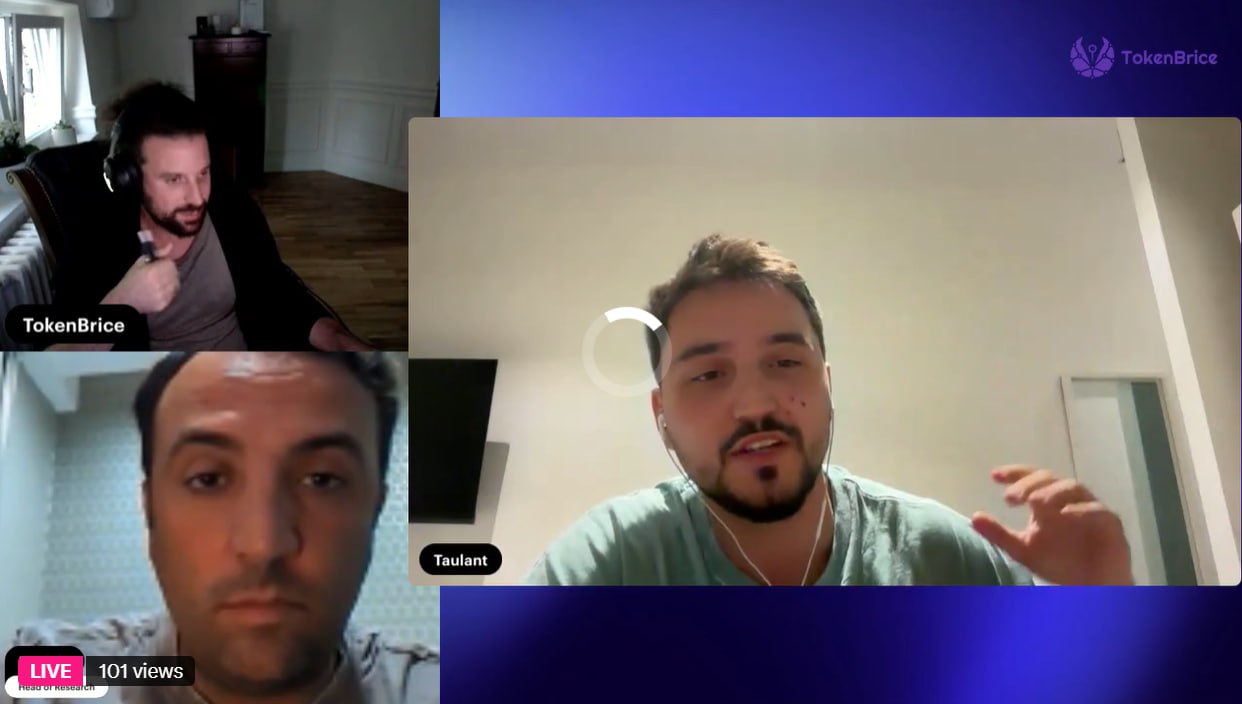
DeFi educator and builder TokenBrice has launched a new livestream series called “Spotlight”, with Episode 01 focused on Twyne, a DeFi credit delegation protocol described as a “credit delegation layer.” The show is positioned as the formal start of his streaming career and is broadcast live on social platforms such as Twitter (X) and YouTube. In this inaugural episode, Brice hosts Twyne contributors Taulant and Daniele to walk through why Twyne exists, how it works, and what problems it aims to solve in current lending markets.
According to TokenBrice’s show page, Spotlight is designed to share his “DeFi discoveries” by featuring protocols he has pre‑screened with a short research session, then exploring them live with the project teams. The first episode introduces Twyne as a credit delegation protocol that sits atop existing lending markets, connecting underutilized lender capital with borrowers who need additional borrowing power, with the goal of delivering extra yield options for lenders and higher loan‑to‑value (LTV) ratios for borrowers. Twyne is presented as infrastructure that can increase utilization in underlying lending markets and potentially boost yields for passive lenders without forcing them to take on Twyne‑specific risk exposure, while Twyne itself focuses initially on more sophisticated DeFi users and B2B integrations.
The launch of Spotlight matters because it adds a structured, research‑driven media format around emerging DeFi infrastructure, framed by a host already active in stablecoin and protocol design (e.g., Polaris). For projects like Twyne, appearing on Spotlight provides early technical and economic context in front of a specialized DeFi audience, helping clarify how new credit delegation layers integrate with existing lending protocols, how they may affect utilization, yields, and liquidation dynamics, and what types of users and integrations they are targeting.
"entities":["TokenBrice","Spotlight (show)","Twyne","Taulant","Daniele","Polaris"]}`
✨ AI-generated background, compiled from web sources — not editorial content.