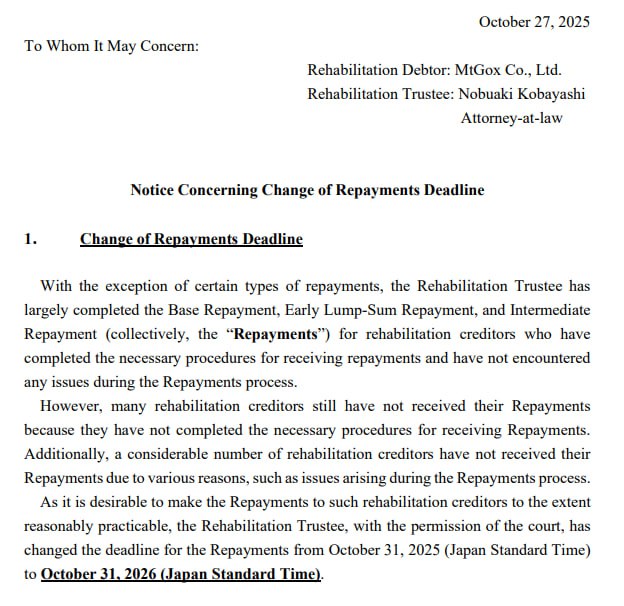
Defunct crypto exchange Mt. Gox has postponed its final creditor repayment deadline by another year to 31 October 2026, after informing the Tokyo court that it has not yet completed the eligibility and processing steps for all remaining rehabilitation creditors. The trustee states that base repayment, early lump-sum repayment, and intermediate repayment have been “largely completed” only for creditors who correctly finished all required procedures and encountered no issues, but a “considerable number” of creditors either did not complete eligibility steps or were affected by problems during processing. As a result, those creditors will have to wait longer for their distributions, even though many others have already been paid.
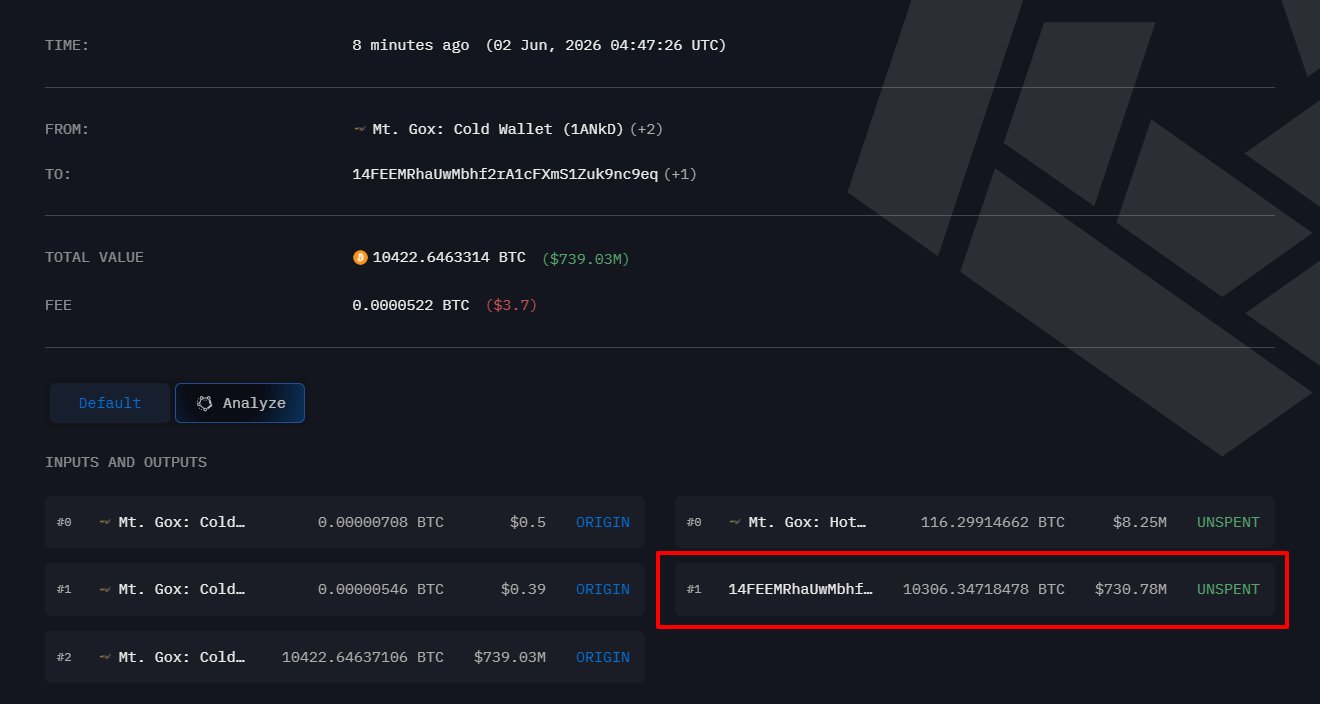
The decision comes after Mt. Gox began distributing Bitcoin (BTC), Bitcoin Cash (BCH), and fiat to eligible creditors via exchanges such as Kraken and Bitstamp starting in 2024, following a civil rehabilitation process that has been ongoing since its 2014 collapse after the loss of about 850,000 BTC. By March 27, 2025, the trustee reported having made repayments to around 19,500 creditors, while blockchain analytics data and subsequent reporting indicate the estate still holds roughly 34,500–34,700 BTC (about 34,689 BTC cited in some analyses) under trustee control. The extension, approved by the court, is intended to allow more time to process remaining claims and resolve technical and procedural issues.
The delay has broader market significance because Mt. Gox’s remaining Bitcoin stack, together with coins already being distributed, has been widely watched as a potential source of selling pressure on BTC markets. Analysts note that pushing the deadline to late 2026 stretches the timetable over which any remaining repayments — and potential sales by creditors — might occur, reducing the risk of a concentrated “supply shock” and giving markets more time to absorb eventual distributions. For individual creditors, however, the new schedule means that those who have not yet successfully completed eligibility procedures or whose payouts encountered issues may now be waiting more than a decade after the exchange’s failure to receive their final compensation.
✨ AI-generated background, compiled from web sources — not editorial content.