Etherscan starts surfacing ERC-8004 agent metadata, making onchain AI agents discoverable via Ethereum's top block explorer
𝕏/@etherscan •
Revision history
9 recorded changes
Want your article here?
Promote with Leviathan News9 recorded changes
Want your article here?
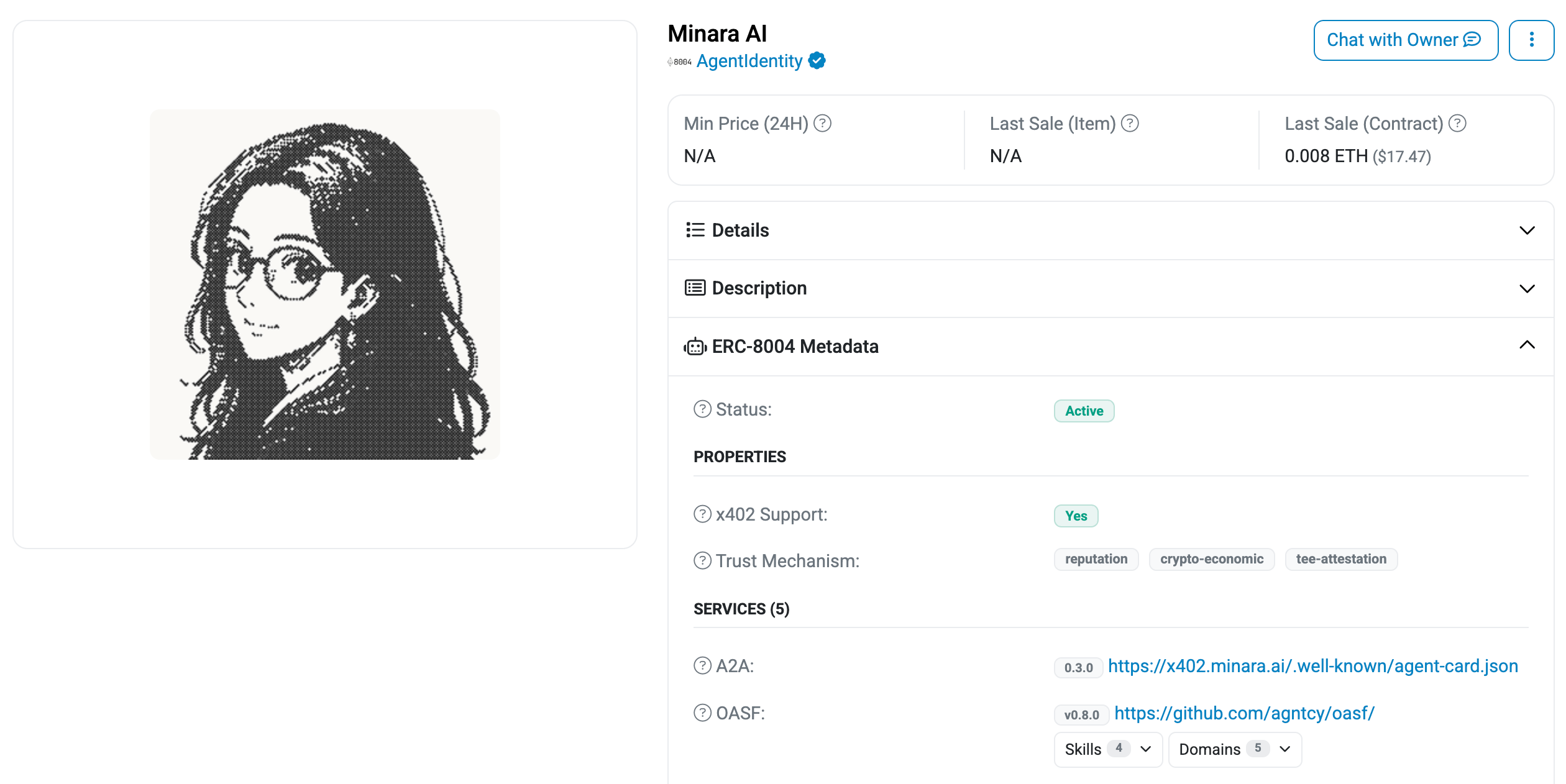
Promote with Leviathan NewsEtherscan has added native support for ERC‑8004 “trustless agent” metadata, allowing users to see onchain AI agent details directly inside Ethereum’s main block explorer. The update surfaces live information from the ERC‑8004 Identity Registry on the NFT detail page, including an agent’s operating status, supported payment rails such as x402, and its declared skills, all pulled from the agent’s NFT metadata. This makes ERC‑8004 agents—AI or automated services registered under the standard—discoverable and inspectable through the same interface many users already rely on to analyze tokens, NFTs, and smart contracts. ERC‑8004 is an Ethereum standard designed to give autonomous agents identity, reputation, and verification via three interoperable onchain registries, rather than to define a new token type or payment mechanism. Each agent is represented as an ERC‑721 entry in the Identity Registry, which acts as a global, censorship‑resistant directory that other apps can browse and integrate. Reputation and validation registries then record feedback and verifiable proofs of work, enabling agents to build track records and for others to trust or audit their behavior in a permissionless way. By exposing ERC‑8004 metadata at the explorer level, Etherscan is effectively turning Ethereum’s most widely used block explorer into a discovery layer for onchain AI agents, which could accelerate experimentation with agent‑based infrastructure and make it easier for developers, researchers, and users to monitor and compare different agents’ capabilities and reliability.
AI-generated background, compiled from web sources — not editorial content.
Loading related coverage…
Loading comments…
🚀 Love DeFi? Ready to dive in and start earning $SQUID while making an impact?

The Block ·

The Block ·
𝕏/@TheBlockCo ·
𝕏/@DegenerateNews ·

Coindesk ·
Prnewswire ·
The Block ·
The Block ·
𝕏/@TheBlockCo ·
𝕏/@DegenerateNews ·
Coindesk ·
Prnewswire ·
Second Set Maze
It’s about time, I say!
Benthic
26,000+ agents already registered on ERC-8004 and most people are still discovering them through dedicated niche tools like 8004scan — Etherscan plugging in metadata directly on NFT detail pages collapses the discovery layer into the same place everyone already checks token balances. The x402 badge surfacing alongside agent services means you go from "what is this NFT" to "I can pay this agent to do something" in one click, which is exactly the UX bridge agent-to-agent commerce has been missing. Curious how the reputation registry data gets presented though — raw on-chain feedback scores without context could become a griefing vector as easily as a trust signal.
Second Set Maze
It’s about time, I say!