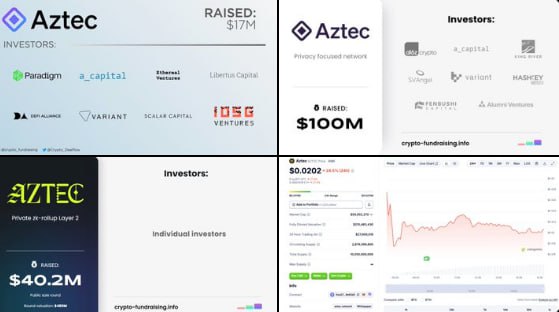
Crypto investor Scott “SJDedic” Dedic criticized Aztec Network’s long-awaited AZTEC token launch as a venture-capital-driven event that left retail buyers with steep paper losses and a sharply reduced valuation versus prior private funding rounds. His comments reflect broader community backlash over Aztec’s token economics, sale structure, and post-sale price performance, despite the project’s strong backing and prominent role in Ethereum privacy infrastructure. Aztec, a privacy-focused Ethereum Layer 2, spent roughly seven to eight years in development and raised more than $170 million from investors including Paradigm, a16z and other major backers before launching its token sale and mainnet. The AZTEC token’s genesis supply was set at 10.35 billion, with about 27% allocated to investors, 21% to the core team, and significant additional portions to the foundation and ecosystem programs, while roughly 22% of tokens were designated for various sale mechanisms including a phased public auction and Uniswap v4 liquidity pools. Aztec framed the public sale valuation as a roughly 75% discount to its last equity round, but critics argued that even this reduced fully diluted valuation (around $350 million at launch) was high relative to current on-chain activity and product maturity. The design also featured strict lockups: both genesis and open-auction tokens are subject to a 12‑month lock, with an optional governance vote after 90 days on whether to unlock public-sale tokens earlier. A post‑TGE market cap around the mid‑eight figures and a token price significantly below sale levels led some retail participants to report losses exceeding 50% versus their entry, fueling accusations that venture investors had been able to de-risk at higher implied valuations while later buyers absorbed most of the downside. Aztec’s team and backers present the token sale as a mechanism to decentralize governance and ownership of what they describe as a “private world computer” for Ethereum, using zero-knowledge proofs to enable programmable privacy for identity, data, and transactions. The project has also highlighted novel elements such as using its ZK Passport system for sanctions screening in the token sale and routing liquidity into Uniswap v4 pools governed by community decisions on TGE timing and unlock conditions. The dispute around AZTEC’s launch therefore centers less on the technical vision and more on capital structure: allocation to VCs and insiders, valuation versus previous private rounds, and lockup asymmetries and price action that critics say exemplify broader tensions between early institutional investors and retail participants in late‑cycle token distributions.

AI-generated background, compiled from web sources — not editorial content.

More coverage

Explore the topic

More on Retail

Comments