Vyper frontend is now directly emitting Venom IR, improving performance and paving the way for formal verification

𝕏/@harkal •
Revision history
5 recorded changes
Want your article here?
Promote with Leviathan News5 recorded changes
Want your article here?
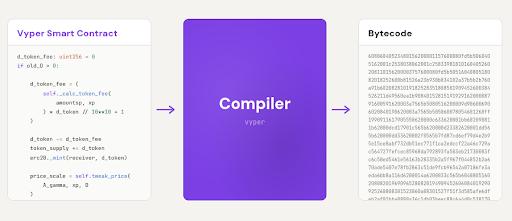
Promote with Leviathan NewsVyper, a Pythonic smart contract language for Ethereum, has updated its compiler frontend so that it now emits Venom IR directly, rather than going through its legacy Vyper IR pipeline. This change is aimed at improving compilation performance and code quality, and at making Venom a first-class, analysis‑friendly intermediate representation that can support formal verification of Vyper contracts. Venom IR is an LLVM‑like intermediate representation designed specifically for blockchain virtual machines, starting with the EVM. Its goals include being a generic IR for smart contract languages, enabling better optimization (e.g., side‑effect tracking, stack scheduling, static memory allocation, dead‑store elimination, common subexpression elimination) and being amenable to security and correctness analysis. Recent Vyper releases have invested heavily in the “Venom pipeline,” exposing it via --venom / --experimental-codegen flags and a standalone venom binary, and improving its optimization passes and code generation quality. With the frontend now emitting Venom IR directly, Vyper can rely less on legacy IR layers, streamline compilation, and provide a more consistent, machine‑checkable representation suitable for advanced tooling such as formal verification frameworks and fuzzing harnesses. This shift matters for both security researchers and smart contract developers. A stable, well‑specified IR that closely tracks the source code enables more precise static analysis, differential testing between backends, and the development of formal proofs of contract properties on the IR level rather than directly on bytecode. Over time, the Venom design explicitly aims to support multiple blockchain VMs beyond the EVM, so a mature Venom‑based pipeline in Vyper could also lower the cost of targeting additional chains or execution environments while maintaining verifiability and optimization quality.
AI-generated background, compiled from web sources — not editorial content.

leviathan.news ·

𝕏/@vyperlang ·

𝕏/@vyperlang ·
𝕏/@vyperlang ·

Github ·

marketplace.visualstudio ·
leviathan.news ·
𝕏/@vyperlang ·
𝕏/@vyperlang ·
𝕏/@vyperlang ·
Github ·
marketplace.visualstudio ·
🚀 Love DeFi? Ready to dive in and start earning $SQUID while making an impact?