Nayib Bukele claims landslide victory in second term as president of El Salvador, citing overwhelming popular support.

The Block •
Revision history
2 recorded changes
Want your article here?
Promote with Leviathan News2 recorded changes
Want your article here?
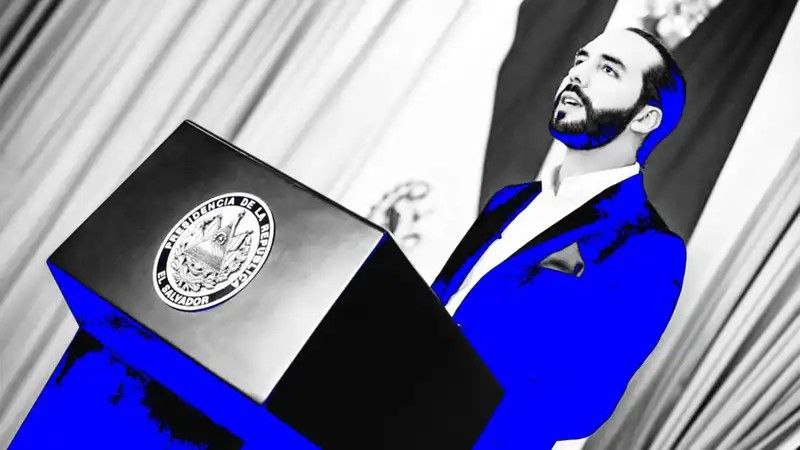
Promote with Leviathan NewsNayib Bukele, the incumbent president of El Salvador and prominent Bitcoin advocate, has claimed – and subsequently secured – a second five‑year term after a landslide victory in the country’s February 2024 elections, winning over 80% of the vote and ensuring his Nuevas Ideas party retains a dominant majority in the Legislative Assembly. With around 70% of ballots counted, preliminary tallies showed Bukele above 83% support and projections indicating his party would control roughly 58 of 60 legislative seats, giving him an even more consolidated hold on political power for the 2024–2029 term. Bukele’s re‑election is highly controversial because El Salvador’s constitution contains a prohibition on immediate presidential re‑election, and his candidacy was enabled by a 2021 ruling from a Supreme Court chamber that had been reshaped by his allies in the legislature. Despite those legal concerns, the vote itself was conducted peacefully according to the Supreme Electoral Tribunal and international observers, though opposition parties reported irregularities and Bukele himself alleged that some overseas voting centers, particularly in the United States, blocked Salvadorans from casting ballots. Human rights and governance organizations argue that Bukele’s overwhelming victory comes amid a prolonged state of emergency, extensive concentration of power in the executive, restrictions on access to public information, and documented abuses in his aggressive anti‑gang security campaign, even as that campaign has driven down gang‑related violence and remains popular with much of the population. For international observers and crypto markets, Bukele’s victory signals continuity in his policy agenda, including his signature move to adopt Bitcoin as legal tender and position El Salvador as a crypto‑friendly jurisdiction, though detailed post‑election economic and crypto policy plans are still emerging. At the same time, governance and transparency concerns—such as allegations around opaque use of public funds, including funds associated with the Bitcoin program—are expected to remain a central issue in the country’s relations with multilateral lenders and foreign governments during his second term.
AI-generated background, compiled from web sources — not editorial content.

𝕏/@nayibbukele ·
𝕏/@TheBlockCo ·

𝕏/@JAN3com ·
bitcoin.gob.sv ·
archive.is ·
The Block ·
𝕏/@nayibbukele ·
𝕏/@TheBlockCo ·
𝕏/@JAN3com ·
bitcoin.gob.sv ·
archive.is ·
The Block ·
🚀 Love DeFi? Ready to dive in and start earning $SQUID while making an impact?